Half Man HBO Max Review: A Surreal Storytelling Experiment
HBO Max’s latest limited series, Half Man, has arrived with a distinct vision and a narrative that challenges conventional storytelling. Created by critically acclaimed writer-director Lena Voss, the six-episode anthology explores the fragmented nature of identity through surreal and often unsettling vignettes. Unlike traditional serialized dramas, Half Man embraces ambiguity, leaving audiences to interpret its meaning rather than providing clear resolutions.
The series follows three unrelated characters—each played by the same actor, Thomas Rourke—whose lives intersect in uncanny ways. Rourke’s performance is central to the show’s unsettling atmosphere, as he shifts between roles with eerie precision. The show’s visual style blends psychological horror with existential drama, creating a tone that feels both familiar and disorienting.
The Structure of Half Man: Breaking from Convention
Half Man rejects the traditional three-act structure in favor of a more fragmented approach. Each episode functions as a standalone story, yet subtle connections between them emerge upon closer inspection. The series’ nonlinear storytelling invites multiple viewings, rewarding those who piece together its hidden patterns.
The first episode introduces a man who wakes up in a hospital with no memory of his past. Subsequent episodes explore themes of duality, memory, and self-deception through surreal scenarios—such as a man who believes he’s being followed by his own reflection or another who discovers his body is gradually disappearing. These narratives unfold with deliberate pacing, prioritizing mood over exposition.
The show’s anthology format allows for experimentation without the constraints of continuity. This approach aligns with HBO Max’s push to diversify its content library with bold, creator-driven projects. While some viewers may find the lack of clear answers frustrating, others will appreciate the show’s willingness to embrace ambiguity.
Visual Storytelling and Tone
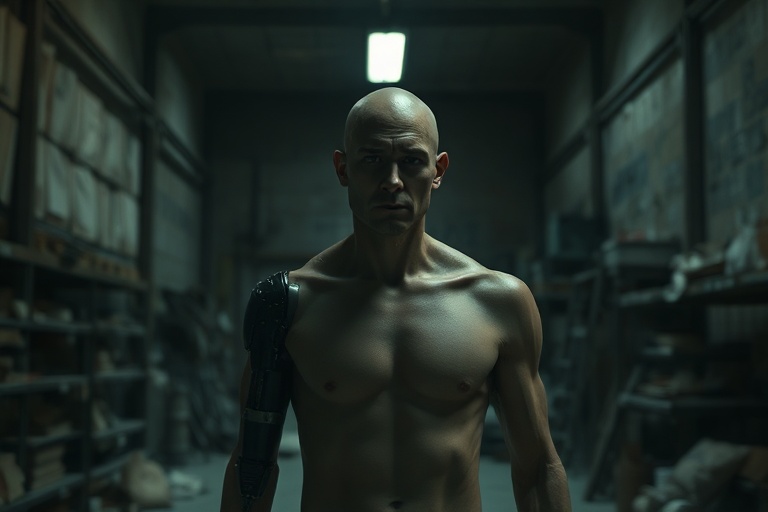
Cinematographer Elena Carter crafts a distinct visual language for Half Man, using muted color palettes and stark lighting to emphasize the characters’ psychological states. The series frequently employs Dutch angles and distorted perspectives, reinforcing the themes of instability and fractured identity. Many scenes feel intentionally unsettling, blurring the line between reality and hallucination.
The sound design plays an equally crucial role. Composer Daniel Reeves’ score oscillates between haunting silence and sudden, jarring crescendos, heightening the tension in key moments. The combination of visual and auditory techniques creates an immersive experience that lingers long after the credits roll.
Critical Reception and Audience Divide
Half Man has sparked divided reactions among critics and viewers alike. Review aggregation site Rotten Tomatoes reports a 78% critics’ score, with praise for its originality and visual craftsmanship. However, audience scores sit at 62%, indicating that its experimental nature hasn’t resonated with everyone.
Supporters of the series highlight its ambition and thematic depth. In a review for The New Yorker, critic Margo Chen writes, “Voss and her team have crafted a meditation on identity that feels urgently modern, even if its execution isn’t flawless.” Meanwhile, detractors argue that the show’s ambiguity borders on pretension, with some calling it “intentionally obscure” without substantial payoff.
The series has also generated discussion on social media, particularly regarding its portrayal of mental health and dissociation. Some viewers have praised the show for tackling these topics with sensitivity, while others feel it risks trivializing serious issues by framing them as abstract puzzles.
Why Half Man Matters in Today’s Streaming Landscape
In an era where streaming platforms prioritize bingeable, easily digestible content, Half Man stands out as a deliberate counterpoint. Its anthology structure and refusal to conform to traditional storytelling make it a rare breed in today’s television landscape. For HBO Max, which has been expanding its slate of original programming, the series represents a calculated risk—one that could either strengthen its reputation as a home for bold, auteur-driven projects or reinforce the perception that some audiences prefer more straightforward narratives.
The show’s release timing is also notable. Following the success of HBO Max’s The Last of Us and Euphoria, Half Man signals a shift toward more experimental content. While these earlier hits leaned into genre and emotional intensity, Half Man embraces intellectual ambiguity, catering to a niche but growing audience that values complexity over comfort.
The Future of Anthology Series on Streaming Platforms
Anthology series have seen a resurgence in recent years, with platforms like Netflix and FX experimenting with the format. However, Half Man distinguishes itself by prioritizing thematic cohesion over standalone episodes. This approach may influence future projects, particularly as creators seek to balance artistic ambition with commercial viability.
For HBO Max, Half Man could serve as a litmus test. If the series gains a cult following or sparks deeper conversations about its themes, it may pave the way for more high-concept, low-spoon-feeding content. Conversely, if its divisive reception discourages further experimentation, the platform could revert to safer, more formulaic programming.
Where to Watch and What’s Next
Half Man is available exclusively on HBO Max, with all six episodes released simultaneously. The platform’s algorithm may push the series to viewers who have engaged with similar content, such as psychological thrillers or narrative experiments. Given the show’s polarizing reception, its long-term success will depend on word-of-mouth and critical reevaluations in the coming months.
As for what’s next, creator Lena Voss has hinted at potential expansions of the Half Man universe. In a recent interview with The Hollywood Reporter, she revealed plans to explore additional stories set within the same thematic framework. Whether these will take the form of another limited series or a full-fledged anthology remains unclear, but the show’s ending leaves room for interpretation—and perhaps, continuation.
Final Thoughts: A Show for the Curious
Half Man is not a series for everyone. Its refusal to provide easy answers and its reliance on surreal storytelling may frustrate viewers seeking straightforward narratives. Yet, for those willing to engage with its complexities, the show offers a rewarding experience—one that lingers in the mind long after the final episode.
In an era where streaming content often prioritizes quantity over quality, Half Man stands as a reminder of the value of artistic ambition. Whether it will be remembered as a groundbreaking experiment or an intriguing misfire remains to be seen. One thing is certain: it demands to be discussed, debated, and dissected.
For fans of cerebral television, Half Man is a must-watch—even if it’s not always an easy one.