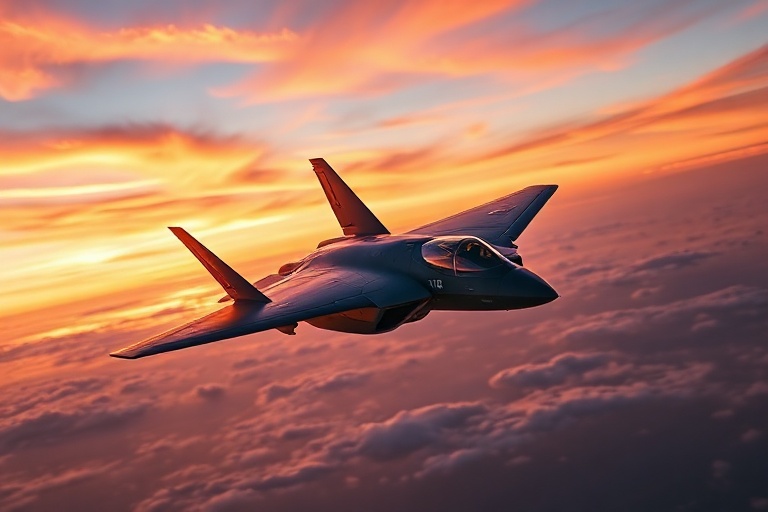
The KAI KF-21 Boramae, developed by Korea Aerospace Industries (KAI), represents a significant leap in South Korea’s defense capabilities. This next-generation multirole fighter is designed to bridge the gap between fourth-generation and fifth-generation aircraft, offering advanced stealth, agility, and firepower. Its maiden flight in July 2022 marked a pivotal moment for South Korea’s aerospace industry, signaling its ambition to become a major player in the global defense market.
The Boramae—Korean for “young hawk”—is more than just an aircraft; it is a symbol of technological sovereignty and strategic autonomy for Seoul. With rising tensions in the Asia-Pacific region, particularly with North Korea and China, the KF-21 has emerged as a critical asset for South Korea’s air defense and deterrence strategy.
The Development and Design of the KF-21 Boramae
The KF-21 Boramae was born out of South Korea’s Fighter eXperimental (FX) program, which sought to replace the aging fleet of F-4 Phantoms and F-5 Tigers in the Republic of Korea Air Force (ROKAF). Initially, the program aimed to acquire foreign-made jets, but South Korea ultimately pursued an indigenous solution to reduce reliance on imports and bolster its domestic defense industry.
Development began in earnest in 2016, with KAI collaborating with Lockheed Martin for technical expertise in stealth design and avionics. The aircraft’s design incorporates several fifth-generation features, including low radar cross-section (RCS), advanced sensors, and supercruise capability—though it does not yet match the full stealth of aircraft like the F-35 Lightning II. Instead, the KF-21 is often described as a “4.5-generation” fighter, offering a balance between performance and cost.
Key design elements of the KF-21 include:
- Stealth Features: The aircraft incorporates radar-absorbing materials and an angular fuselage to minimize its radar signature. While not as stealthy as the F-22 Raptor or F-35, the KF-21 is designed to evade detection by most contemporary radar systems.
- Advanced Avionics: The Boramae is equipped with a state-of-the-art active electronically scanned array (AESA) radar, infrared search and track (IRST) system, and an advanced electronic warfare suite. These systems provide the pilot with unparalleled situational awareness.
- Multirole Capability: The KF-21 is designed to excel in both air-to-air and air-to-ground missions. It can carry a variety of weapons, including air-to-air missiles, precision-guided bombs, and future hypersonic weapons.
- Supercruise Potential: The aircraft is powered by two General Electric F414 engines, which provide sufficient thrust for supersonic speeds without afterburners. This enhances its operational range and fuel efficiency.
Testing, Challenges, and Future Prospects
The KF-21 Boramae has undergone rigorous testing since its first flight. The initial prototype, known as the “Boramae 001,” completed its maiden flight on July 19, 2022, at Sacheon Air Base in South Korea. Subsequent prototypes have since taken to the skies, with each test flight providing valuable data on the aircraft’s performance, handling, and systems integration.
Despite its promise, the KF-21 has faced several challenges. One of the most significant hurdles is the aircraft’s stealth capabilities. While the KF-21 incorporates advanced stealth features, it does not match the radar-evading performance of fifth-generation fighters like the F-35. This has led some analysts to question whether the KF-21 can truly operate in contested environments dominated by advanced air defense systems.
Another challenge is the aircraft’s cost. Developing a next-generation fighter is an expensive endeavor, and the KF-21 is no exception. South Korea has invested heavily in the program, but questions remain about its affordability for export markets. To date, Indonesia is the only confirmed international partner, contributing financially and technically to the project. However, other countries, including Poland and the UAE, have expressed interest, which could help offset development costs.
Looking ahead, the KF-21 Boramae is expected to enter service with the ROKAF in the mid-2020s. The aircraft will initially serve as a bridge between fourth- and fifth-generation fighters, but future upgrades could enhance its capabilities further. Potential upgrades include the integration of directed-energy weapons, advanced networking systems, and even unmanned wingman drones.
Broader Implications for South Korea and Global Defense
The KF-21 Boramae is more than just a fighter jet; it is a statement of South Korea’s technological and strategic ambitions. By developing its own fifth-generation fighter, South Korea has reduced its dependence on foreign arms suppliers, particularly the United States. This aligns with Seoul’s broader policy of achieving “defense self-reliance,” or “Jaju Guja,” which aims to reduce reliance on imported military hardware.
The success of the KF-21 could also reshape the global defense market. Traditionally, fifth-generation fighters have been dominated by the U.S., Russia, and China. However, South Korea’s entry into this exclusive club demonstrates that other nations can develop cutting-edge military technology. This could inspire similar initiatives in other countries, particularly in regions where geopolitical tensions are rising.
For South Korea, the KF-21 serves as both a deterrent and a tool for diplomacy. The aircraft enhances the ROKAF’s ability to defend its airspace against potential threats from North Korea and China. Additionally, the Boramae could become a valuable export, strengthening South Korea’s ties with allied nations and providing a counterbalance to the dominance of Western and Russian fighter jets.
The program’s international collaboration with Indonesia also highlights South Korea’s growing role as a defense exporter. By partnering with regional allies, Seoul can share development costs while fostering stronger diplomatic and economic ties. This model could serve as a blueprint for future defense projects, particularly in Southeast Asia and the Middle East.
Conclusion: A New Era for South Korean Aerospace
The KAI KF-21 Boramae represents a bold step forward for South Korea’s aerospace industry and defense strategy. While it may not yet rival the stealth and performance of the world’s most advanced fighters, the Boramae is a testament to South Korea’s growing technological prowess and strategic vision. With continued development and international collaboration, the KF-21 could evolve into a true fifth-generation fighter, capable of meeting the challenges of the 21st century.
For now, the Boramae stands as a symbol of South Korea’s ambition—a young hawk ready to take on the skies and assert its place among the world’s leading aerospace powers. As testing continues and the aircraft prepares for service, the global defense community will be watching closely to see how this ambitious project unfolds.
For those interested in the latest developments in aerospace technology and defense innovations, stay tuned to Dave’s Locker Technology and News sections for updates on the KF-21 Boramae and other groundbreaking projects.