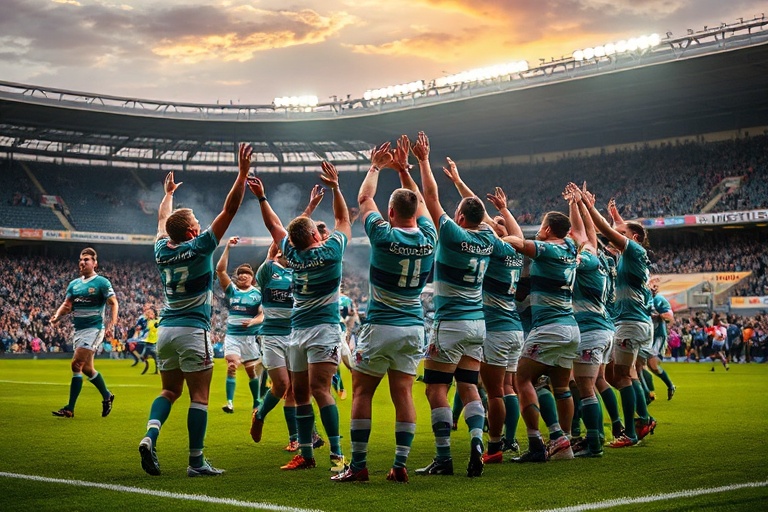
Hull Kingston Rovers: Rugby League’s Resilient Global Ambassador
Hull Kingston Rovers: A Pillar of Rugby League’s Global Legacy
Hull Kingston Rovers, often abbreviated as HKR, stands as one of the most storied and resilient clubs in the history of rugby league. Founded in 1882, the club has navigated decades of change, economic shifts, and competitive evolution to remain a cornerstone of the sport in England and beyond. While the club’s recent years have been marked by both triumphs and challenges, its influence extends far beyond the pitch, shaping local identity and contributing to rugby league’s global expansion.
With a fanbase that stretches across continents, Hull Kingston Rovers embodies more than just athletic competition. It represents community pride, cultural heritage, and the enduring spirit of a sport that has grown from working-class roots into a modern, international spectacle. As rugby league continues to expand its footprint—particularly in Europe, Australia, and parts of Asia—HKR plays a pivotal role in preserving tradition while embracing innovation.
The Foundations of a Rugby League Icon
Hull Kingston Rovers was established in the East Riding of Yorkshire, a region deeply intertwined with rugby league’s origins. The club’s early years were defined by a strong working-class following, rooted in the industrial docks and shipyards of Hull. Unlike its cross-city rival, Hull FC, HKR emerged from the Kingston upon Hull suburb, giving it a distinct community identity from the outset.
By the early 20th century, the club had established itself in the top tier of rugby league, competing in the inaugural Challenge Cup in 1896. Its first major trophy came in 1922, when the club lifted the Yorkshire Cup. These early successes helped cement HKR’s reputation as a club that punches above its weight, often challenging more established teams despite limited resources.
The post-war era brought both struggles and milestones. Financial pressures and fluctuating attendances tested the club’s resilience, but HKR maintained a loyal following. The 1970s and 1980s saw periods of resurgence, including multiple appearances in the Challenge Cup semifinals and strong performances in the league. Yet, it was the late 1990s and early 2000s that marked a turning point in the club’s modern history.
Rebuilding and Rebranding: A New Chapter
The turn of the millennium presented Hull Kingston Rovers with a critical crossroads. After years of mid-table finishes and financial constraints, the club faced the possibility of relegation or even liquidation. In response, a new ownership group took control in 2007, initiating a comprehensive restructuring effort. This included a rebranding initiative, with the club adopting a fresh identity—new crest, updated colors, and a renewed focus on youth development.
One of the most visible changes was the relocation to the newly built Craven Park stadium in 2003, a modern venue that replaced the club’s historic home. While the move was controversial among traditionalists, it proved essential in securing HKR’s long-term future. The stadium’s design prioritized fan experience and commercial potential, aligning with the club’s ambition to compete at the highest level.
On the field, HKR began to rebuild through smart recruitment and a commitment to developing local talent. The appointment of coaches like Tony Smith and Tim Sheens brought tactical sophistication, while the emergence of homegrown players such as Kris Radlinski and Scott Wheeldon revitalized the squad. By 2010, the club had returned to the Super League, the premier competition in European rugby league.
This period of renewal culminated in HKR’s first major trophy in nearly a century. In 2015, the club won the Challenge Cup, defeating Leeds Rhinos in a dramatic final at Wembley Stadium. The victory was hailed as a triumph of perseverance and strategic vision, proving that consistent investment in culture and community could yield results.
HKR in the Global Rugby League Landscape
Rugby league remains a niche sport globally, but its growth has accelerated in recent years, driven by international tours, digital broadcasting, and strategic partnerships. Hull Kingston Rovers has played a subtle but significant role in this expansion, particularly through its involvement in cross-code initiatives and community outreach programs.
The club has participated in pre-season tours to Australia, New Zealand, and France, exposing its players to top-tier competition and fostering cultural exchange. These tours not only enhance the team’s competitiveness but also strengthen rugby league’s presence in markets where rugby union dominates. HKR’s participation in the World Club Challenge—a fixture that pits Super League champions against NRL winners—has further elevated its global profile.
At home, HKR has become a leader in community engagement. The club runs multiple grassroots programs, including rugby league development in schools, mental health initiatives, and support for refugee integration through sport. These efforts align with rugby league’s ethos of inclusivity and social impact, reinforcing HKR’s role as a civic institution.
Internationally, HKR has contributed to the rise of players who have gone on to represent England and other nations. The club’s academy system has produced talents like Jordan Abdull, who became a key figure for both HKR and the national team. Such pathways are crucial in a sport where pathway development often lags behind rugby union and football.
Challenges and the Road Ahead
Despite its progress, Hull Kingston Rovers continues to face challenges. Financial sustainability remains a concern, particularly as clubs compete for revenue in a crowded entertainment market. The COVID-19 pandemic disrupted matchday income and sponsorship deals, forcing HKR to adapt through digital engagement and community fundraising.
Competitively, the club has oscillated between top-six finishes and relegation battles. The Super League’s shift to a more meritocratic system—ending automatic promotion and relegation—has increased pressure on clubs to perform consistently. HKR’s ability to balance ambition with financial prudence will determine its standing in the coming years.
Looking ahead, HKR has outlined a strategic vision focused on three pillars: performance, community, and commercial growth. Key initiatives include expanding the academy, upgrading Craven Park with modern facilities, and forging international partnerships. The club’s leadership has also emphasized sustainability, aiming to reduce its environmental impact through energy-efficient stadium operations.
As rugby league continues to evolve, Hull Kingston Rovers stands at a pivotal moment. The club’s ability to honor its heritage while embracing innovation will define its legacy in the decades to come. For fans old and new, HKR remains a symbol of resilience—a club that has survived crises, celebrated triumphs, and, above all, stayed true to its roots.
Why Hull Kingston Rovers Matters Beyond the Sport
Hull Kingston Rovers is more than a rugby league club. It is a cultural institution that reflects the social and economic history of Hull. In a city that has faced industrial decline and demographic shifts, HKR provides continuity and pride. Matchdays at Craven Park are not just sporting events; they are social gatherings that strengthen community bonds.
The club’s influence extends into education and social policy. Through its rugby league development programs, HKR introduces young people to teamwork, discipline, and healthy lifestyles. These initiatives are particularly impactful in areas with high youth unemployment or mental health challenges.
Moreover, HKR serves as a bridge between generations. Older supporters pass down stories of past heroes, while younger fans bring fresh energy and digital savvy. This intergenerational connection is rare in modern sports and underscores HKR’s unique role in local culture.
As rugby league expands globally, clubs like Hull Kingston Rovers will be vital in nurturing the sport’s growth. Their ability to blend tradition with innovation sets a standard for clubs in emerging markets. Whether through youth academies, international tours, or digital storytelling, HKR is helping shape the future of rugby league—one match, one community, and one generation at a time.