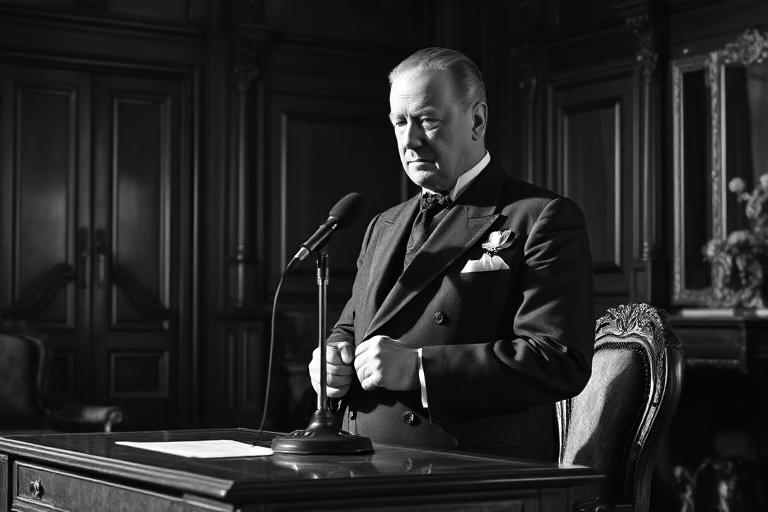
The King’s Speech (2010) arrived at a cultural inflection point—not just in cinema, but in how societies perceive authority, vulnerability, and the act of communication itself. Directed by Tom Hooper and written by David Seidler, the film dramatizes the true story of King George VI’s struggle with a debilitating stammer and his unlikely partnership with speech therapist Lionel Logue. Though set in mid-20th-century Britain, its themes resonated globally, sparking public reflection on leadership, mental health, and the power of words.
At its core, The King’s Speech is a story about overcoming adversity. Yet it transcended its historical subject matter by mirroring contemporary anxieties about public speaking, authenticity, and the burdens of public life. From boardrooms to classrooms, from royal palaces to social media stages, the film became a touchstone for discussions about communication in an increasingly vocal world.
The Global Resonance of a Personal Struggle
While rooted in British history, The King’s Speech found universal appeal. Its themes of overcoming personal limitation through perseverance and mentorship struck chords across cultures where stammering or speech impediments carry deep social stigma. In India, where an estimated 11 million people stutter, the film was screened in schools and therapy centers, sparking support groups and public awareness campaigns. Similarly, in Japan—where public speaking anxiety is culturally prevalent—educators used the film to discuss confidence and self-expression in a society that often values silence over speech.
The film’s emotional authenticity helped shift perceptions. Rather than portraying a king as infallible, it showed a man wrestling with imperfection—a narrative that aligned with a growing global movement toward mental health awareness and the normalization of vulnerability in leadership.
Cultural Variations in Reception
Responses to The King’s Speech varied significantly by region:
- United States: Critics praised Colin Firth’s performance and the film’s historical detail, while political commentators drew parallels between George VI’s leadership during crisis and modern expectations of presidential communication.
- Germany: The film was analyzed through the lens of post-war identity, with scholars noting how a monarch’s struggle to find his voice mirrored national efforts to articulate a new democratic identity after the Nazi era.
- South Korea: Audiences connected with the theme of overcoming societal pressure, especially in a culture where public speech is tied to academic and professional success.
- Brazil: The film was embraced by speech therapy professionals and featured in university psychology programs, helping to destigmatize speech disorders in Portuguese-speaking communities.
These diverse interpretations underscore how a single story can catalyze different conversations depending on cultural context—a testament to the film’s layered narrative.
From Screen to Social Change
The King’s Speech didn’t just entertain; it inspired tangible action. Following its release, speech therapy clinics worldwide reported increased inquiries, particularly from young adults seeking help for long-ignored stammering issues. In the UK, the British Stammering Association saw a 40% rise in helpline calls within six months of the film’s release. Similar spikes occurred in Australia and Canada, where advocacy groups leveraged the film’s visibility to push for better speech pathology services.
Educators also adopted the film as a teaching tool. In classrooms from London to Lagos, teachers used scenes from the movie to discuss perseverance, empathy, and the science of speech. Some schools integrated speech therapy techniques into their curricula, normalizing the idea that everyone—regardless of status—can benefit from learning to communicate more effectively.
Even corporate training programs began using The King’s Speech as a case study in leadership development, particularly in workshops focused on emotional intelligence and authentic communication.
The Enduring Legacy of a Modern Classic
More than a decade after its release, The King’s Speech remains a cultural benchmark. It is frequently cited in discussions about historical accuracy in film, the portrayal of disability, and the ethics of dramatizing real lives. The film’s success also helped solidify the careers of its lead actors—Colin Firth won an Academy Award for Best Actor, while Geoffrey Rush and Helena Bonham Carter received nominations—proving that stories centered on emotional struggle could achieve both critical and commercial acclaim.
The movie’s influence extends beyond awards and box office numbers. It has become a reference point in political discourse, with commentators invoking King George VI’s journey when discussing modern leaders’ communication challenges. During the COVID-19 pandemic, for instance, public health officials referenced the film in speeches about overcoming fear and speaking clearly in times of crisis.
Moreover, The King’s Speech contributed to a broader shift in how we view historical figures. By humanizing a king, it challenged the idea of royalty as untouchable and instead presented leadership as a journey of continuous growth—one that requires humility, effort, and sometimes, the help of others.
Why This Story Still Matters
In an era dominated by digital communication—where messages are often reduced to soundbites and social media rewards brevity over depth—the film’s central message feels more relevant than ever. It reminds us that true leadership isn’t about perfection; it’s about authenticity, resilience, and the courage to speak—even when it’s difficult.
As we navigate an increasingly polarized world, The King’s Speech offers a quiet counterpoint: a story about listening, learning, and finding one’s voice without losing one’s soul.
For those interested in exploring more about how film intersects with real-world change, visit our Entertainment section, where we examine how pop culture shapes social movements and public discourse. You can also explore our Culture archives for deeper analysis on how stories travel across borders and generations.
“The King’s Speech isn’t just a period drama—it’s a mirror. It reflects our collective desire to be heard, to be understood, and to lead with integrity, no matter our starting point.” — Cultural critic and historian Dr. Amina Patel
As we reflect on the film’s legacy, one thing is clear: its power lies not in its royal setting, but in its universal truth. Words have weight. Speech is power. And sometimes, the most profound leadership begins with a single, halting word.