Putin’s War Comes Home to Moscow: The Unfolding Crisis in Russia’s Capital
The war that began as a distant conflict in Ukraine has now crept closer to the heart of Russian power. Moscow, once a bastion of stability under Vladimir Putin’s rule, is now experiencing the destabilizing effects of a war that refuses to stay confined to foreign soil. Recent events have shown that the conflict is no longer just a geopolitical struggle fought on distant battlefields—it is now reshaping the very fabric of daily life in Russia’s largest city.
This shift marks a significant turning point. For years, Putin’s government has maintained a carefully constructed narrative that the war in Ukraine was a necessary defense against Western aggression. Yet as the conflict drags on, the cracks in that narrative are becoming impossible to ignore. Moscow, a city that has long thrived on the illusion of control, is now grappling with the consequences of a war that has come home to roost.
The Rising Tensions in the Russian Capital
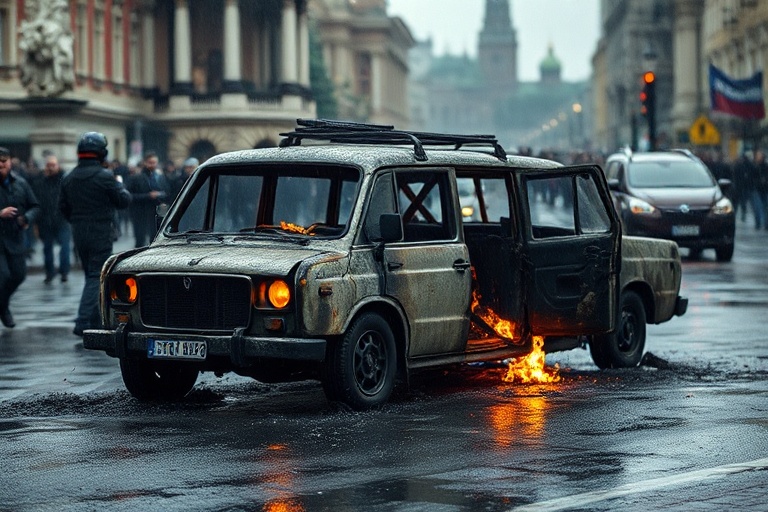
The most visible sign of this shift has been the increase in security measures across Moscow. Checkpoints, enhanced surveillance, and a noticeable military presence have become part of the city’s new normal. These changes are not merely symbolic; they reflect a government preparing for the possibility of internal unrest. The war in Ukraine has not only drained resources but has also exposed vulnerabilities in Russia’s domestic stability.
Public sentiment is another area where the war’s impact is being felt. While state-controlled media continues to paint a picture of unwavering support for the war effort, whispers of dissent are growing louder. Small protests, though swiftly suppressed, have begun to appear in pockets of the city. Social media, despite heavy censorship, has become a battleground for opposing viewpoints, with some Muscovites openly questioning the government’s handling of the conflict.
The economic toll of the war is also making itself known. Inflation is rising, the ruble remains volatile, and sanctions have disrupted supply chains. These pressures are particularly acute in Moscow, where the cost of living was already high. The middle class, once a pillar of Putin’s support, is feeling the squeeze. As wages stagnate and prices climb, frustration is building beneath the surface.
The Broader Implications of the War at Home
The war’s ripple effects extend far beyond Moscow’s city limits. Domestically, it has forced the Russian government to recalibrate its priorities. Military spending has surged, diverting funds from social programs and infrastructure projects. This reallocation of resources is creating new grievances among the populace, particularly in regions already struggling with economic hardship.
Internationally, the war has further isolated Russia. Diplomatic relations with Western nations have deteriorated, and even once-friendly partners are growing wary. This isolation is compounding the economic challenges Moscow faces, as trade routes shrink and foreign investment dwindles. The longer the war continues, the more Russia risks being locked out of the global economy—a prospect that could have dire long-term consequences.
Militarily, the war has stretched Russia’s resources thin. The deployment of troops to Ukraine has left gaps in domestic security, which the government is now scrambling to fill. The recent mobilization efforts, though officially denied, have fueled speculation about the true state of Russia’s military readiness. These concerns are not unfounded; reports of equipment shortages and logistical failures in Ukraine suggest that the war is taking a heavier toll than the Kremlin is willing to admit.
What Comes Next for Moscow and Russia?
The future of Moscow—and Russia as a whole—hangs in a precarious balance. The war has exposed the fragility of the systems that have kept Putin in power for decades. As the conflict grinds on, the government’s ability to maintain control will be tested like never before. The question is no longer whether the war will reshape Russia, but how severe the transformation will be.
For Muscovites, the immediate challenge is navigating a city that feels increasingly foreign. The once-familiar streets are now patrolled by soldiers, and the air is thick with uncertainty. Yet even in these conditions, life goes on. People still gather in cafes, children attend school, and businesses attempt to function. The resilience of Moscow’s residents is remarkable, but it is a resilience being pushed to its limits.
Looking ahead, several scenarios could unfold. The most optimistic outcome would be a negotiated settlement that brings an end to the war. However, given the current state of affairs, this seems increasingly unlikely. A more probable scenario is a prolonged conflict that further destabilizes Russia from within. In this case, Moscow could become a flashpoint for unrest, with protests, strikes, and even civil disobedience becoming more common.
The worst-case scenario—a collapse of the Russian state—remains a distant but not impossible possibility. Such an outcome would have catastrophic consequences for the region and the world. Yet even if the state holds, the war will leave deep scars. The social, economic, and political fabric of Russia will be forever altered, and the Moscow of today may soon be unrecognizable.
Key Takeaways: The War’s Impact on Moscow
- Security Overhaul: Moscow has seen a significant increase in military presence, checkpoints, and surveillance as the government prepares for potential internal unrest.
- Economic Strain: Inflation, a volatile ruble, and sanctions are putting pressure on Muscovites, particularly the middle class, who are feeling the squeeze of rising costs.
- Public Sentiment: While state media maintains a narrative of support for the war, dissent is growing, with small protests and social media dissent becoming more visible.
- Isolation and Consequences: Russia’s diplomatic isolation and economic struggles are intensifying, risking long-term damage to its global standing and domestic stability.
- Military Strain: The war in Ukraine has stretched Russia’s military resources thin, raising questions about the country’s long-term security and readiness.
As the war in Ukraine continues, its effects are no longer confined to the battlefield. Moscow, the symbolic heart of Putin’s Russia, is now on the front lines of a conflict that is reshaping the nation from within. The road ahead is uncertain, but one thing is clear: the war has come home, and Russia will never be the same.
For those watching from afar, the events unfolding in Moscow serve as a stark reminder of the true cost of war. It is a cost that extends far beyond the borders of Ukraine, reaching into the very heart of Russia itself. The question now is not just how the war will end, but how Russia—and the world—will reckon with the damage it has wrought.
In the coming months, the world will be watching closely as Moscow navigates this crisis. The choices made in the Russian capital will have repercussions far beyond its city limits, shaping the future of a nation and the course of global politics. One thing is certain: the war has come home, and the world must pay attention.
For more analysis on global conflicts and their domestic impacts, visit our News and Politics sections.