When Rayo Vallecano faced Girona at the Campo de Fútbol de Vallecas on a chilly November evening, the match carried more than just three points at stake. For the Madrid-based side, it was a chance to reinforce their reputation as a team that punches above its weight. For Girona, the visit to Vallecas represented an opportunity to prove that their impressive start to the season wasn’t a fluke but a sign of something more sustainable.
The game unfolded with a rhythm that mirrored the broader narratives of both clubs. Rayo, known for their high-energy pressing and relentless work ethic, set out to suffocate Girona from the first whistle. Their midfield trio—comprising of trequartista Pathé Ciss and deep-lying playmakers Unai López and Óscar Trejo—worked tirelessly in shifting Girona’s play wide and forcing errors. Girona, on the other hand, relied on the creativity of midfield maestro Aleix García and the goal-scoring instincts of Cristhian Stuani to unlock Rayo’s resolute defense.
The Tactical Battle: Pressing vs Possession
From the opening minutes, it was clear that Rayo Vallecano intended to impose their will through aggressive pressing. Their 4-4-2 formation transformed into a 4-2-4 in attack, with wingers Pathé Ciss and Isi Palazón stretching Girona’s backline. The duo’s energetic runs and willingness to track back into defensive positions disrupted Girona’s buildup play, forcing the Catalans to play long balls or recycle possession under pressure.
Girona, managed by the tactically astute Michel Sánchez, responded with a patient possession-based approach. They favored short passes through the center, with midfielders Aleix García and Valery Fernández controlling the tempo. The full-backs, Juanpe and Santiago Bueno, provided width, allowing Girona to switch play quickly and exploit the spaces Rayo left in behind their high press.
One of the key tactical duels unfolded in midfield. Rayo’s Óscar Trejo, a veteran with over 300 La Liga appearances, was tasked with disrupting Girona’s rhythm. His ability to intercept passes and transition quickly into attack provided Rayo with their most dangerous moments. Meanwhile, Girona’s Aleix García, despite being heavily marked, managed to dictate play with his vision and passing range, though he often found himself crowded out by Rayo’s disciplined midfield.
Key Moments That Defined the Match
The game’s first significant moment arrived in the 12th minute. Rayo’s pressing paid off when Unai López intercepted a loose pass from Girona’s center-back, Bernardo Espinosa. The ball fell to Pathé Ciss, whose low cross was met by the onrushing Raúl de Tomás. The Rayo striker’s first-time finish was saved brilliantly by Girona goalkeeper Paulo Gazzaniga, but the rebound fell to Óscar Trejo, whose effort was blocked on the goal line. The near-miss set the tone for what would become a cagey, end-to-end contest.
Girona’s best chance of the first half arrived in the 34th minute. A quick counterattack saw Cristhian Stuani receive the ball in space just outside the box. His curling effort dipped just over the bar, leaving Rayo’s defense momentarily relieved. The miss underscored Girona’s struggles to break down a disciplined Rayo side, which had dropped into a compact 4-4-1-1 shape once they regained possession.
Rayo nearly doubled their lead in the 67th minute when Isi Palazón embarked on a mazy run down the left flank. His cross was met by the head of Raúl de Tomás, but Gazzaniga produced another crucial save. The rebound fell to Pathé Ciss, whose shot was blocked by a sliding defender. The miss proved costly, as Girona capitalized on Rayo’s temporary lapse in concentration.
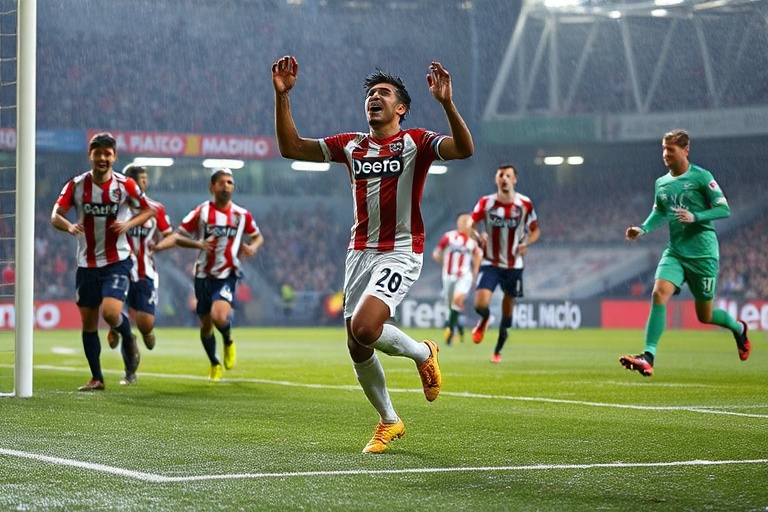
In the 78th minute, Girona broke through. A swift counterattack involving Stuani and García ended with the latter sliding the ball to substitute Portu, who had entered the game just 10 minutes earlier. His low cross found Stuani at the back post, and the Uruguayan striker made no mistake, firing past Stole Dimitrievski to level the scores. The goal sent the Vallecas faithful into a momentary hush before erupting in celebration as Girona’s players celebrated their equalizer.
The final whistle blew shortly after, with the score remaining 1-1. While Rayo would have left points on the table, Girona’s draw was a testament to their resilience and tactical adaptability.
Rayo Vallecano’s Struggles in Front of Goal
Despite their high pressing and territorial dominance, Rayo Vallecano have often struggled to convert their dominance into goals this season. The match against Girona was no exception. While their pressing forced Girona into errors, Rayo’s final product was lacking. Raúl de Tomás, a proven goal scorer in La Liga, missed several clear chances, including the one in the 67th minute.
Their inability to capitalize on these opportunities has become a recurring theme. In their previous five matches, Rayo had created 12 big chances but scored just twice. This trend raises questions about their finishing and composure in the final third. Óscar Trejo’s leadership and experience have been crucial in midfield, but the team’s attacking output remains heavily reliant on individual brilliance rather than collective efficiency.
For Rayo manager Francisco López, the challenge will be to find a solution to this issue. Whether it’s through tactical adjustments or personnel changes, the need for more clinical finishing is evident. The draw against Girona, while respectable, left Rayo in 12th place, seven points adrift of the top four.
Girona’s Resilience and the Stuani Factor
Girona’s performance against Rayo highlighted their growing reputation as a team capable of grinding out results in challenging away fixtures. While they are often overshadowed by the financial might of clubs like Barcelona and Real Madrid, Girona’s start to the season has been nothing short of impressive. Their draw at Vallecas followed a hard-fought victory over Real Betis and a credible stalemate against Atlético Madrid, signaling their ambition to establish themselves as a permanent fixture in Europe.
Cristhian Stuani has been the focal point of Girona’s attack. The Uruguayan striker, now 36 years old, continues to defy expectations with his intelligent movement and clinical finishing. Against Rayo, his equalizing goal was a reminder of his value to the team. Stuani’s ability to link play, hold up the ball, and score crucial goals makes him an invaluable asset for Girona, particularly in matches where they are outplayed.
Their midfield, marshaled by Aleix García, has also been a source of strength. García’s ability to dictate play and break up opposition attacks has provided Girona with stability in transition. His partnership with Valery Fernández and the industrious work of midfield enforcer Toni Villa has allowed Girona to compete with teams far wealthier than themselves.
Looking ahead, Girona’s focus will be on maintaining their consistency. While they may not have the same financial resources as their rivals, their tactical discipline and team ethos have allowed them to punch above their weight. The draw against Rayo was another step in their journey toward establishing themselves as a team capable of competing at the highest level.
What This Match Means for Both Teams
The 1-1 draw between Rayo Vallecano and Girona served as a microcosm of the broader challenges and ambitions facing both clubs. For Rayo, the result was a missed opportunity to climb the table and close the gap on the European spots. Their high pressing and energetic displays have made them a tough team to beat, but their lack of goal-scoring efficiency remains a concern. The need to find a reliable source of goals will be critical if they are to avoid a relegation battle.
For Girona, the draw was a statement of intent. In a league dominated by financial giants, their ability to grind out results against teams like Rayo demonstrates their tactical maturity and resilience. While they may not have the same resources as the top clubs, their performances this season suggest that they are more than capable of competing at this level. The draw at Vallecas was a testament to their growing confidence and ambition.
As the season progresses, both teams will look to build on this match. Rayo will need to address their finishing issues, while Girona will aim to maintain their momentum and push for a top-half finish. For fans of both clubs, the match was a reminder of the unpredictable and tactical nature of La Liga, where even the smallest margins can decide the outcome.
Looking Ahead: Key Fixtures for Both Teams
For Rayo Vallecano, their next challenge comes in the form of a home fixture against Real Sociedad. The Basque side, known for their disciplined defense and counterattacking prowess, will test Rayo’s ability to adapt to a different tactical approach. A strong performance against Sociedad could provide the momentum they need to climb the table.
Girona, meanwhile, face a daunting trip to the Camp Nou to face Barcelona. While the result may seem foregone, Girona’s resilience and tactical discipline have allowed them to defy expectations in the past. A draw at Camp Nou would be a major boost to their campaign and further cement their reputation as a team capable of competing with the best.
As the season unfolds, both Rayo Vallecano and Girona will look to build on their performances against each other. For Rayo, the challenge will be to convert their dominance into points. For Girona, the aim will be to maintain their consistency and push for a top-half finish. Whatever the outcome, one thing is certain: La Liga remains as unpredictable and exciting as ever.
For more analysis on La Liga matches and tactical breakdowns, visit our Sports section. To explore deeper insights into the teams shaping European football, check out our Analysis page.