Robert Kirkman has quietly become one of the most influential figures in comic book history. His work spans multiple decades, genres, and mediums, yet his storytelling philosophy remains rooted in a singular principle: authenticity. Whether through the zombie apocalypse of The Walking Dead or the existential horror of Invincible, Kirkman crafts narratives that feel raw, unpredictable, and deeply human.
This isn’t just about creating compelling stories—it’s about redefining what comic books can achieve as a medium. Kirkman’s influence extends beyond page counts and panel layouts. He reshaped reader expectations, proving that serialized storytelling could thrive in an era dominated by superhero fatigue. His work challenges conventions, embraces ambiguity, and refuses to coddle its audience.
From Humble Beginnings to Industry Dominance
Kirkman’s journey began in the early 2000s, a time when comic book storytelling was often formulaic. After graduating from the University of Kentucky with a degree in English, he worked odd jobs while submitting scripts to publishers. His break came when he co-created Tech Jacket with artist E.J. Su for Image Comics in 2002. Though the series didn’t last long, it caught the attention of industry veterans who recognized Kirkman’s knack for blending humor with high-stakes drama.
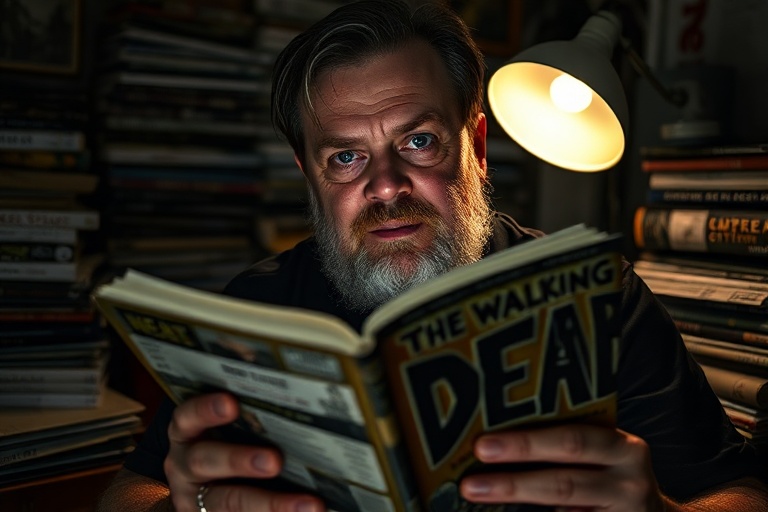
The real turning point arrived in 2003 with The Walking Dead. Initially a six-issue miniseries, the comic’s raw, unflinching approach to survival horror resonated with readers weary of superhero tropes. Kirkman’s decision to kill off major characters early and often defied industry norms. Unlike traditional zombie narratives, his story wasn’t about zombies—it was about people, their flaws, and their desperate attempts to hold onto humanity in impossible circumstances.
By 2010, The Walking Dead was a cultural touchstone, spawning one of the most successful TV adaptations in history. But Kirkman’s legacy isn’t just measured in ratings or sales. It’s measured in how he proved that comic books could be more than escapism—they could be a medium for exploring the human condition.
The Kirkman Method: Storytelling Without Hand-Holding
What sets Kirkman apart is his refusal to simplify storytelling for his audience. His narratives often prioritize realism over resolution, consequence over catharsis. This philosophy is evident in the following key aspects of his work:
- Unpredictable Character Fates: Kirkman kills characters early and often, forcing readers to confront mortality. In The Walking Dead, no one is safe—not even the protagonist.
- Ambiguous Morality: His stories rarely offer clear heroes or villains. Characters make morally gray choices, and the consequences ripple unpredictably.
- Long-Form Serialization: Kirkman excels at pacing. His stories unfold slowly, building tension over years rather than relying on quick resolutions.
- Subverting Expectations: Whether it’s the sudden death of a fan-favorite character or a narrative twist that recontextualizes everything, Kirkman keeps readers guessing.
- Collaborative Independence: Unlike many comic writers, Kirkman often works closely with artists to ensure visual storytelling matches his narrative tone.
This approach isn’t just stylistic—it’s philosophical. Kirkman’s stories reflect a worldview where survival is uncertain, morality is fluid, and happy endings are rare. It’s a refreshing contrast to the often sanitized narratives of mainstream comics.
The Broader Impact on Comics and Pop Culture
Kirkman’s influence extends far beyond his own creations. He helped redefine what it means to be a comic book creator in the 21st century. His success paved the way for other non-superhero stories to find mainstream audiences. Series like Saga and Monstress owe their existence, in part, to Kirkman’s willingness to take risks.
Moreover, his work has demonstrated that comic books can be a viable platform for adaptation without losing their essence. While The Walking Dead TV show became a global phenomenon, the comic retained its darker, more nuanced tone. This dual success proved that comics and TV could coexist as distinct yet complementary art forms.
Kirkman’s impact isn’t limited to comics. His production company, Skybound Entertainment, has expanded into television, film, and video games. This diversification reflects a broader trend in modern media, where creators seek to control their intellectual property across multiple platforms. Kirkman’s model has influenced other writers and artists to think beyond single-medium storytelling.
Legacy and Future: What’s Next for Kirkman?
At 52, Kirkman shows no signs of slowing down. His recent work includes Fire Power, a collaboration with artist Chris Samnee, which blends action, humor, and deep lore. He’s also involved in expanding Skybound’s universe, with new adaptations and original content in development.
What’s particularly intriguing about Kirkman’s future is his willingness to experiment. While The Walking Dead remains his most famous work, he continues to explore new genres and formats. His upcoming projects suggest a shift toward more intimate, character-driven stories—perhaps a return to the kind of grounded narratives that first made him famous.
Regardless of what he does next, Kirkman’s legacy is secure. He didn’t just write comics; he redefined what comics could be. He proved that the medium could handle complex themes, moral ambiguity, and unflinching realism. In an era where many creators chase trends, Kirkman’s work stands out for its authenticity and fearlessness.
For aspiring writers and comic enthusiasts alike, Kirkman’s career offers a masterclass in perseverance, innovation, and staying true to one’s vision. His stories remind us that great art doesn’t always provide answers—sometimes, it just asks the right questions.
As comic book storytelling continues to evolve, Robert Kirkman remains a guiding light—a reminder that the most powerful stories are the ones that make us feel, think, and confront uncomfortable truths.