Geography and Natural Beauty
Saint Lucia rises from the turquoise waters of the Caribbean Sea like an emerald jewel, its mountainous spine cloaked in dense rainforest and dotted with cascading waterfalls. The island’s dramatic topography creates a striking contrast between volcanic peaks, such as the iconic Mount Gimie, and the serene white-sand beaches that fringe its coastline. This duality defines Saint Lucia’s landscape, where lush valleys meet the crashing waves of the Atlantic on the island’s eastern side.
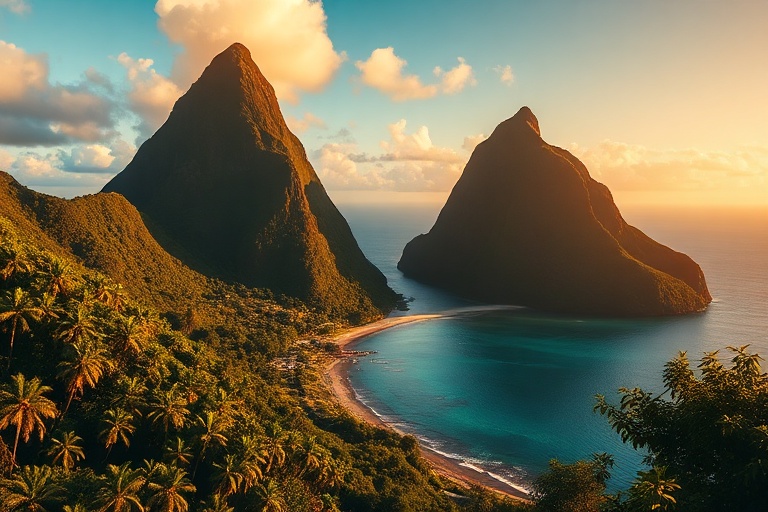
The island’s natural diversity extends beneath the surface as well. The UNESCO-recognized Soufrière Marine Management Area protects vibrant coral reefs teeming with marine life, including sea turtles and tropical fish. The Pitons, two UNESCO World Heritage Sites, dominate the southwestern coast, offering some of the most breathtaking hiking trails in the Caribbean. From the summit of Gros Piton, adventurers are rewarded with panoramic views of the island and neighboring Martinique on clear days.
The Pitons: Symbols of Resilience
The Pitons are more than geological formations—they are cultural anchors. Named after the French word for “peaks,” they have witnessed centuries of history, from indigenous Arawak settlements to colonial battles and modern tourism. Local legends tell of the twin peaks as lovers transformed into stone, a metaphor for eternal connection that resonates deeply in Saint Lucian folklore.
- Gros Piton: The taller of the two, standing at 798 meters, is accessible via a challenging but rewarding 4–5 hour hike.
- Petit Piton: Though shorter at 750 meters, its steep ascent requires technical climbing skills and is less frequently attempted.
- Marine Reserve: The area surrounding the Pitons is protected, preserving biodiversity and offering world-class snorkeling and diving.
Cultural Heritage: A Fusion of Traditions
Saint Lucia’s cultural identity is a rich tapestry woven from African, French, British, and indigenous influences. This fusion is most evident in the island’s music, cuisine, and festivals. The soulful rhythms of kwadril, a Creole folk dance, and the pulsating beats of soca and calypso reflect the island’s African roots, brought over during the transatlantic slave trade.
French colonialism left an indelible mark on the island’s language and architecture. Saint Lucia is one of only two Caribbean nations where French-based Creole (Kwéyòl) is widely spoken alongside English. This linguistic duality is celebrated annually during the Jounen Kwéyòl, or Creole Day, when locals gather to share traditional food, music, and storytelling in their ancestral tongue.
Cuisine: A Feast of Flavors
Saint Lucian cuisine is a celebration of local ingredients and multicultural influences. Dishes like green fig and saltfish (made with green bananas and cured cod) and bouyon (a hearty stew of meat, root vegetables, and dumplings) are staples. The island’s famous cocoa tea, made from locally grown cacao, is a daily ritual for many residents.
The island’s cuisine also reflects its colonial past. French techniques blend with African flavors in dishes like lambi (conch) prepared in a spicy Creole sauce, while British influences appear in the popularity of roti and fried fish. Seafood is abundant, with fresh catches like red snapper and mahi-mahi appearing daily in local markets.
History and Colonial Legacy
Saint Lucia’s strategic location in the Caribbean made it a coveted prize during the colonial era. The island changed hands between the French and British a staggering 14 times before finally being ceded to Britain in 1814. This turbulent history is evident in the island’s place names, architecture, and even its legal system, which retains elements of both French civil law and British common law.
The island was originally inhabited by the Arawak people, who called it Iouanalao (“Land of the Iguanas”). European contact began in 1502 when Christopher Columbus landed on the island during his fourth voyage. The Arawak population was soon decimated by disease and conflict, and African slaves were brought in to work on sugar plantations, shaping the island’s demographic and cultural landscape.
Key Historical Moments
- 1660: The British establish the first permanent settlement, but it is quickly abandoned due to conflict with the French.
- 1834: Slavery is abolished, leading to significant social and economic changes.
- 1967: Saint Lucia gains full internal self-government under British rule.
- 1979: The island achieves full independence, becoming a sovereign nation within the Commonwealth.
- Present Day: Saint Lucia remains a member of the Caribbean Community (CARICOM) and the Organisation of Eastern Caribbean States (OECS).
Tourism and Economic Growth
Tourism is the lifeblood of Saint Lucia’s economy, contributing nearly 65% of GDP. The island attracts visitors with its luxury resorts, eco-lodges, and all-inclusive hotels, many of which are designed to blend seamlessly with the natural environment. High-end destinations like Jade Mountain and Ladera Resort offer breathtaking views of the Pitons, while boutique properties like Anse Chastanet focus on sustainability and marine conservation.
The island’s tourism sector has evolved significantly in recent years. While cruise ships once dominated visitor arrivals, today’s tourists increasingly seek authentic, immersive experiences. This shift has led to a rise in community-based tourism, where travelers engage with local farmers, artisans, and guides to learn about Saint Lucia’s culture and environment.
Challenges and Opportunities
Despite its natural beauty, Saint Lucia faces economic and environmental challenges. Rising sea levels threaten coastal communities, while overreliance on tourism makes the economy vulnerable to global shocks, as seen during the COVID-19 pandemic. The government has responded by diversifying the economy, investing in agriculture, renewable energy, and creative industries like film and music.
Efforts to promote sustainable tourism are gaining momentum. Initiatives like the Saint Lucia Green Tourism Certification encourage hotels and tour operators to adopt eco-friendly practices. Meanwhile, the island’s farmers are reviving traditional crops like cocoa, nutmeg, and turmeric, tapping into the global demand for organic and fair-trade products.
Conclusion
Saint Lucia is a microcosm of the Caribbean’s complexity—a place where natural wonders coexist with deep cultural traditions and modern ambitions. Its lush landscapes and vibrant communities offer more than just a vacation; they provide a glimpse into the resilience and creativity of its people. As the world increasingly seeks sustainable and meaningful travel experiences, Saint Lucia is well-positioned to shine as a model of cultural preservation and environmental stewardship.
From the misty peaks of the Pitons to the sun-drenched shores of Anse La Raye, the island invites visitors to explore its beauty, history, and spirit. Whether hiking through rainforests, savoring a bowl of bouyon, or dancing to the rhythms of soca at a local festival, one thing is clear: Saint Lucia is not just a destination—it’s an experience that lingers long after the journey ends.