Sam Burgess: From Rugby League to Global Recognition
Sam Burgess is a name that resonates across multiple sports, particularly in rugby league and rugby union. Born on November 14, 1988, in Dewsbury, West Yorkshire, England, Burgess grew up in a family deeply embedded in rugby league. His father, Mark Burgess, was a professional rugby league player, and his brothers, Tom and Luke, also pursued careers in the sport. This familial influence set the stage for a career that would see Burgess become one of the most versatile and globally recognized athletes in rugby.
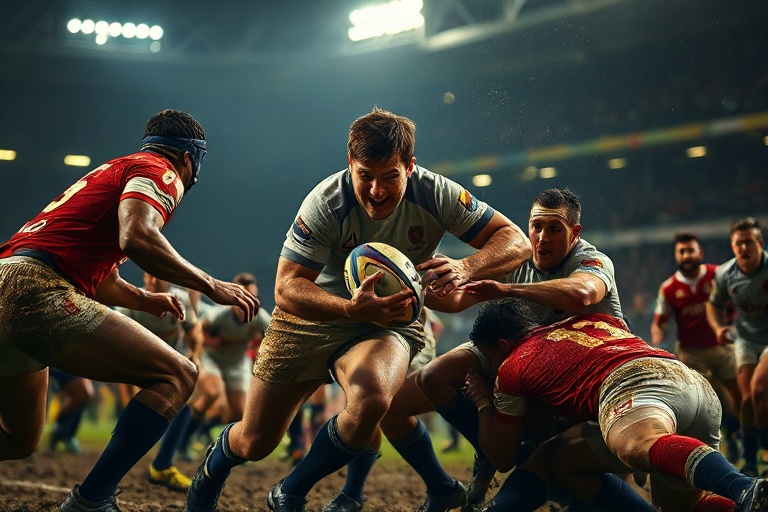
Burgess’s journey to international fame was not linear. He began playing professional rugby league with the Bradford Bulls in 2006 before making a high-profile move to the South Sydney Rabbitohs in Australia’s National Rugby League (NRL) in 2009. His time in Australia was transformative, not only for his career but also for his cultural exposure. The NRL is one of the most physically demanding rugby competitions in the world, and Burgess thrived in its intensity. His performances caught the attention of rugby union scouts, leading to a surprising and controversial switch to rugby union in 2014.
The Rugby League Foundation: Early Career and Rise to Prominence
Burgess’s early career in rugby league was marked by rapid development and high expectations. At just 17, he made his first-grade debut for the Bradford Bulls, becoming one of the youngest players to feature in the Super League. His physicality, work rate, and ability to play in multiple positions—including second row, loose forward, and even hooker—made him a valuable asset. By 2008, he had established himself as a key player for both club and country.
Representing England in international rugby league was a natural progression. Burgess earned his first cap in 2007 and quickly became a regular in the national team. His performances in the 2008 Rugby League World Cup solidified his reputation as a rising star. Burgess’s ability to dominate in both attack and defense, combined with his leadership qualities, made him a standout player. His versatility was particularly evident during the 2013 World Cup, where he played a pivotal role in England’s run to the final.
- Key milestones in Burgess’s rugby league career:
- 2006: Debut for Bradford Bulls at age 17
- 2007: First England cap
- 2009: Move to South Sydney Rabbitohs in the NRL
- 2013: Named man of the match in multiple NRL games
- 2013: Finalist in the Rugby League World Cup with England
The Rugby Union Experiment: A Bold and Controversial Move
In 2014, Burgess shocked the sporting world by announcing his switch to rugby union. The move was driven by a desire to test himself in a new environment and the opportunity to play for the England national team in the 2015 Rugby World Cup, held in England. The transition was not seamless. Rugby union’s different physical demands, tactical nuances, and cultural expectations presented challenges. Burgess initially struggled to adapt, particularly in the set-piece aspects of the game, such as lineouts and scrums.
His debut for Bath Rugby in the English Premiership was met with mixed reactions. While his physicality was undeniable, his technical skills in rugby union lagged behind those of his peers. The 2015 Rugby World Cup became a focal point for Burgess’s rugby union career, but it was also a period of scrutiny. England’s disappointing performance in the tournament, combined with Burgess’s limited impact, led to widespread criticism. Despite this, he remained determined to prove himself in the new code.
Burgess’s rugby union career eventually found its footing. He developed his skills in the set-piece and became a more rounded player. His leadership qualities continued to shine, and he captained Bath Rugby on multiple occasions. While he never reached the heights he had in rugby league, his journey highlighted the challenges and rewards of transitioning between sports at the highest level.
Global Influence and Cultural Impact
Burgess’s career transcends the boundaries of sport. As a British athlete who excelled in both rugby league and rugby union, he has become a symbol of adaptability and perseverance. His story resonates in countries where rugby league and rugby union have distinct followings, such as Australia, England, and New Zealand. In Australia, Burgess is remembered for his impact in the NRL, particularly his role in South Sydney Rabbitohs’ 2014 premiership win. In England, he is seen as a pioneer who bridged the gap between the two codes of rugby.
Beyond his on-field achievements, Burgess has also engaged with fans and media in a way that reflects his down-to-earth personality. His appearances in documentaries and interviews have provided insights into the mental and physical toll of professional sport. Burgess’s willingness to share his struggles, including injuries and the pressure of transitioning codes, has made him a relatable figure to aspiring athletes worldwide.
Culturally, Burgess’s career reflects broader trends in global sports. The increasing mobility of athletes between different codes and leagues has become more common, driven by financial incentives, career opportunities, and the pursuit of new challenges. Burgess’s journey underscores the importance of adaptability in an era where athletes are expected to perform at the highest level across various environments.
Legacy and Future Endeavors
As Burgess’s playing career winds down, his legacy is already secure. He leaves behind a career that spans two major rugby codes, international representation, and a premiership title in the NRL. His story serves as inspiration for athletes considering transitions between sports or those aiming to excel in multiple disciplines. Burgess’s impact is particularly notable in rugby league, where he is remembered as one of the most dominant forwards of his generation.
Looking ahead, Burgess has expressed interest in coaching and mentoring young athletes. His experience in both rugby league and rugby union positions him well to guide the next generation of players. Additionally, his involvement in media and public speaking could further cement his influence beyond the field. Whether he chooses to stay within the sport or explore new ventures, Burgess’s contributions to rugby and global sports culture are undeniable.
For fans of sports and rugby in particular, Sam Burgess’s career is a testament to the power of versatility and determination. His story reminds us that success is not always a straight path, and that challenges can lead to growth. As rugby continues to evolve globally, Burgess’s legacy will serve as a benchmark for what it means to push boundaries and redefine what is possible in sport.