Last updated: October 12, 2023
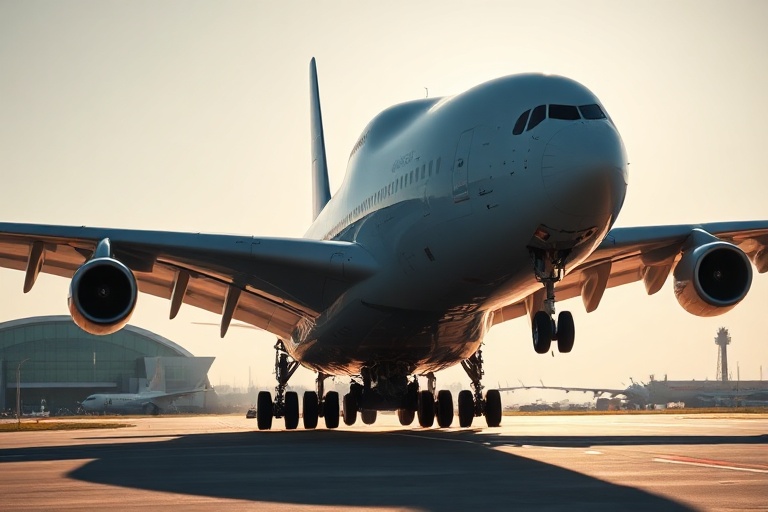
The Airbus A380 stands as a testament to human engineering ambition—a double-deck, wide-body jet that once dominated the skies as the world’s largest passenger aircraft. Launched in the early 2000s, the A380 wasn’t just another airliner; it was a statement. A statement about what aviation could achieve when governments, engineers, and airlines dared to dream bigger. Yet, its journey from revolutionary marvel to operational relic offers a fascinating case study in the economics of scale, the unpredictability of global travel demand, and the relentless march of technological progress.
The Genesis of a Giant: Why the A380 Was Built
By the late 1990s, air travel was growing rapidly, particularly on long-haul routes between major hubs like London, New York, Tokyo, and Dubai. Traditional wide-body jets like the Boeing 747 were nearing capacity limits, and airports faced congestion challenges. Airbus saw an opportunity: a new superjumbo that could carry more passengers per flight, reduce airport traffic, and offer unmatched comfort on the world’s busiest routes.
The A380 project was officially launched in December 2000, with the first aircraft rolling out in January 2005. It featured two full passenger decks stretching the length of the fuselage, four powerful Engine Alliance GP7200 or Rolls-Royce Trent 900 engines, and a wingspan wider than a football field. With seating for up to 853 passengers in a high-density layout—or 525 in a typical three-class configuration—the A380 was designed to make air travel more efficient by moving more people in fewer flights.
Airbus invested over $25 billion in development, betting that airlines would prioritize capacity over flexibility. The gamble was bold. The company envisioned a future where mega-cities like Beijing, Mumbai, and São Paulo would generate enough demand to fill these colossal jets daily. But as with all grand predictions, reality had other plans.
The Operational Reality: Where the A380 Succeeded—and Struggled
The Airbus A380 entered commercial service in 2007 with Singapore Airlines, and for nearly a decade, it was the darling of the aviation elite. Emirates became its most enthusiastic operator, eventually flying more A380s than any other airline. Routes like Dubai to London Heathrow, New York JFK, and Sydney became synonymous with the A380’s presence. Its spacious cabins, quieter ride, and sheer presence made it a draw for passengers and aviation enthusiasts alike.
But beneath the surface, operational challenges began to emerge:
- Airport Compatibility: Not all airports could handle the A380. It required wider taxiways, longer runways, and specialized boarding bridges. Some terminals had to be retrofitted, adding cost and complexity for airports and airlines.
- Economics of Scale: While the A380 could carry more passengers, it also burned more fuel per flight. Rising oil prices in the 2010s made fuel efficiency a top priority, and the A380’s four-engine design—once a selling point—became a liability in an era favoring twin-engine efficiency.
- Route Viability: The A380 excelled on high-demand routes between global hubs. But as point-to-point travel grew with the rise of long-haul, low-cost carriers, many routes didn’t generate enough traffic to justify an A380’s capacity.
- Passenger Preferences: Airlines found that passengers often preferred more frequent flights on smaller aircraft over fewer flights on larger ones, even if it meant less legroom. The A380’s size limited its flexibility; it couldn’t easily be redeployed to secondary routes.
These factors led to a gradual decline in new orders. Airbus had projected selling over 1,200 A380s; in reality, it delivered just 251 before ceasing production in 2021. The final A380 rolled off the assembly line in Toulouse, France, in 2021—a poignant end to an era.
The Broader Implications: What the A380 Taught the Aviation Industry
The A380’s story is more than just about one aircraft—it’s about the evolving priorities of the aviation industry and the limits of hub-and-spoke models. When the A380 was conceived, the dominant model was the hub airport: passengers would fly from smaller cities to major hubs, then connect via massive jets to their final destinations. This model relied on high passenger volumes and efficient connections.
But in the 2010s, two trends undermined this approach:
- The Rise of Long-Haul, Low-Cost Carriers: Airlines like Norwegian Air Shuttle and later French Bee began offering direct flights between secondary cities, bypassing hubs entirely. This reduced demand for connecting traffic at mega-hubs like Dubai or London Heathrow.
- The Twin-Engine Revolution: Advances in engine technology—particularly the Rolls-Royce Trent XWB and GE9X—made twin-engine jets like the Airbus A350 and Boeing 787 incredibly fuel-efficient over long distances. These planes could fly farther, burn less fuel, and operate more flexibly than the A380, all while requiring fewer maintenance hours.
The A380’s failure to adapt to these shifts highlights a critical lesson: in aviation, technological superiority doesn’t always guarantee commercial success. The industry prioritizes efficiency, flexibility, and adaptability above all else. The A380 was a marvel of engineering, but it was built for a world that no longer exists in the same way.
Yet, the A380’s legacy isn’t entirely negative. It pushed the boundaries of what was possible in aircraft design, cabin comfort, and airport infrastructure. Many of its innovations—such as advanced noise reduction, improved cabin pressurization, and spacious interiors—have been incorporated into newer aircraft. The A380 also demonstrated that sheer size alone isn’t enough to guarantee market success, a lesson that continues to shape aircraft development today.
The Future: What’s Next for the A380?
With production halted, the A380’s future now lies in the hands of airlines, lessors, and secondary markets. Emirates remains the largest operator, with over 120 A380s in its fleet, and has committed to keeping them in service through at least 2030. Qantas and Singapore Airlines continue to use the A380 on select premium routes, where its spacious cabins and brand appeal justify its operational costs.
But for most airlines, the A380 is becoming a relic of a bygone era. Many have retired their fleets, and those still flying the superjumbo are doing so on a limited basis. The COVID-19 pandemic accelerated retirements, as airlines sought to streamline fleets and reduce operating costs.
Still, the A380 has found new life in unexpected ways. Some aircraft have been converted for cargo use, while others are being repurposed for luxury experiences, such as private charters and even pop-up hotels. In 2023, Airbus announced a partnership to convert up to 100 A380s into freighters, a move that could extend the aircraft’s service life by a decade or more.
The A380’s story is one of ambition, innovation, and ultimately, adaptation. While it may never fly again in its original role for most airlines, its impact on aviation—and the lessons it offers—will resonate for decades. It serves as a reminder that even the most groundbreaking technologies must evolve to survive in an ever-changing world.
For aviation enthusiasts, the A380 remains a symbol of what happens when humanity pushes the limits of what’s possible. For airlines and engineers, it’s a cautionary tale about the importance of flexibility and foresight. And for passengers, it’s a reminder that sometimes, the most memorable travel experiences come from the aircraft itself—not just the destination.
Explore more about aviation trends and aircraft innovations on Dave’s Locker Aviation section.
Learn about the economics of airline fleets in our Technology & Business Analysis category.