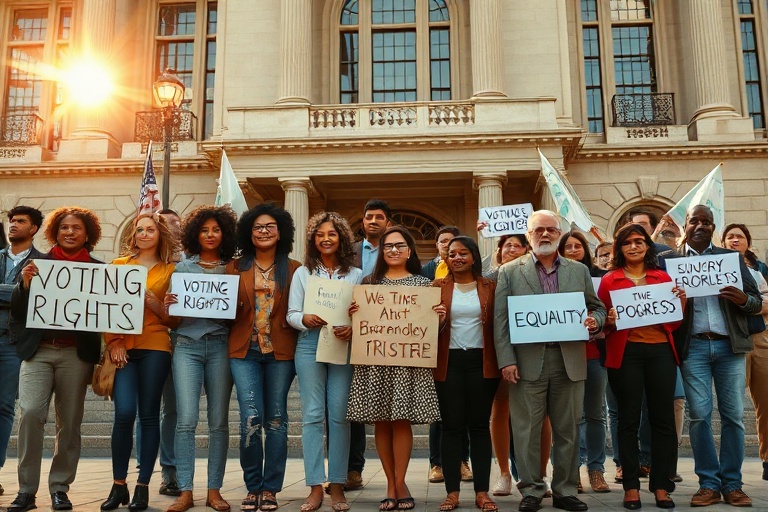
The Democratic Party stands as one of the two major political forces in the United States, shaping national policy for over two centuries. Founded in 1828, it has evolved from a coalition of agrarian interests to a party that now champions civil rights, social welfare, and progressive economic policies. While its ideologies have shifted over time, the party’s core mission—balancing individual freedoms with collective responsibility—remains a defining feature of American governance.
Its dominance in modern politics is undeniable, with Democratic presidents and congressional majorities frequently steering the nation through pivotal moments. Yet, the party’s influence extends beyond legislation; it has become a cultural and ideological battleground, reflecting broader societal divides. Understanding its trajectory requires examining its historical roots, key ideological shifts, and the challenges it faces today in an increasingly polarized political landscape.
A Brief History: From Jefferson to Biden
The Democratic Party traces its origins to Thomas Jefferson’s Democratic-Republican Party, which opposed federalist policies in the early 1800s. By the 1820s, Andrew Jackson’s populist movement rebranded the faction as the Democratic Party, emphasizing states’ rights and opposition to a centralized banking system. This era solidified its identity as a party of the “common man,” a theme that would resurface in later decades.
The Civil War era marked a critical divergence. The party split over slavery, with Northern Democrats largely supporting Union efforts while Southern Democrats defended segregationist policies. The New Deal era, spearheaded by Franklin D. Roosevelt in the 1930s, redefined the party as a champion of federal intervention in economic crises. Social Security, labor rights, and public works programs became staples of its platform, appealing to working-class and minority voters.
Civil rights movements in the mid-20th century forced another reckoning. Under Lyndon B. Johnson, the party passed landmark legislation like the Civil Rights Act and Voting Rights Act, alienating Southern conservatives who migrated to the Republican Party. This realignment cemented the Democrats as the party of racial and social progressivism—a reputation it maintains today, albeit with ongoing internal debates over the pace of reform.
Core Ideologies and Policy Priorities
Modern Democratic ideology is a mosaic of progressive and centrist factions, united by a few foundational principles. Economic policy remains a cornerstone, with calls for higher taxes on corporations and the wealthy to fund social programs. Healthcare expansion, particularly through mechanisms like the Affordable Care Act, has been a recurring priority, as has climate change mitigation through green energy investments.
Social issues also define the party’s agenda. Advocacy for LGBTQ+ rights, reproductive freedoms, and criminal justice reform reflects its alignment with progressive values. However, the party’s base is increasingly diverse, encompassing not just urban progressives but also suburban moderates and rural voters concerned with economic stability. This coalition demands careful navigation, as shifting too far left risks alienating swing voters while appearing too centrist can demobilize the progressive wing.
Foreign policy presents another layer of complexity. Traditionally, Democrats have favored diplomacy and multilateral alliances, though recent administrations have grappled with military interventions and global instability. The party’s stance on trade, immigration, and national security often hinges on the prevailing economic climate and public sentiment, making it a fluid area of policy development.
Key Policy Pillars of the Democratic Party
- Economic Justice: Raising the federal minimum wage, strengthening labor unions, and expanding social safety nets like Social Security and Medicare.
- Healthcare Reform: Expanding access to affordable healthcare, often through public option proposals or Medicare-for-All initiatives.
- Climate Action: Investing in renewable energy, rejoining international climate agreements, and implementing carbon reduction policies.
- Social Equity: Advocating for racial justice, gender equality, LGBTQ+ rights, and criminal justice reform.
- Education and Infrastructure: Proposing free or debt-free college options and modernizing national infrastructure through federal funding.
Factions and Internal Divisions
The Democratic Party is not a monolith. Its internal divisions mirror the broader political spectrum, ranging from progressive firebrands like Bernie Sanders to establishment figures like Joe Biden. These factions clash over strategy, ideology, and electability, creating a dynamic that can either strengthen or weaken the party’s unity.
The progressive wing, energized by movements like Occupy Wall Street and the Bernie Sanders 2016 and 2020 campaigns, pushes for systemic change—Medicare-for-All, the Green New Deal, and wealth taxes. Their grassroots activism has pushed the party leftward on issues like student debt relief and police reform. Meanwhile, moderates and centrists, often representing suburban districts or swing states, prioritize pragmatic solutions that appeal to independents and disaffected Republicans.
This tension was evident in the 2020 primaries, where Biden’s victory over Sanders signaled a preference for electability over ideological purity. Yet, the progressive base’s influence persists, as seen in the party’s embrace of policies like the $1.9 trillion American Rescue Plan and infrastructure bills that incorporated climate and social spending. The challenge lies in balancing these priorities without fracturing the coalition—a task that will define the party’s future.
Challenges and the Path Forward
The Democratic Party faces existential challenges in an era of deep political polarization. The rise of populist movements, both on the left and right, has intensified debates over the party’s direction. Progressives argue for bold reforms to address inequality and systemic racism, while moderates caution against overreach that could alienate key demographics. Meanwhile, Republican opposition, amplified by media echo chambers, has turned governance into a high-stakes battleground.
Electoral dynamics further complicate matters. The party’s reliance on urban and suburban voters contrasts with the Republican Party’s strength in rural areas, creating an electoral map that favors the GOP in key swing states. Demographic shifts, including the growth of minority and young voter blocs, offer opportunities but also require sustained engagement to maintain turnout. The 2022 midterms, where Democrats outperformed expectations but lost ground in some regions, highlighted these vulnerabilities.
Beyond domestic politics, global instability—from wars in Ukraine and Gaza to economic competition with China—demands a coherent Democratic response. The party’s ability to navigate these crises while advancing its domestic agenda will determine its relevance in the decades ahead. Whether through technological innovation, diplomatic engagement, or economic resilience, the Democrats must prove that their vision can deliver tangible results.
Ultimately, the Democratic Party’s future hinges on its ability to reconcile its diverse factions, adapt to changing voter priorities, and articulate a compelling vision for the country. In an era where political identity often supersedes policy, the party’s challenge is not just to win elections but to restore faith in the democratic process itself.
Opportunities for Renewal
Despite its challenges, the Democratic Party has several avenues for renewal and growth:
- Youth Mobilization: Engaging younger voters through issues like student debt, climate change, and social media-driven activism.
- Cross-Generational Appeal: Bridging the gap between progressive ideals and moderate economic policies to attract suburban and independent voters.
- State-Level Strategies: Investing in down-ballot races to build a bench of future leaders and counter Republican gerrymandering.
- Message Discipline: Crafting a coherent narrative that contrasts with Republican opposition while avoiding internal contradictions.
- Global Leadership: Leveraging diplomatic and economic tools to position the U.S. as a leader in global governance and climate action.
For more on the intersection of politics and culture, explore our coverage of Politics and Analysis at Dave’s Locker. These sections provide deeper insights into the forces shaping modern governance and societal trends.