From Royal Oratory to Global Echoes: The Enduring Power of the King’s Speech
The tradition of the monarch’s annual address to the nation is not merely a ceremonial formality—it is a ritual that bridges history, culture, and communication. In the United Kingdom, the King’s Speech has evolved from a private parliamentary address into a televised event watched by millions worldwide. It is a moment when tradition meets modernity, when the weight of history is balanced against the immediacy of live broadcast.
The speech itself is delivered during the State Opening of Parliament, a centuries-old event steeped in pomp and pageantry. Yet its significance extends far beyond the gilded halls of Westminster. For citizens, it offers a rare glimpse into the priorities of the monarchy and the government. For the world, it represents a cultural touchstone—a reminder that even in an age of digital fragmentation, some institutions retain their symbolic power.
The Evolution of a Monarchy’s Voice: From Handwritten Notes to Digital Broadcasts
The King’s Speech has undergone a remarkable transformation since its origins in the medieval era. Originally, monarchs communicated their intentions through proclamations read aloud in public squares or delivered to local officials. These were not personal statements but authoritative decrees, often delivered in Latin or Old English to emphasize their gravitas.
By the 16th century, the speech became more structured, delivered in Parliament as a way to outline legislative plans. King James I, for example, used his opening addresses to assert his divine right while also navigating political tensions. The speeches were still formal, but they began to reflect the personality of the monarch—at least to the extent that a king or queen could express personal conviction within the constraints of royal duty.
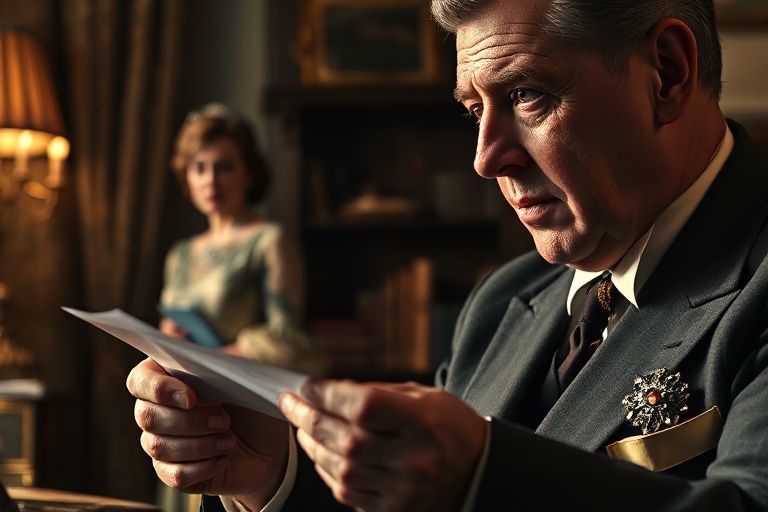
The 20th century marked a turning point. With the rise of radio in the 1920s and television in the 1950s, the speech reached unprecedented audiences. King George VI’s 1939 address, delivered as war loomed, became one of the most listened-to broadcasts of its time. His struggle with a stammer, later dramatized in The King’s Speech, humanized the monarchy and turned the annual address into a narrative of resilience.
Today, the speech is broadcast live on television, streamed online, and dissected by analysts within minutes. Social media amplifies its reach, with hashtags trending and pundits debating every phrase. The monarchy’s voice is no longer confined to the corridors of power—it resonates globally, adapting to the rhythms of the digital age while preserving its ceremonial core.
Cultural Symbolism: What the King’s Speech Represents Across Borders
The King’s Speech is uniquely British, yet its cultural resonance extends far beyond the UK. It embodies stability in an era of rapid change, continuity in a world of disruption. For many Commonwealth nations, the speech is a link to a shared past, a reminder of the enduring ties forged under the Crown.
In former colonies, reactions to the speech vary widely. Some nations view it as a relic of imperialism, a reminder of historical injustices. Others see it as a symbol of tradition and national identity, separate from political controversies. In Canada, Australia, and New Zealand, the speech is broadcast as part of the parliamentary calendar, though its reception is often more subdued than in the UK.
The speech also carries weight in countries with their own monarchies. In Japan, for example, the Emperor’s New Year’s address is closely watched as a barometer of national morale. In Scandinavian nations, royal speeches often focus on social welfare and environmental stewardship. These addresses, while distinct in tone and content, share a common purpose: to reinforce national unity through a shared cultural moment.
For the British diaspora, the King’s Speech serves as a cultural anchor. Expatriates tune in not just to hear policy announcements but to reconnect with a sense of home. In cities like Toronto, Sydney, and Dubai, pubs and community centers host watch parties, turning the event into a transnational gathering.
Yet the speech is not without controversy. Critics argue that it reinforces outdated hierarchies, that a hereditary monarch should not address the nation on matters of governance. Others point to the cost of the event—the pageantry, the security, the global media coverage—as an extravagance in times of economic uncertainty. These debates underscore a broader tension: how to preserve tradition in a rapidly changing world.
The Art of the Address: Crafting a Speech That Resonates
Delivering the King’s Speech is not a task taken lightly. Months of preparation go into drafting, refining, and rehearsing the address. The process begins with consultations between the monarch, government officials, and speechwriters. The goal is to strike a balance—acknowledging the gravity of the moment while ensuring the speech feels personal and accessible.
Historically, the speeches have followed a predictable structure: an acknowledgment of the past year, a nod to current challenges, and a forward-looking vision for the nation. Yet modern monarchs have experimented with tone. King Charles III, for instance, has emphasized environmental themes in his addresses, reflecting his long-standing advocacy for climate action.
The most effective speeches often share key elements:
- Clarity: Avoiding jargon and convoluted phrasing ensures the message is understood by all audiences.
- Empathy: Acknowledging struggles—whether economic, social, or personal—helps the speech feel relatable.
- Hope: Even in difficult times, the speech aims to offer a sense of direction and reassurance.
- Brevity: While the speech may run for 15-20 minutes, every word is carefully chosen to maintain engagement.
Delivery matters just as much as content. The late Queen Elizabeth II was known for her poised, measured tone, which conveyed authority without arrogance. King Charles III, with his reputation as a verbose speaker, has had to adapt, focusing on concise phrasing and deliberate pauses.
In an era where public trust in institutions is fragile, the King’s Speech remains one of the few moments when citizens willingly lend their attention to a figure of unelected power. Its success depends not on spectacle alone, but on the ability to speak to the anxieties and aspirations of the moment.
A Global Stage, a National Moment
The King’s Speech is more than a tradition—it is a cultural artifact, a political signal, and a media spectacle all at once. It reflects the enduring appeal of monarchy in a democratic age, the tension between continuity and change, and the power of words to shape collective identity.
As technology evolves, so too will the ways in which the speech is delivered and received. Virtual reality could one day allow global audiences to “attend” the State Opening of Parliament from their living rooms. Artificial intelligence might generate alternative drafts of the speech, testing its resonance with different demographics. Yet no matter how the medium changes, the core purpose remains: to offer a moment of reflection, unity, and leadership.
For now, the King’s Speech endures—a reminder that in a world of constant noise, some voices still command attention not through amplification, but through authority.