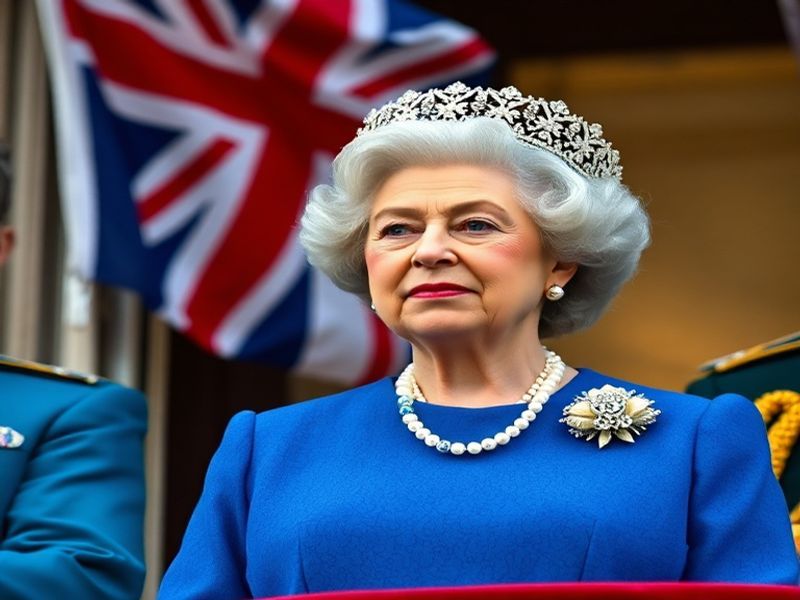
For seven decades, Queen Elizabeth II stood as the world’s most recognizable monarch, her reign spanning the rise of television, the fall of empires, and the birth of the digital age. Born in 1926 as the first child of the Duke and Duchess of York, she ascended to the throne in 1952 at age 25, becoming a fixed point in an era of relentless change. Her life and rule were not merely historical footnotes but threads woven into the fabric of global culture, politics, and tradition.
Elizabeth Alexandra Mary Windsor—later known simply as “the Queen”—was never meant to rule. Yet when her uncle, King Edward VIII, abdicated in 1936 to marry Wallis Simpson, the crown passed to her father, George VI. This unexpected turn set the stage for a life of duty, discipline, and quiet transformation. Over seven decades, she evolved from a wartime princess into a symbol of continuity, resilience, and global unity.
The Crown and the Commonwealth: A Global Monarchy
At the time of her death in 2022, Elizabeth II was not only queen of the United Kingdom but also head of the Commonwealth, a voluntary association of 56 member states spanning six continents. Her role in fostering this modern alliance was pivotal. The Commonwealth, born from the ashes of the British Empire, grew under her leadership into a cooperative network focused on democracy, human rights, and shared cultural heritage.
- 1952: The Commonwealth begins to take shape as former colonies gain independence.
- 1991: After apartheid ends, South Africa rejoins the Commonwealth.
- 2002: The Commonwealth adopts the Durban Declaration on human rights.
- 2018: Barbados announces plans to become a republic, signaling a shift in the monarchy’s role.
Her influence extended beyond politics. Through state visits, Commonwealth Games, and cultural exchanges, she became a living link between generations and nations. In nations like Jamaica, Antigua, and Belize, her presence was both a reminder of colonial history and a symbol of enduring partnership. While debates about colonialism and reparations intensified in her later years, her personal role remained one of diplomacy and goodwill.
Her annual Christmas broadcasts—begun in 1957—became a global tradition. Watched by millions, they offered a message of hope, reflection, and quiet reassurance. In 1997, after the death of Princess Diana, her carefully crafted address demonstrated both the weight of tradition and the capacity for emotional connection.
Style, Symbolism, and Soft Power
Elizabeth II was more than a political figure—she was a cultural icon. Her wardrobe alone became a subject of fascination. Whether in bright coats and hats at garden parties or elegant gowns at state banquets, her clothing was never accidental. The colors were chosen for visibility in crowds, the silhouettes designed to convey authority and approachability. Her iconic hat collection was rumored to be curated with the help of Angela Kelly, her long-time dresser and friend.
Her handbags, too, became part of her public persona. Often seen holding a Launer London bag, she used it as a practical tool—holding gloves, reading glasses, and even handwritten notes during engagements. The bags were never purely decorative; they were extensions of her meticulous preparation.
Her image was carefully managed, yet it also evolved. In the 1960s, she embraced modernity, allowing the BBC to film her family life in the groundbreaking documentary Royal Family (1969). The film, watched by 350 million people, humanized the monarchy but also sparked criticism for exposing private moments. Later, she adapted to social media, launching the Royal Family’s first Twitter account in 2014 and Instagram in 2019.
Her presence in popular culture was unparalleled. From the satirical Spitting Image puppets of the 1980s to Netflix’s The Crown, she became a character in global storytelling. While some portrayals focused on glamour, others probed the burdens of duty. Yet through it all, she remained a figure of stability—a rare constant in an era of rapid change.
A Life of Service and Sacrifice
Elizabeth II’s life was defined by service. During World War II, she trained as a mechanic and truck driver in the Auxiliary Territorial Service, becoming the only female member of the royal family to serve in uniform. This experience shaped her sense of duty and connection to ordinary people.
Her marriage to Prince Philip, Duke of Edinburgh, in 1947 was both a personal partnership and a public commitment. For 73 years, they supported each other through crises, including the 1997 death of Diana, Princess of Wales, and the 2020 COVID-19 pandemic, when she delivered a rare televised address urging unity.
Her role as a mother was less public but deeply felt. She raised four children—Charles, Anne, Andrew, and Edward—under the harsh scrutiny of the modern media. The deaths of Princess Margaret in 2002 and Prince Philip in 2021 tested her resilience, yet she continued her duties until her final days.
The announcement of her death on September 8, 2022, was met with global mourning. Flags flew at half-mast, landmarks were illuminated in purple, and millions left flowers and tributes outside Buckingham Palace and Windsor Castle. In nations from Canada to Australia, from Kenya to New Zealand, people gathered to honor her memory.
Legacy in Transition: The Monarchy After Elizabeth II
The end of her reign marked the beginning of a new chapter. King Charles III, her eldest son, inherited a monarchy facing unprecedented challenges. Public support had waned in some Commonwealth realms, and debates about colonialism, wealth, and relevance grew louder. The accession of a new monarch in an era of social media and republican sentiment tested the institution’s adaptability.
Yet Elizabeth II’s legacy endures in the values she embodied: duty, resilience, and quiet leadership. Her life spanned the reigns of 15 British prime ministers, from Winston Churchill to Liz Truss, and 14 U.S. presidents. She met every one, often forming close professional relationships—especially with leaders like Nelson Mandela and Angela Merkel.
Her funeral, held on September 19, 2022, was a masterclass in pageantry and tradition. Watched by an estimated 4 billion people worldwide, it blended centuries-old rituals with modern media spectacle. The procession from Westminster Hall to Westminster Abbey, the state hearse, and the committal service at St. George’s Chapel were all choreographed to perfection. Yet it was the small moments—the Queen’s favorite hymns, the floral tributes from children—that revealed her humanity.
In an age of disruption, she offered continuity. In a world of division, she stood for unity. Her reign was not without controversy or criticism, but her personal integrity remained unassailable. She never gave a press conference, never published a memoir, and never sought the spotlight for herself. Instead, she let her actions speak—through 2,168 solo engagements in 2019 alone, through millions of miles traveled, and through countless handwritten letters of condolence and congratulation.
Elizabeth II’s story is not just one of royalty, but of resilience. She guided a monarchy through decolonization, technological revolution, and cultural upheaval without ever losing sight of her role. She proved that symbolism matters—that a crown can be a bridge, a tradition can be a comfort, and a life of service can outlast empires.
As the world continues to change, her example remains a touchstone—a reminder that leadership is not measured by power alone, but by presence, perseverance, and purpose.
Learn more about the evolution of European monarchies and their cultural impact in our Culture section.