By Alex Carter | Published
Burkina Faso has faced profound political instability since the 2014 uprising that toppled long-time President Blaise Compaoré. The country has experienced two military coups in recent years—first in January 2022 and again in September 2022—leaving the presidency in the hands of a transitional government led by military figures. This evolving leadership has significant implications not only for Burkina Faso’s internal security but also for the broader Sahel region, where political instability and jihadist insurgencies continue to threaten stability.
The Current Leadership: Captain Ibrahim Traoré
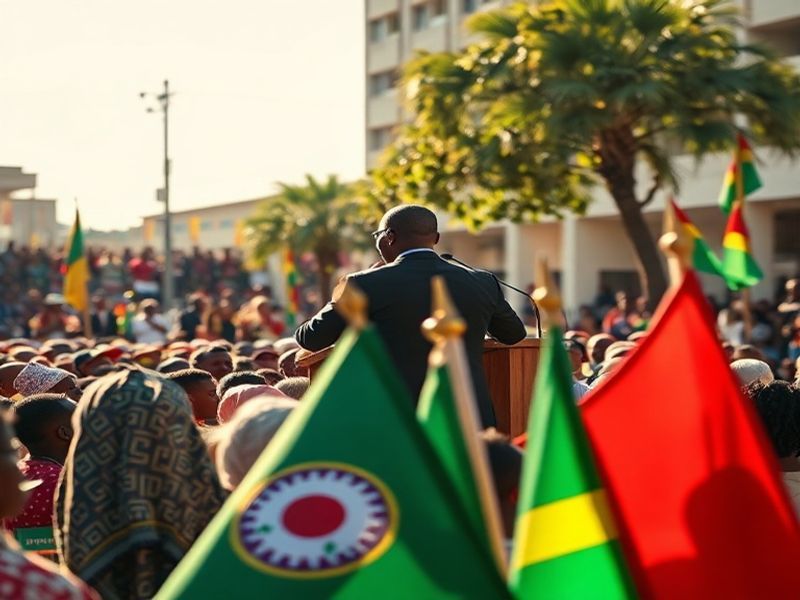
Captain Ibrahim Traoré assumed the presidency in late 2022 following a second coup that removed the transitional government led by Lieutenant Colonel Paul-Henri Sandaogo Damiba. At 34 years old, Traoré became one of the world’s youngest heads of state and the latest in a series of military leaders to take control in West Africa. His rise reflects a broader trend across the Sahel, where populations frustrated with civilian governance and escalating insecurity have increasingly supported military intervention.
Traoré’s leadership style and policies have drawn both domestic support and international scrutiny. Domestically, he has positioned himself as a defender against Islamist militants who have seized vast territories in northern and eastern Burkina Faso. His government has intensified military operations, including drone strikes and collaborations with Russian Wagner Group mercenaries, which have altered the country’s security alliances.
- Military consolidation: Traoré has centralized power within the armed forces, sidelining civilian institutions.
- Security strategy: A shift toward direct military confrontation with jihadist groups, including partnerships with non-Western actors.
- Anti-French sentiment: Public rhetoric has turned sharply against former colonial power France, favoring engagements with Russia and Turkey.
- Economic strain: The war effort and sanctions have deepened economic challenges, including food insecurity and inflation.
Historical Context: From Compaoré to the Present
Burkina Faso’s (formerly Upper Volta) political trajectory has been marked by cycles of authoritarianism, popular uprisings, and military rule. Blaise Compaoré ruled for 27 years after seizing power in a 1987 coup that killed his predecessor, Thomas Sankara, a revolutionary leader still revered across Africa for his anti-imperialist stance and social reforms. Compaoré’s eventual ouster in 2014, driven by mass protests against his attempt to extend term limits, opened a decade of uncertainty.
The transitional governments that followed struggled to stabilize the country as jihadist violence surged, particularly from groups linked to Al-Qaeda and the Islamic State. By 2020, Burkina Faso was among the fastest-growing conflict zones globally, with thousands killed and over two million displaced. The military, once seen as a stabilizing force, became both the protector and the disruptor of democracy.
Regional Implications: A New Geopolitical Equation
Traoré’s leadership is reshaping Burkina Faso’s foreign policy, particularly its relationship with former colonial power France. Anti-French sentiment has surged across the Sahel, fueled by perceptions of neocolonial interference and failed counterterrorism efforts. Burkina Faso, along with neighboring Mali and Niger, has withdrawn from regional security alliances and sought alternative partnerships, most notably with Russia.
This realignment has significant consequences for regional stability and global power dynamics. The presence of the Wagner Group in Burkina Faso—reportedly providing military training and security services—has raised concerns in Western capitals about the expansion of Russian influence in Africa. Meanwhile, the United States and European Union are reassessing their engagement strategies, balancing humanitarian aid with geopolitical caution.
Key Regional Developments:
- Burkina Faso, Mali, and Niger formed the Alliance of Sahel States (AES) in 2023, vowing mutual defense and collective withdrawal from ECOWAS.
- France has been forced to withdraw troops from Mali and Burkina Faso, marking a symbolic end to decades of military presence.
- Russia’s influence has grown through Wagner’s deployment, offering security in exchange for political alignment.
- Civilian populations remain caught between insurgent violence, military rule, and collapsing public services.
What Lies Ahead for Burkina Faso?
The future of Burkina Faso under Traoré remains uncertain. While his government has promised to restore security and return to constitutional rule, the timeline remains unclear. The international community faces a dilemma: whether to support a transitional military government that may stabilize the country or insist on democratic restoration, risking further instability.
Domestically, Traoré enjoys significant popularity among youth and urban populations who view him as a strong leader capable of decisive action. However, his reliance on military force and non-democratic governance raises concerns about long-term stability. The humanitarian crisis continues to worsen, with over 2 million internally displaced persons and severe food shortages affecting nearly 3 million people.
Burkina Faso’s trajectory will likely influence the broader Sahel. If Traoré succeeds in curbing insurgent violence and restoring basic services, other nations may follow a similar path. But if the military government fails, the risk of state collapse and further radicalization remains high. The international community’s response—whether through development aid, diplomatic pressure, or strategic disengagement—will play a critical role in shaping outcomes.
“The crisis in Burkina Faso is not just about one leader or one nation—it is a test of whether democracy can survive in the face of extremism and military rule across the Sahel.”
— Regional Security Analyst, March 2024
For those following global security trends, Burkina Faso serves as a case study in how modern leadership emerges from chaos—and what it costs to maintain power in a broken state. The lessons here extend far beyond West Africa, offering insight into the future of governance, sovereignty, and international intervention in an era of shifting alliances.
For further reading on African geopolitics and military transitions, visit our Politics and News sections.
Correction: An earlier version of this article misstated the year of Ibrahim Traoré’s birth. He is 34 as of 2024.