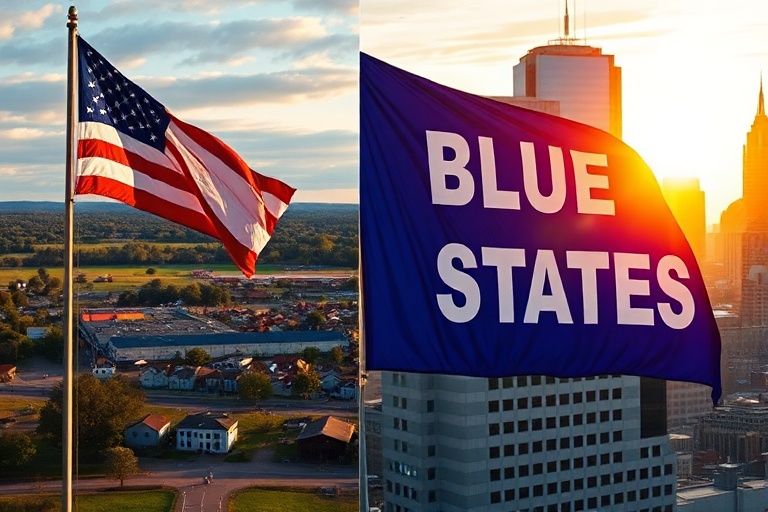
The red state-blue state divide has become one of the most defining features of American politics in the 21st century. This geographic and ideological split shapes elections, policies, and cultural conversations across the country. While the terms “red” and “blue” are now shorthand for political affiliation, their origins and implications run much deeper than simple color-coding.
The divide reflects broader tensions in American society—economic priorities, social values, and visions for the nation’s future. Understanding this split requires examining historical trends, demographic shifts, and the evolving nature of political identity. What began as a visual tool for election night coverage has evolved into a framework for analyzing America’s most persistent divides.
The Origins of the Red State-Blue State Divide
The terms “red state” and “blue state” entered the American lexicon during the 2000 presidential election. Major news networks used color-coding to differentiate between states won by George W. Bush (Republican, red) and Al Gore (Democrat, blue). While the practice predates 2000, this election cemented the association in the public imagination.
However, the divide itself predates the color scheme. Political geographers and historians trace its roots to the Civil War era, when regional loyalties were fiercely divided along economic and cultural lines. The South’s Democratic dominance after Reconstruction gave way to Republican realignment in the mid-20th century, particularly after the Civil Rights Movement realigned party platforms.
The modern divide reflects more than just party preference—it encapsulates differences in urban vs. rural development, education levels, religious affiliation, and exposure to globalization. Coastal cities often lean Democratic, while rural interior regions tend toward Republicanism. These patterns are not absolute but reflect broader trends in political behavior and cultural identity.
What Defines the Divide Today
The red state-blue state distinction is no longer just about voting patterns. It has become a lens through which to view differences in policy preferences, social attitudes, and even lifestyle choices. Below are some key factors that define the divide in contemporary America:
- Economic Priorities: Blue states often prioritize investments in education, infrastructure, and social services, while red states frequently emphasize tax cuts, deregulation, and business-friendly policies.
- Social Issues: Views on abortion, LGBTQ+ rights, and gun control vary significantly between the two blocs, with blue states generally advocating for more progressive policies.
- Urban vs. Rural: Metropolitan areas tend to vote Democratic, while rural and exurban regions lean Republican, reflecting differences in population density and economic structures.
- Religious Influence: Conservative Christian values play a more prominent role in red state politics, whereas blue states tend to be more secular or religiously diverse.
- Cultural Values: Blue states often embrace multiculturalism, environmentalism, and global engagement, while red states may emphasize patriotism, traditionalism, and localism.
These factors are not mutually exclusive, and many voters defy stereotypes. However, the patterns hold enough consistency to shape national debates and policy outcomes. The divide is not just about politics—it reflects fundamentally different visions for what America should look like in the 21st century.
The Broader Implications of the Divide
The red state-blue state divide has consequences beyond election results. It influences economic growth, social cohesion, and even public health outcomes. States with different political leadership often implement vastly different policies on healthcare, climate change, and criminal justice, leading to divergent quality-of-life indicators.
For example, states with Democratic leadership are more likely to expand Medicaid, implement renewable energy standards, and adopt stricter environmental regulations. Republican-led states may resist federal mandates, prioritize fossil fuel industries, and limit social welfare programs. These policy differences create measurable disparities in healthcare access, air quality, and economic mobility.
The divide also affects national unity. Political polarization has eroded trust in institutions, making bipartisan cooperation increasingly difficult. Gerrymandering and voter suppression laws in some states further entrench the divide, while others push for electoral reforms to bridge the gap. The 2020 census and redistricting battles highlighted how deeply these divisions are embedded in the system.
Beyond policy, the divide influences cultural expression. Music, film, and literature often reflect regional perspectives, whether it’s country music’s celebration of rural life or coastal cities’ embrace of progressive art. Even sports rivalries—think Alabama vs. California in college football—mirror the broader political tensions.
Can the Divide Be Bridged?
While the red state-blue state divide appears entrenched, there are signs of change. Demographic shifts, generational turnover, and economic pressures may gradually reshape the political landscape. Younger voters, in particular, are more likely to reject partisan extremes and seek pragmatic solutions.
Some analysts argue that the divide is less about geography and more about cultural identity. As social media algorithms create digital echo chambers, people may feel more connected to ideological peers across state lines than to neighbors with different views. This phenomenon complicates efforts to foster dialogue and understanding.
Yet history shows that American politics is cyclical. Realignment periods—such as the New Deal era or the Reagan Revolution—have repeatedly reshaped the political map. The rise of third-party movements, independent voters, and issue-based coalitions could weaken the red state-blue state dichotomy over time.
For now, the divide remains a defining feature of American life. It challenges the notion of a unified national identity while highlighting the diversity of experiences within the country. Rather than viewing it as an insurmountable obstacle, the divide could be seen as an opportunity to engage in more honest conversations about the future of the nation.
Whether through policy innovation, grassroots movements, or electoral reforms, the potential for change exists. The question is whether Americans are willing to bridge the gap—or if the divide will continue to deepen.
Further Reading
For more on political trends and cultural analysis, explore these related articles on Dave’s Locker Politics and Dave’s Locker Culture.