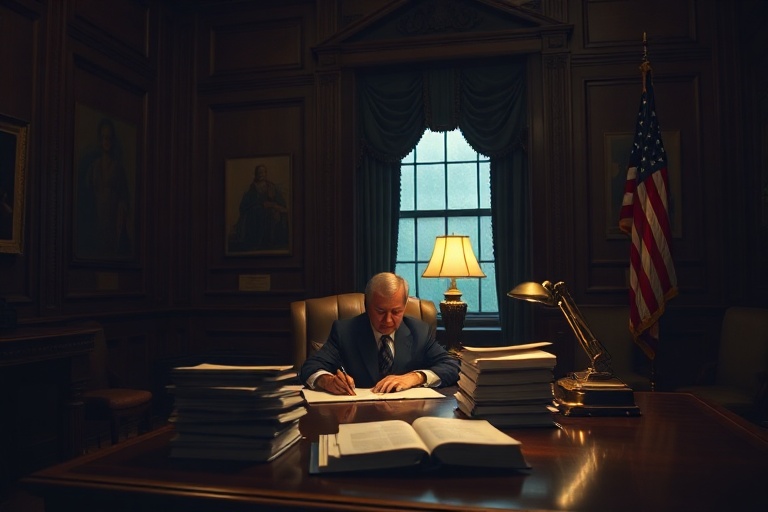
The Special Counsel of the United States is a unique legal position established to investigate and, if necessary, prosecute matters of extraordinary public importance. Unlike standard federal prosecutors, special counsels operate with a degree of independence from the Department of Justice (DOJ), allowing them to pursue cases without direct oversight from the Attorney General or other high-ranking officials. This independence is crucial when the subjects of an investigation are politically sensitive or could pose conflicts of interest for the DOJ.
The role has evolved significantly since its inception, shaped by high-profile cases that have tested the boundaries of its authority and purpose. From Watergate to the Russia investigation, special counsels have become synonymous with accountability at the highest levels of government. Their work often intersects with national security, political strategy, and public trust in institutions.
The Legal Framework Behind Special Counsels
The authority to appoint a special counsel is derived from 28 C.F.R. § 600.1, which implements the statutory provisions of 28 U.S.C. § 515 and 28 U.S.C. § 533. This regulation grants the Attorney General—or, in cases of recusal, the Acting Attorney General—the power to appoint an outside attorney to investigate and prosecute specific matters. The regulation outlines strict guidelines to ensure impartiality, including prohibitions on ex parte communications and requirements for transparency in reporting.
Historically, special counsels were rare. The first modern iteration was Archibald Cox, appointed by Attorney General Elliot Richardson in 1973 to investigate the Watergate scandal. Cox’s dismissal by President Nixon—an event known as the “Saturday Night Massacre”—highlighted the tensions inherent in the role and underscored the need for structural safeguards. Subsequent reforms, including the Ethics in Government Act of 1978, formalized the process, though the law’s sunset provisions led to its expiration in 1999.
Today, special counsels are appointed under internal DOJ regulations rather than congressional statute. This shift has raised questions about accountability, particularly when investigations span multiple presidential administrations. Critics argue that the lack of congressional oversight weakens democratic checks, while supporters contend that independence is essential to prevent political interference.
Key Cases That Shaped the Special Counsel’s Role
The impact of special counsels can be measured through their most consequential cases. Below are four investigations that defined the role’s evolution and public perception:
- Watergate (1973-1974): Archibald Cox’s investigation into the Nixon administration’s cover-up of the Watergate break-in led to the president’s resignation. The case established the precedent for independent investigations into executive branch misconduct.
- Whitewater (1994-2000): Kenneth Starr’s expansive probe into Bill Clinton’s business dealings and personal conduct resulted in the president’s impeachment. The investigation’s scope and Starr’s aggressive tactics sparked debates about prosecutorial overreach.
- Iraq WMD (2004-2005): Special Counsel Patrick Fitzgerald investigated the leak of CIA operative Valerie Plame’s identity, which was tied to criticism of the Bush administration’s pre-war intelligence. The case culminated in the conviction of Scooter Libby, Vice President Dick Cheney’s chief of staff.
- Russia Investigation (2017-2019): Robert Mueller’s inquiry into Russian interference in the 2016 election and potential collusion with the Trump campaign produced a 448-page report detailing extensive contacts between Trump associates and Russian operatives. Though it did not establish conspiracy, the report highlighted vulnerabilities in the U.S. electoral system.
These cases illustrate the dual-edged nature of special counsels: they can uncover critical truths but also become politicized, with their findings weaponized by opposing factions. The Russia investigation, in particular, showcased how the mere appointment of a special counsel could dominate political discourse for years, regardless of the ultimate findings.
The Broader Implications for Democracy and Governance
The existence of special counsels reflects a tension between the need for accountability and the risks of unchecked prosecutorial power. On one hand, they serve as a safeguard against corruption within the executive branch, ensuring that even the president is not above the law. On the other, their independence can create a parallel legal system that operates outside traditional democratic oversight.
One of the most pressing concerns is the potential for special counsels to be used as political tools. The appointment of John Durham in 2019 to investigate the origins of the Russia probe raised eyebrows when it became clear that his inquiry was aligned with Donald Trump’s narrative of a “deep state” conspiracy. Similarly, the appointment of Jack Smith to oversee two high-profile cases involving Trump—one related to classified documents and the other to election interference—has drawn criticism from Trump’s allies, who argue that the investigations are politically motivated.
Another challenge is the lack of clear termination criteria. Unlike standard prosecutions, which conclude with indictments, acquittals, or declinations, special counsel investigations can drag on for years, leaving subjects in a state of legal limbo. This was evident in the Russia investigation, which lasted nearly two years and resulted in no charges against Trump himself, despite numerous indictments of his associates.
The financial cost of special counsels is also significant. The Russia investigation alone cost taxpayers over $32 million, with additional expenses incurred for related prosecutions. While defenders argue that these costs are justified by the public interest, critics question whether the resources could be better allocated to other law enforcement priorities.
What’s Next for Special Counsels?
The future of the special counsel role will likely be shaped by ongoing debates about its necessity, scope, and accountability. Some legal scholars advocate for reforming the system to include congressional oversight or term limits for investigations. Others propose abolishing the position entirely, arguing that the DOJ should have the institutional capacity to handle complex cases without external appointments.
Regardless of the path forward, the special counsel remains a powerful and controversial tool in the American legal and political landscape. Its effectiveness depends not only on the integrity of the individuals appointed but also on the willingness of the public and the media to accept findings that challenge their preconceptions. In an era of deep political divisions, the role of the special counsel may become even more contentious, testing the resilience of the rule of law in the face of partisan pressures.
For further reading on related legal and political topics, explore our Politics and Analysis sections, where we delve into the intersection of law, power, and public trust.