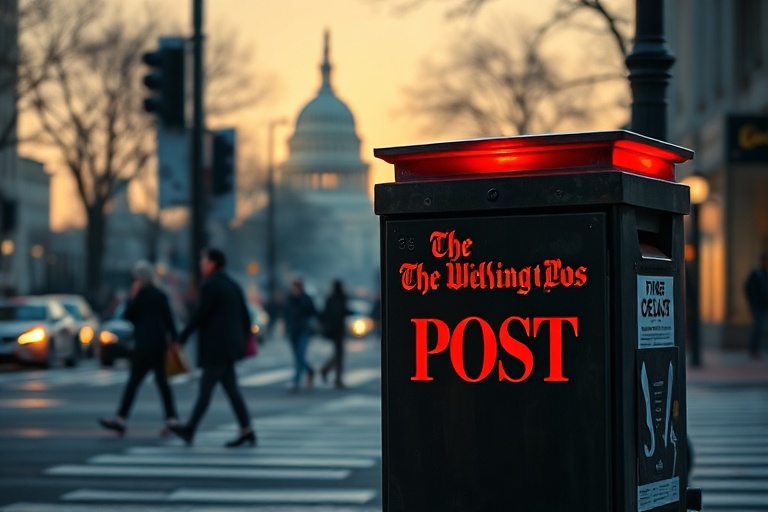
The Washington Post: History, Influence, and Digital Evolution
The Washington Post stands as one of the most recognizable names in American journalism. Since its founding in 1877, the newspaper has evolved from a local DC publication to a global media powerhouse. Its coverage of political scandals, wars, and social movements has shaped public discourse for over a century. Yet, its journey hasn’t been without controversy or transformation.
A Brief History: From Humble Beginnings to National Prominence
The Post was established by Stilson Hutchins in 1877 as a four-page newspaper serving Washington, D.C. Initially a Democratic-leaning publication, it struggled financially in its early years. That changed in 1889 when Frank Hatton, a former Postmaster General, and Beriah Wilkins, a former congressman, purchased the paper. Under their leadership, it expanded its reach and influence.
The turning point came in 1933 when Eugene Meyer, a financier and public servant, acquired the Post at a bankruptcy sale. Meyer’s vision and financial backing transformed the paper into a serious journalistic institution. His son-in-law, Philip L. Graham, took over in 1946 and expanded the Post’s operations, launching the Style section in 1946 and acquiring the magazine Newsweek in 1961.
The Post’s reputation soared during the Watergate scandal in the 1970s. Reporters Bob Woodward and Carl Bernstein uncovered the Nixon administration’s involvement in the break-in at the Democratic National Committee headquarters. Their investigative work, supported by a relentless editorial team, led to the president’s resignation in 1974. This era cemented the Post’s legacy as a watchdog of democracy.
The Modern Era: Digital Transformation and Challenges
Like many print publications, The Washington Post faced existential challenges with the rise of digital media. By the early 2000s, declining circulation and ad revenue threatened its survival. The Graham family sold the paper to Amazon founder Jeff Bezos in 2013 for $250 million, a move that signaled a new chapter. Bezos, known for his tech acumen, invested heavily in digital innovation.
Under Bezos’ ownership, the Post embraced a digital-first strategy. It launched a metered paywall in 2013, allowing readers limited free access before requiring a subscription. This model proved successful, with digital subscriptions surpassing one million by 2016. The Post also expanded its multimedia offerings, including podcasts, newsletters, and video content.
Yet, the transition wasn’t seamless. Critics argued that the Post’s paywall alienated casual readers, while others questioned whether Bezos’ ownership compromised its editorial independence. Despite these concerns, the Post’s digital growth has been undeniable. In 2023, it reported over 3 million digital-only subscribers, making it one of the most successful subscription-based news organizations in the world.
Key Innovations Under Bezos’ Leadership
- Digital Subscription Model: Introduced a metered paywall to drive revenue while maintaining accessibility.
- Investment in Technology: Built a proprietary content management system and expanded its engineering team.
- Global Expansion: Launched international editions and expanded coverage of global affairs.
- Data-Driven Journalism: Emphasized analytics to understand reader behavior and tailor content.
- Collaborative Investigations: Partnered with other news organizations on major investigations, such as the Panama Papers.
The Post’s Role in Today’s Media Landscape
The Washington Post operates in an increasingly fragmented media environment. Social media platforms have democratized news distribution, but they’ve also fueled misinformation and polarization. The Post has responded by doubling down on fact-checking and transparency. In 2020, it launched a “Truth” section dedicated to debunking false claims, particularly those related to the COVID-19 pandemic and the 2020 U.S. election.
Its coverage of the 2020 election and the January 6 Capitol riot demonstrated its continued relevance. The Post’s real-time reporting and analysis provided crucial context during a period of national upheaval. However, the paper has also faced criticism for perceived bias, particularly from conservative commentators who argue it leans left.
Despite these challenges, the Post remains a vital source of information. Its commitment to investigative journalism, exemplified by projects like the “Fatal Force” database tracking police shootings, underscores its role as a public service. The Post’s influence extends beyond its readership, shaping policy debates and holding institutions accountable.
The Broader Implications: What the Post’s Journey Teaches Us
The Washington Post’s evolution reflects broader trends in media. The decline of print and the rise of digital platforms have forced traditional news organizations to adapt or perish. The Post’s success in transitioning to a digital-first model offers lessons for other publications. Yet, its journey also highlights the tensions between profitability and journalistic integrity.
Ownership matters, too. Jeff Bezos’ investment in the Post raised questions about the influence of billionaire owners on editorial independence. While Bezos has largely avoided direct interference, his presence underscores the financial pressures facing independent journalism. The Post’s ability to balance innovation with its core mission is a testament to its resilience.
Looking ahead, the Post faces new challenges, including competition from digital-native outlets like News and the proliferation of AI-generated content. Yet, its century-and-a-half legacy provides a strong foundation. The Post’s future will depend on its ability to maintain trust, adapt to technological change, and uphold its commitment to truth.
The Washington Post is more than just a newspaper; it’s a symbol of journalism’s enduring importance. In an era of misinformation and media fragmentation, institutions like the Post serve as beacons of accountability. Its story is a reminder that journalism, at its best, is a public good—and one worth fighting for.
Conclusion
The Washington Post’s journey from a local newspaper to a global media leader is a testament to its adaptability and commitment to journalism. Its role in exposing Watergate, navigating the digital revolution, and holding power to account underscores its importance in American democracy. As the media landscape continues to evolve, the Post’s ability to innovate while staying true to its mission will determine its place in the future of journalism.
For readers, the Post remains an essential source of information and analysis. For aspiring journalists, it serves as a model of investigative rigor and editorial excellence. And for democracy, it stands as a bulwark against misinformation and corruption. The Washington Post isn’t just a newspaper—it’s a cornerstone of a free and informed society.