Traffic Congestion: Why Cities Worldwide Are Gridlocked
Why Cities Worldwide Are Choking on Their Own Traffic
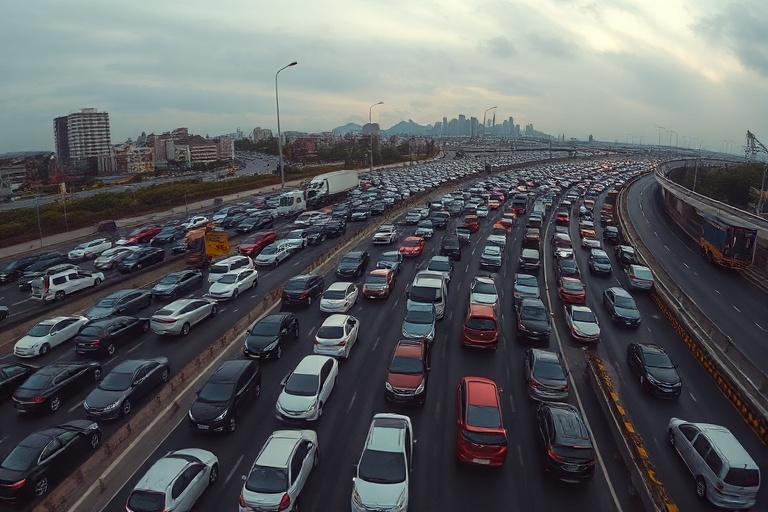
The morning commute in São Paulo lasts four hours for some drivers. In Jakarta, motorists spend an average of 50 days per year stuck in traffic. Meanwhile, Los Angeles has become synonymous with endless freeway crawls. Traffic congestion is no longer an occasional inconvenience—it’s a chronic condition afflicting metropolitan areas across continents. The problem transcends borders, cultures, and economic statuses, revealing deeper issues about urban planning, public policy, and human behavior.
Unlike localized bottlenecks that resolve themselves over time, today’s gridlock reflects systemic failures. Cities expanded without adequate consideration for future population growth or alternative transportation. The result? Streets designed for 20th-century traffic volumes now struggle to handle 21st-century demand. Rising car ownership in developing nations compounds the strain, while legacy infrastructure in older cities crumbles under sustained pressure.
The Economic Toll: Billions Lost in Idle Engines
The financial impact of traffic congestion is staggering. According to the TomTom Traffic Index, the world’s most congested cities collectively lose billions annually in wasted fuel, lost productivity, and increased transportation costs. In the United States alone, the Texas A&M Transportation Institute estimates that congestion cost the economy $120 billion in 2022. That figure includes 3.1 billion gallons of wasted fuel and 8.7 billion hours of delay—enough time for every resident of New York City to watch The Godfather 14 times over.
Developing economies feel the pinch even more acutely. In Nairobi, Kenya, traffic snarls cost the city nearly 2% of its GDP each year. Jakarta’s congestion drains an estimated $7 billion annually from Indonesia’s economy. These losses aren’t merely economic abstractions; they translate into higher prices for goods, delayed emergency services, and diminished quality of life for millions. The burden falls disproportionately on low-income workers who often lack alternatives to congested routes.
Cultural Shifts: From Car Pride to Congestion Despair
Car culture once symbolized freedom and progress. In the mid-20th century, owning a vehicle represented upward mobility, especially in post-war America and Europe. Advertising campaigns glorified the open road, while urban planners prioritized highways over public transit. Yet today, that legacy haunts cities that built their futures on the assumption of endless road capacity.
In Tokyo, once a poster child for efficient urban mobility, congestion has crept back despite its legendary train system. Tokyo’s population density—16,000 people per square mile—makes car ownership impractical for most. Yet even there, rush-hour bottlenecks persist, proving that no city is immune. Meanwhile, in wealthier cities like Zurich and Vienna, a cultural rejection of car dependency has taken root. These cities invest heavily in cycling infrastructure, pedestrian zones, and high-frequency transit, treating congestion not as an inevitability but as a solvable challenge.
Contrast this with Houston or Atlanta, where sprawling suburbs and weak public transit options leave residents with little choice but to drive. The cultural divide is stark: some societies see cars as tools, while others treat them as status symbols. In Dubai, where traffic cameras issue fines for lane hogging, the government has even launched awareness campaigns to curb aggressive driving—highlighting how cultural attitudes toward driving shape congestion outcomes.
Technological Fixes: Can Innovation Outpace Sprawl?
Technology offers promising avenues to mitigate congestion, but results remain uneven. Ride-sharing apps like Uber and Lyft initially promised to reduce cars on the road by consolidating trips. Instead, studies show they often increase vehicle miles traveled by clogging streets with empty cars circling for fares. Bike-sharing programs, such as those in Paris and Hangzhou, have fared better, reducing short car trips while improving public health.
Autonomous vehicles loom as the next frontier. Proponents argue that self-driving cars could communicate with each other to eliminate stop-and-go traffic. Early tests in cities like Pittsburgh and Singapore suggest potential, but widespread adoption remains decades away. Meanwhile, congestion pricing—a system where drivers pay fees to enter high-traffic zones—has shown measurable success in London, Stockholm, and Singapore. These programs reduce traffic by up to 30% while generating revenue for transit upgrades.
Yet technology alone cannot solve a problem rooted in urban design. No amount of smart traffic lights can compensate for a city built around cars. Successful congestion relief requires a holistic approach: expanding transit options, implementing congestion pricing, redesigning streets for pedestrians and cyclists, and—perhaps most importantly—discouraging car dependency through policy and culture.
Lessons from the World’s Most Congested Cities
Some cities have turned the tide on congestion through radical rethinking. Bogotá, Colombia, pioneered the “Ciclovía” program in 1974, closing major streets to cars every Sunday and holiday. Today, over 12% of Bogotá’s population uses the network daily, reducing car trips and improving air quality. The program has since inspired similar initiatives in Los Angeles, Paris, and Milan.
Seoul’s demolition of an elevated highway in 2003 to restore the Cheonggyecheon Stream stands as a landmark case. The project not only reduced traffic in the surrounding area but also revitalized the city center, boosting property values and tourism. It’s a reminder that congestion solutions often lie beyond the road itself.
Not all interventions succeed. London’s congestion charge reduced traffic by 15% when introduced in 2003, but critics argue the gains were temporary as drivers adapted by shifting routes or times. Meanwhile, Beijing’s lottery system for license plates—designed to limit car ownership—has merely inflated the resale value of existing permits.
These case studies reveal a critical truth: there’s no one-size-fits-all solution. Effective congestion management depends on local context—geography, culture, economic priorities, and political will. What works in a dense European capital may fail in a sprawling American metropolis. The key is adaptability.
A Way Forward: Policies That Prioritize People Over Cars
Cities must confront a fundamental question: do they exist to move cars, or to move people? The latter requires a paradigm shift. Transit-oriented development—building dense housing near train stations and bus hubs—can reduce car dependency by design. Cities like Copenhagen and Freiburg have demonstrated that mixed-use zoning and pedestrian-first streetscapes cut congestion while enhancing livability.
Public transit remains the most scalable solution. Yet in many cities, transit systems are underfunded, unreliable, or inaccessible to marginalized communities. A robust bus rapid transit (BRT) system, like those in Bogotá and Lagos, can provide metro-like service at a fraction of the cost. Similarly, expanding last-mile solutions—such as e-bike rentals and on-demand shuttles—can bridge gaps in coverage.
Equity must be central to any congestion strategy. Congestion pricing, for example, risks penalizing low-income drivers who have no alternatives. Solutions like London’s scrappage scheme, which offers discounts on public transit passes for low-income residents, can mitigate these effects. Meanwhile, investing in underserved neighborhoods’ transit access can reduce both congestion and inequality.
Ultimately, the fight against congestion is a fight for better cities. It’s about reclaiming streets as public spaces, not just thoroughfares. It’s about recognizing that every car trip avoided is a step toward cleaner air, safer streets, and more vibrant communities. The solutions exist. The question is whether cities have the courage to implement them.
As cities grow and climate pressures mount, the cost of inaction will only rise. The gridlock we see today is not an accident—it’s the result of choices made decades ago. But the future remains unwritten. With bold policies, cultural shifts, and technological innovation, cities can break free from the chokehold of congestion.