traffic
Understanding the Chaos: What Really Drives Urban Traffic
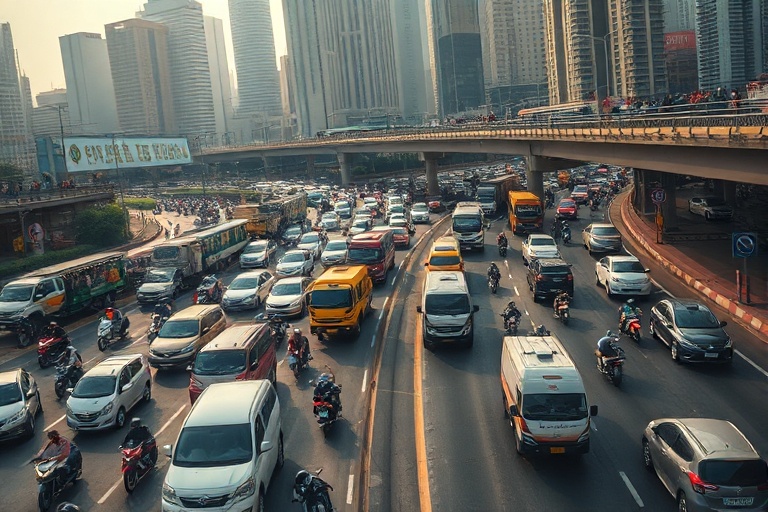
Traffic remains one of the most persistent frustrations of modern urban life. Whether it’s the crawl of rush hour on a highway or the stop-and-go rhythm of city gridlock, congestion shapes daily routines in ways that are both predictable and infuriating. The causes are rarely a single factor but rather a tangled web of infrastructure, behavior, and policy decisions that have accumulated over decades.
At its core, traffic is a mathematical problem. Roads have finite capacity, and when demand exceeds supply—whether from commuters, delivery trucks, or ride-share vehicles—the system slows to a crawl. Cities like Los Angeles and New York have long grappled with this reality, where sprawling suburbs and dense downtown cores create a perfect storm of congestion. Even smaller cities are seeing population growth outpace road expansion, turning once-quiet streets into parking lots during peak times.
One overlooked driver of traffic is poor traffic signal timing. Studies show that outdated or poorly synchronized signals can increase delays by up to 20%. Cities like Pittsburgh have reduced congestion by 40% in pilot programs simply by optimizing signal phases to match real-time traffic flows. Yet many municipalities still rely on static timers installed decades ago, a relic of an era when traffic patterns were far simpler.
The rise of smart city technology offers a glimpse into how traffic might be reimagined. AI-powered systems can adjust signal timings dynamically, reroute emergency vehicles, and even nudge drivers toward less congested routes via apps. Singapore’s electronic road pricing system, for example, charges drivers for entering high-traffic zones during peak hours, cutting congestion by nearly 15%. These innovations prove that traffic isn’t just an inevitable part of urban life—it’s a solvable challenge with the right tools.
The Human Factor: How Driver Behavior Fuels the Gridlock
While infrastructure plays a role, human behavior is often the wild card in traffic patterns. Aggressive lane changes, rubbernecking at accidents, and distracted driving all contribute to the ripple effects that turn minor slowdowns into hour-long ordeals. The phenomenon of phantom traffic jams—where a single driver braking hard triggers a chain reaction of stops—highlights how quickly chaos can emerge from minor missteps.
Distraction is a growing menace. A 2023 study found that drivers using phones at red lights were 30% slower to accelerate once the light turned green, creating unnecessary backups. Even hands-free devices don’t eliminate the cognitive load; research shows that mentally processing a phone conversation can reduce reaction times by up to 50%. These delays compound when multiplied across thousands of vehicles on a single road.
Another behavioral quirk is the “rubbernecking effect”. Accidents or stalled vehicles on the opposite side of a highway can slow traffic by up to 50% as drivers slow down to look. Some states, like Virginia, have installed rumble strips and higher barriers between lanes to mitigate this, but the habit remains deeply ingrained. Public awareness campaigns have had mixed success—while most drivers admit rubbernecking is dangerous, few resist the urge when confronted with a crash scene.
Parking also deserves scrutiny. The hunt for a spot in busy areas can account for up to 30% of urban traffic, as drivers circle blocks or double-park in frustration. Cities like San Francisco have experimented with dynamic pricing to discourage circling, while others are turning to underground lots or multi-story garages to reduce street congestion. Yet the convenience of on-street parking continues to lure drivers, even when the costs—time, fuel, and stress—far outweigh the benefits.
The Environmental Toll: How Traffic Pollutes More Than Just the Air
Beyond the frustration of a stalled commute, traffic exacts a steep environmental price. Vehicles idling in congestion emit disproportionate amounts of CO2, particulate matter, and nitrogen oxides. In the U.S. alone, stop-and-go traffic accounts for 5% to 10% of total transportation emissions. Cities like London have introduced Ultra Low Emission Zones (ULEZ), where older, polluting cars pay a daily fee to enter, reducing harmful emissions by nearly 45% in some areas.
The health impacts are equally alarming. A study by the American Lung Association found that living near high-traffic roads increases the risk of asthma, heart disease, and premature death. Children and the elderly are particularly vulnerable, as their respiratory systems are more sensitive to pollutants. Traffic noise pollution adds another layer of harm, contributing to stress, sleep deprivation, and even cognitive decline in long-term residents.
Yet the environmental cost isn’t limited to emissions. The sheer volume of traffic also strains urban infrastructure. Pavement degradation from heavy vehicles leads to potholes, which in turn slow traffic further as drivers swerve to avoid them. Parking lots and roads consume vast amounts of land, often displacing green spaces that could absorb runoff and reduce the urban heat island effect. Some cities are fighting back by reimagining streets as “complete streets”—designs that prioritize pedestrians, cyclists, and public transit over cars.
Paris has led the way with its “15-minute city” model, where residents can reach essential services by foot or bike within a quarter-hour. By reducing car dependency, the city has cut traffic-related emissions by 30% since 2020. These projects prove that traffic isn’t just a congestion problem—it’s a design problem, one that demands a shift in how we prioritize movement within our cities.
Alternative Futures: Can We Really Escape the Traffic Trap?
The future of traffic may lie less in building bigger roads and more in rethinking how we move. Here are four strategies cities are testing to break the cycle:
- Congestion Pricing: Charging drivers for entering high-traffic zones, as in London or Stockholm, has shown measurable reductions in both congestion and emissions. Critics argue it unfairly targets low-income drivers, but proponents point to equity programs that subsidize transit passes for affected residents.
- Micro-Mobility Solutions: E-scooters and bike-share programs offer last-mile connectivity, reducing the need for short car trips. Cities like Portland have integrated these services into public transit apps, making multimodal trips seamless.
- Autonomous Vehicles: Self-driving cars promise to reduce human error and improve traffic flow through platooning (vehicles driving closely together to reduce wind resistance). However, early tests show mixed results, with some systems struggling in dense urban environments.
- Remote Work and Flexible Scheduling: The pandemic proved that many jobs don’t require daily commutes. Cities like Austin have seen traffic drop by 12% since 2020, thanks to hybrid work policies that spread out rush hours.
Yet none of these solutions work in isolation. A truly traffic-free future requires a combination of policy, technology, and cultural shifts. For instance, Amsterdam’s success in reducing car traffic by 20% since 2019 stems from a multi-pronged approach: expanding cycling lanes, subsidizing public transit, and incentivizing employers to stagger work hours.
The challenge is political as much as it is practical. Car-centric planning has deep roots in zoning laws, tax structures, and cultural identity. Changing that demands not just innovation but also public buy-in. Surveys show that while most drivers dislike congestion, they’re reluctant to give up the convenience of their vehicles. The key may lie in making alternatives so seamless that the choice to avoid traffic becomes the easier one.
For now, traffic remains an inescapable part of urban life—but it doesn’t have to define it. By addressing the root causes—infrastructure, behavior, and policy—cities can reclaim their streets from the gridlock and build environments where movement is a joy, not a chore.
Conclusion: Rethinking Traffic for a Smoother Future
Traffic is more than just a daily inconvenience; it’s a symptom of deeper urban challenges. From outdated infrastructure to entrenched driving habits, the problem is complex but not insurmountable. The cities that are making progress aren’t just adding more lanes—they’re redesigning streets, rethinking zoning, and reimagining mobility as a shared resource rather than a private privilege.
For drivers, the message is clear: traffic isn’t inevitable. Small changes—like adjusting commute times, using public transit, or even just avoiding peak hours—can collectively make a difference. For policymakers, the task is to invest in solutions that prioritize people over cars, whether through congestion pricing, better transit, or safer bike lanes.
Ultimately, traffic is a mirror reflecting our cities’ priorities. If we want less of it, we’ll need to build environments where getting from point A to point B doesn’t feel like a battle. The tools exist. The question is whether we have the will to use them.