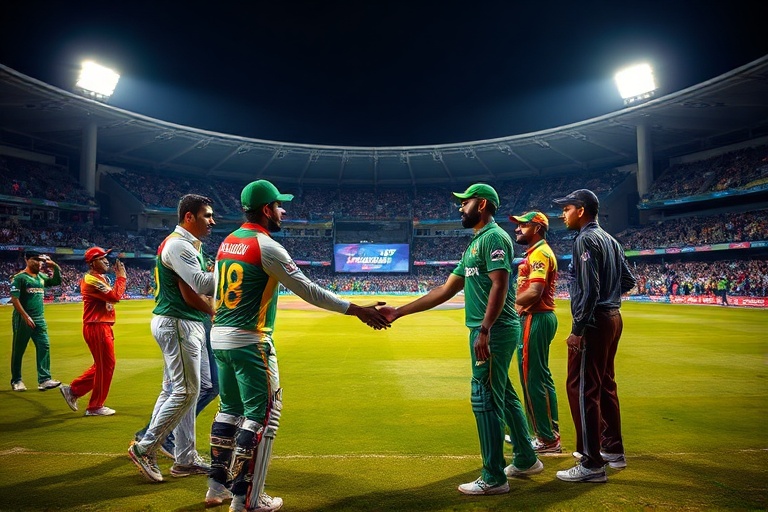
Bangladesh vs Pakistan: Beyond Cricket, A Rivalry of History and Hope
Bangladesh vs Pakistan: A Rivalry Beyond Cricket
The cricket field has long been a battleground where Bangladesh and Pakistan have clashed, not just with bat and ball, but with decades of history, national pride, and shifting global dynamics. These encounters extend beyond the 22 yards of the pitch, reflecting broader cultural exchanges, economic ties, and geopolitical narratives between South Asia’s two most populous nations.
While cricket matches between the two teams often steal headlines, the relationship between Bangladesh and Pakistan is far more complex. It’s a story woven with threads of post-colonial identity, migration, trade, and shared yet distinct cultural traditions. Understanding this rivalry—both on and off the field—requires a look at history, diplomacy, and the evolving role of these nations in the global arena.
A Historical Backdrop: From Division to Diplomacy
Bangladesh emerged as an independent nation in 1971 following a brutal war of liberation against Pakistan. The conflict, marked by widespread atrocities and mass displacement, left deep scars that shaped bilateral relations for decades. For years, Pakistan did not formally recognize Bangladesh, and diplomatic ties remained strained, with Pakistan viewing Bangladesh’s independence as a fracture in the idea of a united Muslim South Asia.
Relations began to thaw gradually in the 1990s. In 1992, Pakistan finally recognized Bangladesh, and over time, both countries worked to rebuild trust. Trade agreements, cultural exchanges, and people-to-people contacts slowly mended fences. Yet, the emotional weight of history still lingers in public memory, particularly among older generations who witnessed the war firsthand.
Today, both nations are key players in South Asia, each carving its own path. Bangladesh has transformed into one of the world’s fastest-growing economies, with a thriving garment industry and rising global influence. Pakistan, despite economic challenges, remains a strategic player in regional security and connectivity projects like the China-Pakistan Economic Corridor (CPEC).
Cricket as a Mirror: Competition and Camaraderie
On the cricket field, the rivalry is intense but respectful. Matches between Bangladesh and Pakistan are often unpredictable, with the underdog narrative playing a significant role. Bangladesh, once considered cricket’s minnows, has evolved into a competitive force, especially in limited-overs formats.
Notable encounters include Pakistan’s dramatic last-over wins and Bangladesh’s historic series victories, such as their first-ever Test series win in 2015. These games are not just about points—they symbolize Bangladesh’s growing confidence and Pakistan’s resilience under pressure. Fans on both sides treat these matches with passion, filling stadiums and social media with fervor.
Off the field, players from both teams often share camaraderie, reflecting the broader cultural warmth between the two nations. Many Bangladeshis trace their roots to undivided Bengal and Punjab, creating a shared cultural heritage that transcends political borders.
Cultural and Economic Ties: Strengths and Strains
The relationship between Bangladesh and Pakistan is not defined solely by history or cricket. It is also shaped by trade, migration, and soft power. Bangladesh is one of Pakistan’s largest trading partners in South Asia, with bilateral trade exceeding $1 billion annually. Key exports from Bangladesh include pharmaceuticals, textiles, and agricultural products, while Pakistan exports machinery, chemicals, and food items.
Cultural exchanges flourish through music, literature, and cinema. Bangladeshi films and dramas are popular in Pakistan, and Pakistani music, especially Sufi and qawwali traditions, resonates deeply in Bangladesh. Literary figures like Kazi Nazrul Islam and Faiz Ahmed Faiz are celebrated in both countries, symbolizing a shared poetic sensibility.
Yet, challenges remain. Visa restrictions and bureaucratic hurdles still impede free movement. The issue of stranded Pakistanis of Bihari origin—Urdu-speaking Muslims who migrated to Pakistan after 1971 but remain stateless—continues to be a humanitarian concern. Pakistan has not granted them full citizenship, despite repeated pleas from Bangladesh and international observers.
Meanwhile, Bangladesh’s growing global profile, especially in climate diplomacy and women’s empowerment, contrasts with Pakistan’s struggles with terrorism, climate disasters, and political instability. These differences shape how each nation is perceived internationally and influence their bilateral interactions.
A Global Perspective: Where Do They Stand?
From a global standpoint, Bangladesh and Pakistan represent two distinct models of Muslim-majority nations navigating modernity. Bangladesh has prioritized economic growth and social development, reducing poverty and improving health and education metrics. Its secular constitution and emphasis on inclusive governance have earned praise from international bodies.
Pakistan, on the other hand, faces internal divisions and external pressures. Its strategic location makes it a critical player in regional geopolitics, but internal instability and economic volatility often overshadow its potential. Both nations, however, are vital to South Asia’s stability and connectivity.
As climate change threatens the region, Bangladesh and Pakistan are on the frontlines. Frequent floods, cyclones, and rising sea levels pose existential threats. Bangladesh’s innovative adaptation strategies, such as floating schools and climate-resilient agriculture, offer lessons for Pakistan, which also grapples with similar environmental challenges.
In sports diplomacy, both countries have hosted international events, including the ICC World Cup and Asia Cup. These platforms have allowed them to showcase their progress and soft power, even as cricket rivalries continue to capture public imagination.
Looking Ahead: Can the Rivalry Evolve into Partnership?
The future of Bangladesh-Pakistan relations hinges on mutual trust and shared goals. While historical grievances cannot be erased, economic interdependence and cultural affinity provide a foundation for cooperation. Joint ventures in education, energy, and infrastructure could strengthen ties.
For Bangladesh, deeper engagement with Pakistan could open new markets and enhance regional connectivity. For Pakistan, closer ties with Bangladesh may help counterbalance its diplomatic isolation in South Asia, especially with India.
Both nations must also address humanitarian concerns, such as the plight of the stateless Biharis, to build a more humane and inclusive relationship. Reconciliation, though slow, is possible—especially when led by civil society, artists, and young leaders who see beyond the past.
In the end, whether on the cricket field or in the halls of diplomacy, Bangladesh and Pakistan have the opportunity to redefine their rivalry as a partnership. The world is watching, and the stakes are high—not just for South Asia, but for global stability and progress.
For more insights into regional sports and cultural dynamics, visit our Sports and Culture sections.
Conclusion
The Bangladesh-Pakistan relationship is a tapestry of resilience, ambition, and unfulfilled potential. From the cricket pitch to the corridors of power, the narrative is shifting from confrontation to collaboration. While history remains a shadow, the future is being written by leaders, artists, and citizens who choose dialogue over division. In a region marked by tension, this evolving partnership offers a glimmer of hope—not just for these two nations, but for all of South Asia.