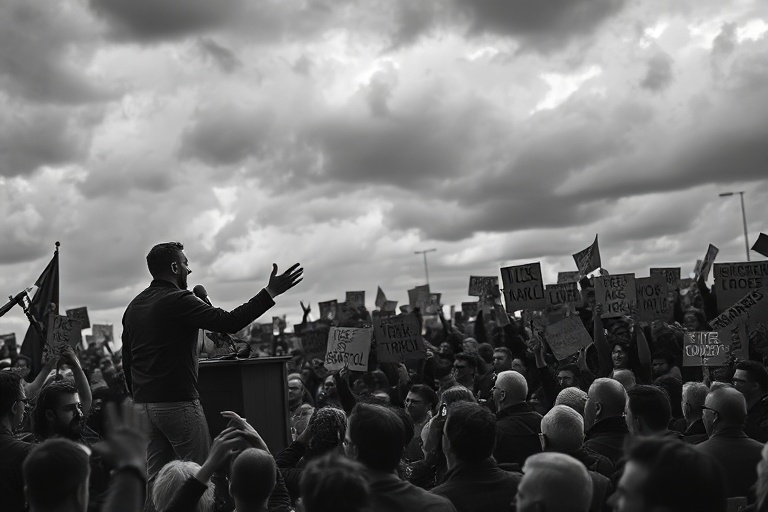
Populism has reshaped political landscapes across continents, challenging traditional party systems and redefining democratic discourse. Far from being a monolithic movement, populism manifests differently depending on context—sometimes as a progressive force, other times as a reactionary one. Its appeal lies in its simplicity: a direct connection between a virtuous people and a corrupt elite. Yet this binary framing often obscures complex realities, fueling both admiration and criticism.
At its core, populism thrives on discontent. Economic inequality, cultural displacement, and institutional distrust create fertile ground for leaders who position themselves as the voice of the “real people” against an out-of-touch establishment. This dynamic isn’t confined to any single ideology; it spans from left-wing movements demanding wealth redistribution to right-wing factions rallying against immigration and globalization. Understanding populism requires examining its psychological, economic, and cultural drivers rather than dismissing it as mere demagoguery.
The Roots of Populism: Economic Anxiety and Cultural Backlash
Economic factors play a pivotal role in populism’s rise. Globalization and automation have hollowed out industries in many Western nations, leaving workers in manufacturing and rural communities feeling abandoned by mainstream parties. The 2008 financial crisis exacerbated these tensions, eroding trust in financial institutions and political elites. In the United States, this manifested in movements like the Tea Party and later, the 2016 election of Donald Trump, both of which framed economic struggles as the result of elite betrayal.
Cultural anxieties often intertwine with economic grievances. Rapid demographic shifts, particularly in urban centers, have fueled fears of cultural erosion among certain groups. This was evident in the Brexit campaign, where proponents argued that EU membership threatened British sovereignty and identity. Similarly, right-wing populist parties in Europe, such as France’s National Rally or Germany’s Alternative for Germany (AfD), capitalize on concerns about immigration and national identity. These movements don’t just reject economic policies; they reject the cultural changes they associate with globalization.
Case Studies: Populism in Action
- United States: The Tea Party emerged in 2009 as a fiscally conservative, anti-establishment movement, laying the groundwork for Trump’s 2016 campaign. Both positioned themselves against a political class they claimed was serving global elites rather than ordinary Americans.
- Latin America: Populism in this region has often taken a leftist turn, with leaders like Hugo Chávez in Venezuela and Evo Morales in Bolivia promising to redistribute wealth and challenge neoliberal policies. Their rhetoric framed the poor as the moral backbone of society against corrupt oligarchs.
- Europe: Parties like Italy’s Five Star Movement and Hungary’s Fidesz blend anti-establishment rhetoric with Euroscepticism, arguing that Brussels bureaucrats and domestic elites prioritize global interests over national ones.
The Populist Playbook: Rhetoric and Tactics
Populist leaders employ a distinct rhetorical style, one that simplifies complex issues into moral battles between “us” and “them.” This often involves scapegoating—blaming immigrants, elites, or cultural minorities for societal problems. The language is emotive, prioritizing visceral appeals over policy details. For example, Trump’s 2016 campaign slogan, “America First,” encapsulated a broader populist narrative: prioritizing national interests over global cooperation.
Social media has amplified populist messaging, allowing leaders to bypass traditional media gatekeepers and communicate directly with their base. This digital strategy fosters an echo chamber where populist narratives are reinforced, making it difficult for counterarguments to gain traction. Research has shown that populist content spreads faster on platforms like Twitter and Facebook, partly because it taps into shared grievances and emotions.
Another hallmark of populism is its relationship with democratic norms. While populists often position themselves as defenders of democracy against corrupt elites, their rule can undermine democratic institutions. Leaders like Recep Tayyip Erdoğan in Turkey and Viktor Orbán in Hungary have used populist rhetoric to justify centralizing power, eroding judicial independence, and suppressing dissent. This paradox—populists claiming to save democracy while weakening its checks and balances—highlights the movement’s inherent tensions.
Populism’s Impact: Polarization and the Erosion of Trust
One of populism’s most damaging effects is the deepening of societal polarization. By framing politics as a moral struggle between good and evil, populists discourage compromise and fuel hostility toward opponents. This was starkly visible during the Trump administration, where political divisions reached historic levels. Similarly, in Brazil, Jair Bolsonaro’s presidency saw a surge in political violence, with supporters and opponents clashing over ideological differences.
Trust in institutions is another casualty of populism. When leaders consistently portray elites—whether political, media, or academic—as corrupt or untrustworthy, they erode public confidence in these institutions. A 2022 Edelman Trust Barometer report found that trust in government, media, and NGOs declined in many countries with rising populist movements. This erosion isn’t just a side effect; it’s often a deliberate strategy to consolidate power.
Yet populism isn’t solely destructive. In some cases, it has forced mainstream parties to address issues they previously ignored, such as rural decline or income inequality. For example, the success of left-wing populist parties like Spain’s Podemos has pushed Spain’s Socialist Party to adopt more progressive economic policies. Similarly, the rise of the Five Star Movement in Italy has accelerated debates on environmental sustainability and digital rights.
Can Populism Be Tamed?
Addressing the root causes of populism requires tackling economic inequality and cultural alienation. Policies that invest in education, infrastructure, and regional development can help bridge divides between urban and rural communities. For instance, Germany’s approach to integrating former East and West Germany after reunification offers lessons in regional economic revitalization.
Media literacy also plays a critical role. By teaching critical thinking and digital literacy, societies can reduce the spread of populist misinformation. Finland, which has faced populist pressures from the Finns Party, has implemented comprehensive media literacy programs in schools, proving that proactive education can mitigate populist influence.
Finally, political leaders must avoid the trap of mimicking populist rhetoric. Instead of engaging in divisive framing, they should focus on inclusive solutions that address the concerns of all citizens, not just their base. This approach requires humility and a willingness to engage with uncomfortable truths—qualities that are often absent in populist narratives.
Lessons from History
Populism is not a new phenomenon. In the late 19th century, the U.S. Populist Party emerged to challenge the political establishment on issues like monetary policy and corporate power. While it ultimately faded, its influence persisted in progressive movements. Similarly, the Weimar Republic in Germany saw the rise of populist movements that exploited economic despair, contributing to the conditions that enabled the Nazi Party’s ascent. History reminds us that populism’s appeal waxes and wanes, but its underlying grievances—economic insecurity and cultural anxiety—persist.
As we navigate the complexities of the 21st century, populism remains a potent force. Its ability to channel frustration into political action makes it both a challenge and an opportunity for democracies. The key lies in addressing its root causes without succumbing to its divisive tactics. Whether through economic reform, media literacy, or inclusive governance, societies must find ways to bridge divides rather than deepen them.
For those interested in exploring the intersection of populism and media, our entertainment section offers insights into how populist narratives permeate culture. Meanwhile, our politics category delves deeper into the structural factors fueling populist movements.