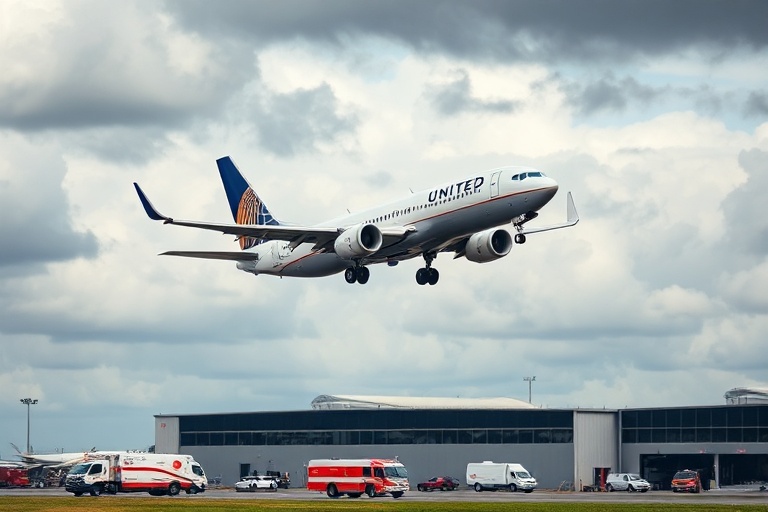
United Flight 579 Diverts: What We Know So Far
On a routine Tuesday afternoon, United Airlines Flight 579 found itself at the center of an unexpected aviation incident. The Boeing 737-800, operating from Denver to San Francisco with 143 passengers and six crew members, diverted to Salt Lake City International Airport after encountering severe turbulence approximately 200 miles northwest of Denver. Authorities and aviation experts have since begun piecing together the sequence of events, while passengers share harrowing accounts of the ordeal.
The Timeline of the Incident
According to preliminary reports from the Federal Aviation Administration (FAA), Flight 579 encountered severe clear-air turbulence at 3:42 PM local time. Clear-air turbulence, which occurs without visual cues like clouds, poses significant challenges for pilots and air traffic control. The aircraft’s rapid descent of nearly 2,000 feet in under a minute left several passengers and crew members injured, with seven individuals requiring medical attention upon landing.
The pilots made the decision to divert to Salt Lake City, where emergency services were already on standby. Landing occurred at 4:18 PM, just 36 minutes after the turbulence was encountered. The swift response from airport authorities and medical teams minimized further complications, but the incident has raised broader questions about aviation safety protocols.
Passenger and Crew Experiences
Survivors of the turbulence described the experience as terrifying. One passenger, Sarah Chen, recounted how she was abruptly thrown from her seat despite wearing a seatbelt. “It felt like the plane dropped out of the sky,” she said. “I saw overhead bins swinging open, and people screaming.” Another passenger, Mark Reynolds, noted that the cabin crew acted quickly, securing loose items and assisting injured passengers.
The flight attendants, though shaken, demonstrated professionalism under pressure. United Airlines has since issued a statement praising their efforts and confirming that all crew members followed emergency procedures. Investigators are reviewing footage from the aircraft’s black boxes to determine the exact cause of the turbulence and whether any warnings were missed.
Broader Implications for Aviation Safety
This incident is not an isolated case. Clear-air turbulence has been a growing concern for the aviation industry, particularly as climate change alters atmospheric conditions. A study published in Nature Climate Change in 2023 found that severe turbulence incidents have increased by 55% over the past three decades, with projections suggesting further rises in the coming years.
Aviation experts emphasize the need for improved detection technology. Currently, pilots rely on weather radar and pilot reports to avoid turbulence, but these methods have limitations. New innovations, such as LIDAR-based turbulence detection systems, are being tested but have yet to be widely adopted. In the meantime, airlines are urged to reinforce safety briefings and ensure passengers keep their seatbelts fastened throughout the flight, regardless of altitude.
Key Takeaways from the United Flight 579 Incident
- Clear-air turbulence remains unpredictable: Unlike turbulence associated with storms, clear-air turbulence occurs without visual warnings, making it difficult to avoid.
- Passenger compliance with seatbelt rules is critical: Many injuries during turbulence result from passengers not wearing seatbelts or having unsecured carry-on items.
- Improved detection technology is urgently needed: Current methods, such as pilot reports and weather radar, are insufficient for detecting clear-air turbulence in real time.
- Airlines must prioritize crew training: Flight attendants play a crucial role in ensuring passenger safety during unexpected events, and their training must reflect this responsibility.
What’s Next for United Airlines and the FAA?
United Airlines has launched an internal review of the incident, focusing on flight operations, crew training, and passenger safety measures. The FAA, meanwhile, is expected to issue new guidelines for airlines operating in regions prone to clear-air turbulence. These may include mandatory seatbelt sign usage during peak turbulence periods and enhanced reporting systems for pilots.
Passengers, too, can take steps to minimize risks. Airlines like United have begun emphasizing the importance of keeping seatbelts fastened at all times, even when the seatbelt sign is off. Carrying fewer carry-on items and storing them securely can also reduce the risk of injury during unexpected turbulence.
For now, the aviation community watches closely as investigators work to uncover the full details of Flight 579’s diversion. While rare, this incident serves as a stark reminder of the unpredictable nature of air travel and the ongoing need for vigilance in aviation safety.
“Aviation safety is a shared responsibility. From pilots to passengers, everyone must remain alert and prepared for the unexpected.” — Aviation Safety Expert, Dr. Emily Carter
As the investigation continues, passengers are encouraged to stay informed about turbulence risks and follow airline guidelines. While the skies remain one of the safest modes of transportation, incidents like this underscore the importance of constant improvement in safety protocols.
For more on aviation safety and travel updates, visit our Travel and News sections.