wolfsburg
Volkswagen’s Wolfsburg: The Unseen Heart of German Automotive Power
Few cities carry the weight of industrial legacy as profoundly as Wolfsburg, Germany. Home to Volkswagen AG, Wolfsburg isn’t just another European municipality—it’s the operational soul of one of the world’s largest automakers. Founded in 1938 as “Stadt des KdF-Wagens bei Fallersleben” (City of the Strength Through Joy Car near Fallersleben), Wolfsburg was purpose-built to produce the iconic Volkswagen Beetle. Today, it stands as a 21st-century model of industrial urbanism: a planned city where cars, culture, and community intersect under the shadow of a global brand.
The city’s identity remains inseparable from Volkswagen, a company that has shaped not only Germany’s postwar economy but also the global mobility landscape. While Wolfsburg may lack the tourist glamour of Munich or Berlin, its influence reverberates from assembly lines in Chattanooga to boardrooms in Shanghai. It’s a place where engineering precision meets social engineering—a testament to how industry can shape a society.
The Volkswagen Effect: More Than Just Cars
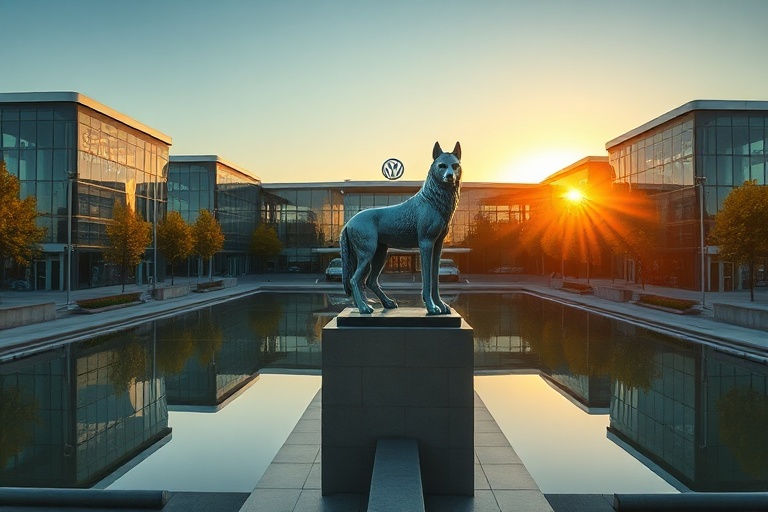
Volkswagen AG employs over 70,000 people in Wolfsburg alone, making it the largest single-site employer in Europe. The company’s presence extends beyond manufacturing; it funds schools, hospitals, and cultural institutions. The automotive giant doesn’t just build vehicles—it sustains a city. The Volkswagen plant, covering nearly 6.5 million square feet, operates 24 hours a day, producing models like the Golf, Tiguan, and ID.4 electric vehicles. This industrial heartbeat defines Wolfsburg’s rhythm: shift changes echo through quiet neighborhoods, and factory tours draw engineers and enthusiasts from around the globe.
Yet Wolfsburg’s relationship with Volkswagen is complex. The company’s 2015 “Dieselgate” scandal exposed emissions fraud and eroded trust, forcing Wolfsburg to confront ethical questions about industrial growth. In response, Volkswagen launched ambitious sustainability initiatives, including a pledge to become carbon-neutral by 2050. The city, too, has invested in green energy and public transit, transforming its image from a monolithic auto town to a forward-looking innovation hub.
A City Built by Design: Architecture and Urban Identity
Wolfsburg was one of the first planned cities of the 20th century, designed by architect Peter Koller under Nazi-era labor programs. Its layout reflects the utilitarian ideals of the time: wide boulevards for efficient traffic flow, standardized housing for workers, and centralized public spaces. The city’s grid-like structure stands in contrast to the medieval charm of nearby Hanover or the Baroque elegance of Brunswick. It’s functional. It’s modern. And it’s unapologetically industrial.
Despite its utilitarian origins, Wolfsburg has cultivated a surprisingly vibrant cultural scene. The Autostadt (Auto City), an automotive theme park and customer center, draws over two million visitors annually. Designed by international architects, it features futuristic pavilions, a glass-walled customer delivery center, and even a transparent factory tour where visitors can watch cars being assembled in real time. The Autostadt isn’t just a marketing tool—it’s a cultural landmark that redefines the relationship between industry and public experience.
Cultural institutions like the Kunstmuseum Wolfsburg (Art Museum Wolfsburg) challenge the city’s industrial reputation. Opened in 1994, the museum hosts contemporary exhibitions ranging from Warhol to Chinese avant-garde artists. It’s a deliberate counterpoint: a space where creativity flourishes amid the hum of assembly lines. Similarly, the Phæno Science Center, designed by Zaha Hadid, turns science into spectacle with interactive exhibits on physics, biology, and space travel. Wolfsburg proves that even a city built for cars can nurture the imagination.
Wolfsburg in a Global Context: From Local Powerhouse to International Player
Wolfsburg’s influence extends far beyond the borders of Lower Saxony. As Volkswagen expands into electric and autonomous vehicles, Wolfsburg has become a key node in a global production network. The city hosts research centers for battery technology, digital mobility, and AI-driven manufacturing. Partnerships with universities in Germany, China, and the United States ensure a steady flow of talent and innovation.
Yet Wolfsburg’s global role is not without challenges. The rise of electric vehicles threatens traditional combustion-engine jobs. Trade tensions and supply chain disruptions have forced the city to diversify its economy. Local leaders have responded by attracting tech startups, expanding healthcare services, and promoting Wolfsburg as a destination for remote workers. The city even launched an international residency program to attract digital nomads—proof that even the most industrial of cities must adapt or risk obsolescence.
Culturally, Wolfsburg reflects broader trends in European urbanism. Like Wolfsburg, cities such as Wolfsburg’s Swedish counterpart Trollhättan (home to Volvo) or Detroit (once the heart of American auto manufacturing) have grappled with industrial decline and reinvention. Wolfsburg offers a case study in resilience: a city that refused to be defined solely by its past. It’s a place where the hum of robots and the echo of museum footsteps coexist in uneasy harmony—a living laboratory of industrial civilization in the 21st century.
What Makes Wolfsburg Unique: Five Defining Features
The city’s identity can be distilled into a few key elements that set it apart from other European urban centers:
- Automotive DNA: Wolfsburg is not just near a car factory—it is the factory. The city’s streets, skyline, and even its public art revolve around automobiles.
- Planned Perfection: Unlike organic cities like Rome or Paris, Wolfsburg was drawn on a blueprint. Its layout prioritizes efficiency, safety, and community cohesion.
- Cultural Contrasts: From the futuristic Autostadt to the avant-garde Phæno, Wolfsburg balances industrial pragmatism with artistic ambition.
- Green Ambitions: Despite its industrial roots, Wolfsburg is investing in renewable energy, car-free zones, and sustainable urban planning.
- Global-Local Nexus: While rooted in Lower Saxony, Wolfsburg operates in a transnational economy, with supply chains, research labs, and cultural exchanges spanning continents.
A City on the Move: The Future of Wolfsburg
The road ahead for Wolfsburg is paved with both promise and uncertainty. Volkswagen’s shift to electric mobility could secure the city’s future—or accelerate its decline if adaptation fails. The company’s investment in software development, particularly through its CARIAD division, suggests Wolfsburg is positioning itself as a center for automotive tech, not just manufacturing.
Meanwhile, the city is reimagining its public spaces. The redevelopment of the Allerpark, a riverside recreational area, and the expansion of cycling infrastructure reflect a growing emphasis on livability. Local festivals, such as the Autofestival, blend automotive heritage with modern entertainment, drawing visitors who might not otherwise consider Wolfsburg a destination.
Wolfsburg’s story is one of transformation: from a propaganda city to an industrial powerhouse, from a scandal-ridden corporation to a sustainability leader, from a planned monotony to a dynamic cultural hub. It’s a city that refuses to be defined by a single narrative. In an era where many urban centers struggle to balance growth and identity, Wolfsburg offers a compelling model—one where industry and innovation, pragmatism and creativity, can coexist.
Whether you arrive by car, train, or curiosity, Wolfsburg challenges visitors to look beyond the assembly line. It’s not just a city that builds cars. It’s a city that builds the future—one bolt, one idea, one exhibition at a time.