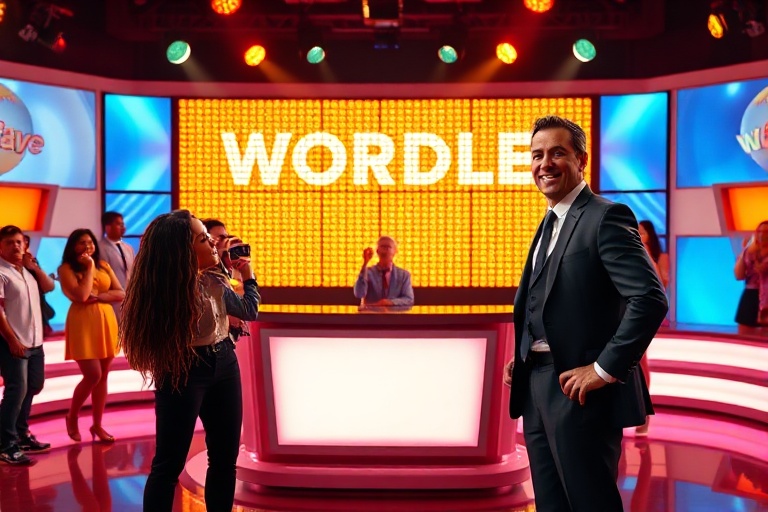
Wordle Game Show: From Digital Puzzle to TV Sensation
The Wordle game show phenomenon began quietly in October 2021, when software engineer Josh Wardle released a personal project to his partner. What started as a private word-guessing experiment became a global obsession within weeks. Unlike traditional trivia or quiz shows, Wordle’s simplicity—just six attempts to guess a five-letter word—made it universally accessible. Wordle didn’t require speed, reflexes, or advanced knowledge. It relied on logic, vocabulary, and a touch of luck. That minimalist design proved irresistible.
Within two months, Wordle was acquired by The New York Times for a reported seven-figure sum. The acquisition validated its cultural impact, transforming a digital puzzle into a media empire. The game show format—distilled into a daily challenge—created a shared cultural experience. Millions logged in simultaneously, not to compete, but to share their results and strategies. The absence of ads, leaderboards, or in-game purchases reinforced its purity. Wordle became a rare digital commodity: a product that felt personal and communal at once.
The Rise of a Digital Mainstream Sensation
Wordle’s ascent defied conventional media logic. It thrived without algorithmic amplification or influencer promotion. Organic sharing drove its growth. Players posted colored grids on social media, turning private puzzles into public conversations. The green, yellow, and gray tiles became visual shorthand for success and struggle. This visual language transcended language barriers, making Wordle a global phenomenon.
Its daily structure created ritual. Each morning, a new word appeared. Players gathered at kitchen tables, on commutes, and during coffee breaks. The timing aligned with human rhythms—predictable, dependable, and undemanding. Unlike addictive slot machines or endless scrolls, Wordle offered closure. You played once, finished, and moved on. This balance of engagement and detachment made it sustainable.
The New York Times’ acquisition in January 2022 marked a turning point. The game moved from indie curiosity to institutional powerhouse. The Times integrated Wordle into its subscription model, blending puzzle culture with journalism. It became a bridge between casual players and dedicated solvers. The shift also sparked debates about accessibility and paywalls. But for most, Wordle remained what it always was: a daily mental stretch, a quiet challenge, a moment of focus.
From Puzzle to Pop Culture: The Wordle Game Show Format
The Wordle game show concept emerged naturally from its mechanics. A single-player puzzle became a communal spectacle. Platforms like Twitch and YouTube adapted it into live-solving streams. Broadcasters narrated their thought processes, turning internal logic into entertainment. Competitive variants emerged: Wordle tournaments, speed-solving leagues, and multiplayer modes. The solitary act became social performance.
Television networks took notice. CBS announced a primetime Wordle game show in 2023, hosted by talent from The Price Is Right and Jeopardy!. The show retained the original’s DNA: five-letter words, six chances, color-coded feedback. But it added drama, audience participation, and real-time scoring. Contestants raced against the clock, their progress displayed on giant screens. The result was familiar yet fresh—a puzzle show disguised as a competition.
This evolution highlights a broader trend: the gamification of daily life. Wordle didn’t invent the format, but it perfected it. It proved that intellectual games could be as addictive as action titles or battle royales. It also showed how digital mechanics translate to television. The color clues became visual spectacle. The ticking clock created tension. The shared vocabulary fostered connection.
Critics questioned whether Wordle could sustain TV audiences. Would casual players engage with a live format? Would the charm survive commercial breaks? Early episodes suggested yes. The blend of strategy, humor, and shared frustration mirrored the game’s online success. The Wordle game show became a laboratory for merging digital and broadcast entertainment.
Broader Implications: What Wordle Teaches Us About Attention and Community
Wordle’s impact extends beyond entertainment. It reveals how modern audiences crave shared experiences that require no expertise, no investment, and no expertise. In an era of algorithmic fragmentation, Wordle created unity. It didn’t divide players into factions. It didn’t reward speed or reflexes. It rewarded thought, patience, and a little luck.
The game also highlights the power of constraint. Five letters. Six attempts. No hints. This stripped-down design forced creativity. Players developed systems: vowel-first strategies, common suffixes, letter frequency charts. The limitations became the foundation of skill. This mirrors broader creative trends—haiku, microfiction, 140-character wit. Constraints breed innovation.
Wordle’s monetization model offers lessons in value. The New York Times didn’t sell ads or data. It sold access to a daily ritual. The subscription fee wasn’t for content, but for continuity. Players weren’t paying for a product; they were paying for a habit. This approach challenges traditional media economics. It suggests that audiences will pay for experiences that feel personal and predictable.
The game’s global spread also demonstrates the universality of language puzzles. Words are the building blocks of culture. They carry history, humor, and meaning. Wordle didn’t need graphics or sound to connect. It relied on the human brain’s love of pattern recognition. This makes it a rare global product—one that translates across borders without localization.
Key Takeaways: Why Wordle Game Show Matters
Wordle’s journey from private project to primetime spectacle offers several insights:
- Simplicity wins: The fewer the rules, the broader the appeal. Wordle proved that minimalist design can outperform complex systems.
- Ritual creates loyalty: Daily puzzles turn casual players into devoted followers. The routine becomes part of identity.
- Community fuels growth: Sharing results turned private puzzles into public conversations. The social layer amplified reach.
- Constraints breed creativity: Limited attempts forced players to innovate. The game’s limitations became its strength.
- Media evolution accelerates: Digital puzzles can become television shows without losing their essence. The format adapts, but the core remains.
Looking Ahead: The Future of Wordle and Game Show Culture
As the Wordle game show expands, questions arise about its longevity. Will the novelty fade? Or will it become a permanent fixture like crossword puzzles or sudoku? Early signs suggest endurance. The New York Times continues to update the game, adding new word lists and seasonal themes. The TV adaptation is still in its infancy, but the format shows promise.
The broader implications are even more significant. Wordle demonstrates how digital experiences can scale into mainstream culture without sacrificing their soul. It proves that audiences crave meaning, not just stimulation. In an era of infinite choice, Wordle offers a daily moment of focus. It’s a reminder that the simplest ideas often have the deepest impact.
As television and digital culture continue to merge, Wordle stands as a case study. It shows how a puzzle can become a phenomenon. How a private project can shape public conversation. How a game can teach us about attention, community, and the power of constraints. The Wordle game show isn’t just entertainment. It’s a cultural artifact—a snapshot of how we play, connect, and think in the 21st century.
For more on gaming trends and digital culture, explore our Trending and Gaming sections. These categories dive deeper into how games evolve from indie gems to mainstream hits—and what that means for players and creators alike.
Wordle’s story is still being written. But one thing is clear: its influence will linger long after the final guess.