Hawaiian Monk Seals: Hawaii’s Endangered Ocean Icon Struggles to Survive
The Hawaiian monk seal is one of the most endangered marine mammals in the United States, with fewer than 1,500 individuals remaining in the wild. Endemic to the Hawaiian Islands, this species has survived for millennia, but today faces existential threats from human activity, climate change, and ecological imbalance. Unlike their more vocal relatives in zoos or aquariums, these seals are rarely seen by the public, yet their survival is critical to the health of Hawaii’s marine ecosystems.
Once hunted to near extinction by early Polynesians and later by European sealers, Hawaiian monk seals were granted full legal protection in 1976 under the U.S. Endangered Species Act. Despite this, their population continues to decline at an alarming rate—around 4% per year. Their plight is a reminder of how fragile island ecosystems can be, and how human actions, even indirect ones, can ripple through entire food chains.
The Hawaiian Monk Seal: A Living Fossil of the Pacific
Hawaiian monk seals (Neomonachus schauinslandi) are one of only two surviving species in the Monachus genus, the other being the Mediterranean monk seal. Genetic studies suggest they diverged from their Mediterranean cousins over 15 million years ago, making them living relics of an ancient lineage. Their scientific name honors Dr. Henry Schauinsland, who first described the species in 1899 after collecting a specimen in the Northwestern Hawaiian Islands.
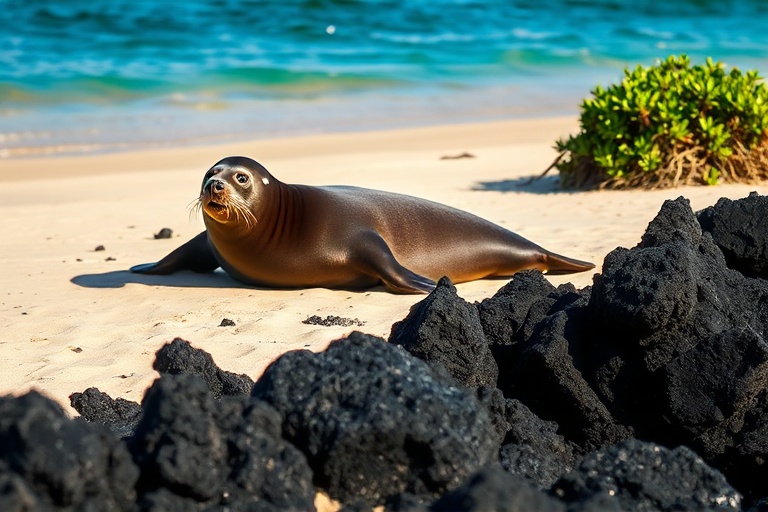
These seals are uniquely adapted to life in the warm, shallow waters around Hawaii. Unlike ice-dependent seals, they lack a thick blubber layer, relying instead on their streamlined bodies and efficient kidneys to thrive in tropical climates. They spend most of their time hauled out on sandy beaches or coral atolls, molting, resting, or giving birth. Their pups are born with a distinctive black coat, which they shed after about six weeks—a stark contrast to the silvery-gray adults.
One of the most fascinating aspects of Hawaiian monk seals is their behavior. They are far less social than other seal species, often seen alone or in small, loose groups. Males are known to establish territories during the mating season, and females exhibit strong maternal instincts, nursing their pups for up to six weeks before abruptly weaning them. This solitary nature makes them particularly vulnerable to human disturbance, as they lack the safety of large colonies where threats can be shared.
Threats to Survival: Why Are Hawaiian Monk Seals Disappearing?
The decline of Hawaiian monk seals is driven by a combination of natural and human-induced factors. While some challenges are beyond human control, others are directly linked to our presence in their habitat. Understanding these threats is essential to developing effective conservation strategies.
- Human Encroachment: As tourism and coastal development expand across Hawaii, seals are increasingly displaced from their preferred haul-out sites. Beaches that were once quiet nurseries are now crowded with visitors, leading to stress and abandonment of pups. Even well-meaning tourists can inadvertently harm seals by getting too close, which disturbs their resting and breeding behaviors.
- Fisheries Interactions: Hawaiian monk seals often forage in nearshore waters where they can become entangled in fishing gear or ingest marine debris. While entanglement is less common than with some other seal species, it remains a serious risk, particularly for younger seals who explore areas frequented by fishermen. The ingestion of plastic and other pollutants can also lead to malnutrition and disease.
- Predation and Competition: The rise of invasive species, such as feral cats and dogs, poses a direct threat to monk seal pups. Sharks, particularly tiger sharks, are natural predators, but their presence is being exacerbated by overfishing of shark prey, which may be pushing sharks closer to seal colonies in search of food. Additionally, competition with commercial fisheries for fish and invertebrates limits the seals’ access to vital food sources.
- Climate Change: Rising sea levels and increased storm activity threaten the low-lying atolls where monk seals give birth and molt. Warmer ocean temperatures also impact the distribution of prey species, forcing seals to travel farther for food. In some cases, entire islands may become uninhabitable, leaving seals with fewer safe places to rest and reproduce.
These challenges are compounded by the seals’ slow reproductive rate. Females typically give birth to only one pup every two to five years, and not all pups survive to adulthood. With such a low reproductive output, even small increases in mortality can have devastating effects on the population. Conservationists estimate that without urgent intervention, the species could face extinction within decades.
Conservation Efforts: What’s Being Done to Save the Hawaiian Monk Seal?
Protecting Hawaiian monk seals requires a multi-faceted approach that balances human needs with the survival of the species. Federal and state agencies, alongside nonprofit organizations, have implemented a range of strategies to mitigate threats and support population recovery.
One of the most critical efforts is habitat protection. The Northwestern Hawaiian Islands, where the majority of monk seals live, are part of the Papahānaumokuākea Marine National Monument, a protected area that limits human access and fishing activities. Within this sanctuary, researchers conduct regular surveys to monitor seal populations, track births, and identify sick or injured individuals in need of care.
When seals do become entangled or injured, rapid response teams from the NOAA Fisheries Hawaiian Monk Seal Research Program intervene. In some cases, they’ve successfully disentangled seals or provided medical treatment to stranded animals. Pups abandoned by mothers due to human disturbance are sometimes relocated to quieter beaches or even raised in temporary captivity until they’re strong enough to survive on their own—a last-resort measure that has saved dozens of lives.
Community engagement is another cornerstone of conservation. Organizations like the Marine Mammal Center and Hawaii Wildlife Fund work with local communities to educate residents and visitors about the importance of respecting seal habitats. Simple actions, such as keeping a safe distance from hauled-out seals and properly disposing of fishing line, can make a significant difference. In some cases, volunteers help monitor beaches and report disturbances, creating a network of stewards for the species.
Research is also shedding light on the seals’ behavior and ecology. Scientists use satellite tags to track their movements, study their diet through scat analysis, and investigate the impacts of climate change on their habitat. This data is crucial for informing policy decisions and ensuring that conservation efforts are grounded in science.
What’s Next for Hawaiian Monk Seals?
The future of Hawaiian monk seals hangs in a delicate balance. While conservation efforts have slowed their decline, the species remains critically endangered. The biggest question is whether these measures can outpace the growing threats from climate change and human expansion.
One promising development is the increasing recognition of monk seals as a cultural and ecological icon of Hawaii. Native Hawaiian communities, who have long revered these seals as kinolau (forms of the gods), are playing a more active role in their protection. Traditional knowledge about marine ecosystems is being integrated with modern science, creating a more holistic approach to conservation.
However, more needs to be done. Expanding protected areas, reducing plastic pollution in the ocean, and regulating coastal development are all essential steps. The public can also help by supporting organizations that work on the front lines of monk seal conservation, such as Dave’s Locker Wildlife and the Hawaiian Monk Seal Research Program.
For now, the Hawaiian monk seal remains a symbol of resilience—a species that has survived for millions of years but now faces its greatest challenge. Their survival will depend on our willingness to share the islands they call home and to act before it’s too late.
With concerted effort and global awareness, there’s still hope that future generations will witness the sight of a Hawaiian monk seal basking on a quiet beach, a silent reminder of the wild beauty that once thrived across the Pacific.