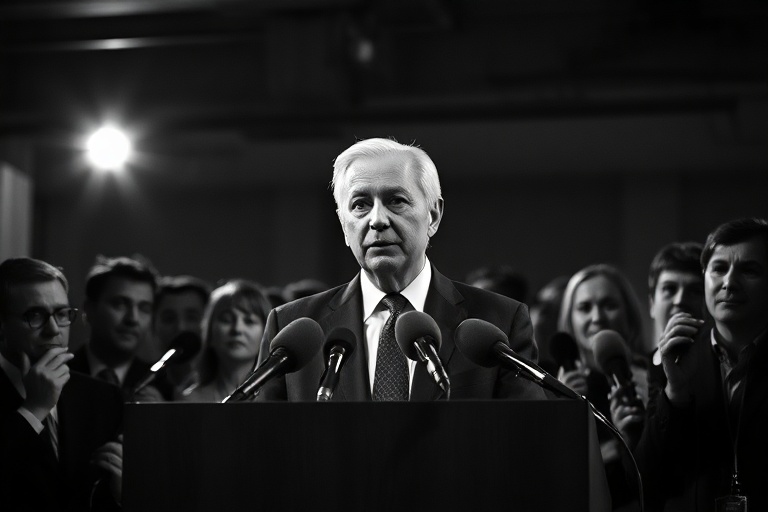
Zbigniew Ziobro: How Poland’s Justice Minister Reshaped Its Legal System
Zbigniew Ziobro has long occupied a unique space in Poland’s political and legal landscape. As a founding member of the Law and Justice (PiS) party, he has shaped policies that redefine the boundaries of judicial independence, state power, and national identity. His influence extends beyond traditional politics into the very institutions meant to balance them.
Over nearly two decades, Ziobro’s career has mirrored Poland’s deepening political divisions. Serving as Minister of Justice from 2005 to 2007, then again from 2015 to 2023, he became the architect of sweeping reforms that critics argue eroded judicial checks on the government. These reforms sparked some of the most heated disputes between Poland and the European Union, culminating in unprecedented legal action and financial penalties.
What makes Ziobro particularly compelling is not just his political longevity but his ability to remain relevant despite constant controversy. Whether through aggressive legal maneuvers or public confrontations with the judiciary, he has become a symbol of Poland’s conservative transformation under PiS.
From Opposition to Architect of Legal Change
Ziobro’s political journey began in the early 2000s as part of a new generation of conservative activists. He co-founded PiS in 2001 alongside Lech and Jarosław Kaczyński, positioning himself as a hardline voice within the party. His rise was rapid: by 2005, at age 33, he became Poland’s youngest-ever Minister of Justice.
His first tenure was marked by early attempts to overhaul the justice system. These included efforts to centralize control over prosecutors and limit the independence of courts—moves that drew immediate criticism from legal experts and EU officials. Despite internal party tensions, his approach resonated with PiS’s base, which increasingly viewed Poland’s judiciary as out of touch with the will of the electorate.
After PiS’s electoral defeat in 2007, Ziobro briefly left government but remained active in politics, founding his own splinter party, United Poland, in 2014. The move signaled a growing rift within the conservative movement but ultimately did not weaken his influence. When PiS returned to power in 2015, Ziobro returned as Justice Minister, this time with expanded authority and a clear mandate to implement more far-reaching reforms.
The 2015–2023 Justice Reforms: A Legal Revolution
Ziobro’s second term as Justice Minister was transformative—and deeply divisive. The reforms he championed included:
- Disciplinary chambers for judges: Empowering the Minister of Justice to appoint disciplinary bodies that could sanction judges for rulings deemed politically inconvenient.
- Judicial appointments: Giving the justice minister greater control over the selection of Supreme Court justices and court presidents.
- Lowering retirement ages: Forcing early retirement of Supreme Court and common court judges, leading to mass replacements with PiS-aligned jurists.
- Constitutional Tribunal changes: Packing the Constitutional Tribunal with loyalists to ensure constitutional rulings aligned with government policy.
These changes drew swift condemnation from the European Commission, which launched multiple infringement procedures. In 2020, the Court of Justice of the European Union ruled that Poland’s disciplinary regime violated EU law, a decision Ziobro dismissed as politically motivated interference. The standoff escalated in 2023 when Poland faced potential suspension of cohesion funds—until a last-minute compromise was reached with the incoming pro-EU government.
The reforms were not merely legal technicalities; they represented a fundamental redefinition of the rule of law in Poland. Supporters argue that the judiciary had become an insulated elite resistant to democratic accountability. Opponents warn that the reforms endangered the separation of powers, creating a judiciary subordinate to political will.
Beyond the Courts: A Broader Vision of Sovereignty
Ziobro’s influence extends beyond justice policy. He has been a vocal advocate for “judicial sovereignty,” framing EU legal oversight as an attack on Poland’s national identity. In speeches, he often invokes the language of sovereignty and self-determination, positioning Poland as a defender against foreign legal domination.
His rhetoric aligns closely with PiS’s broader nationalist platform, which emphasizes traditional values, opposition to LGBTQ+ rights, and resistance to progressive EU policies. As a key architect of that platform, Ziobro helped shape a narrative in which judicial independence is not a universal good but a potential threat to Poland’s cultural and political autonomy.
His political style is combative and uncompromising. He has clashed publicly with judges, prosecutors, journalists, and even fellow politicians. Yet this unyielding posture has cemented his reputation within the conservative base as a fearless defender of Poland’s sovereignty.
Legacy and Future: What Comes After Ziobro?
With the fall of the PiS government in late 2023 and the return of a pro-European coalition led by Donald Tusk, Ziobro’s political future appears uncertain. His party, United Poland, lost seats in the 2023 parliamentary election, and he faces growing pressure to adapt or step aside.
Yet his legacy is already secured. The legal architecture he built—whether praised or condemned—will shape Poland’s judiciary for years to come. Even if some reforms are rolled back, the precedent of politicized justice has been set, and the debate over judicial independence is now permanently altered.
Ziobro’s story is not just about one man’s rise to power. It reflects the broader tensions within modern democracies: between popular sovereignty and institutional autonomy, between national identity and supranational governance, and between tradition and progressive reform. In Poland, Zbigniew Ziobro didn’t just change laws—he changed the terms of the debate itself.
As Poland navigates its post-PiS future, the question remains: Can a judiciary once reshaped by Ziobro regain its independence? Or has his vision become the new normal, a permanent feature of Poland’s legal landscape?
One thing is clear: Zbigniew Ziobro’s impact will be felt long after he leaves office. His career is a case study in how legal institutions can be transformed—and how politics, once unleashed, is difficult to contain.