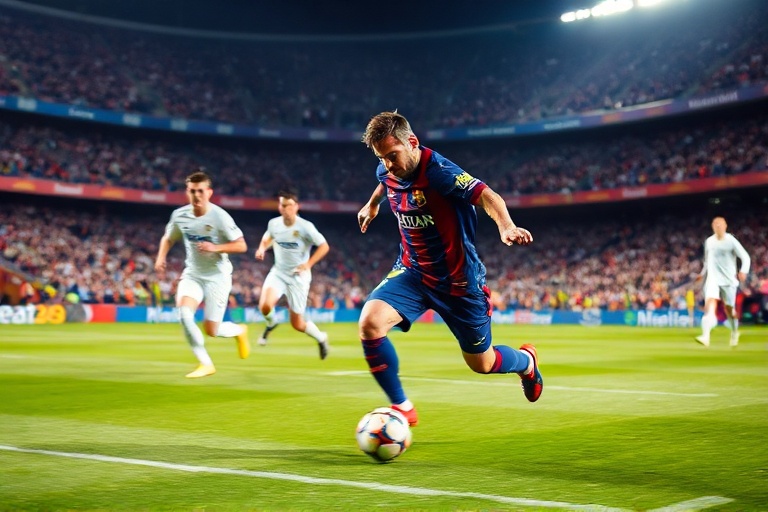
Few sporting events command the attention of a global audience like El Clásico, the legendary clash between Spanish football’s two giants: FC Barcelona and Real Madrid. More than just a match, this fixture represents a collision of identity, politics, and culture that resonates far beyond the pitch. Played at least twice a season in La Liga, El Clásico carries the weight of history, pride, and rivalry so intense it can feel like a national referendum.
What began as a regional contest in the early 20th century has grown into one of the most-watched sporting events in the world. In 2023, the match drew over 600 million viewers across television and digital platforms. The rivalry isn’t confined to Spain—it has become a cultural export, a spectacle that unites and divides fans from Buenos Aires to Beijing, from Lagos to Los Angeles. But why does this match mean so much? And how has it evolved from a simple football game into a global phenomenon?
The Roots of the Rivalry: More Than Just Football
The origins of El Clásico trace back to the early 1900s, when Barcelona, founded in 1899 by Swiss and English expatriates, represented a distinct regional identity within Spain. Real Madrid, established in 1902, became the club of the Spanish monarchy and the central state. This early divide set the tone: Barcelona as the underdog of Catalonia, Real Madrid as the establishment.
The rivalry intensified during the Franco dictatorship (1939–1975), when Catalonia’s language and culture were suppressed. FC Barcelona became a symbol of resistance. The club’s motto, “Més que un club” (“More than a club”), reflected its role as a cultural and political beacon. Meanwhile, Real Madrid was often seen as the regime’s favored team, especially after winning five consecutive European Cups in the 1950s under president Santiago Bernabéu, a figure closely aligned with the Francoist elite.
This historical context transformed El Clásico from a sporting event into a cultural battleground. Goals scored were not just points—they were statements. Victories were interpreted as affirmations of regional pride or national unity. Even today, the match carries echoes of this past, especially when played in Barcelona, where the stadium, Camp Nou, sits in the heart of a city that has long sought greater autonomy.
Key Moments That Defined the Rivalry
Over the decades, certain matches have transcended sport and entered the realm of legend. These games didn’t just decide league titles—they shaped narratives, altered careers, and influenced public sentiment.
- 1943 Copa del Rey: Real Madrid defeated Barcelona 11–1 over two legs, a result that fueled Catalan resentment and became a symbol of perceived injustice under Franco.
- 1960s European dominance: Real Madrid’s five consecutive European Cup wins cemented their status as kings of European football, while Barcelona struggled to compete.
- 1994 Champions League semifinal: Barcelona’s 4–0 aggregate win over Real Madrid marked one of the most stunning upsets in the club’s history, led by Johan Cruyff’s “Dream Team.”
- 2005 “Pizzagate” incident: A pitch invasion by Barcelona fans during a 3–0 win led to global headlines and a diplomatic incident between Spain and Italy.
- 2010: Messi vs. Ronaldo: The rivalry entered a new era as Lionel Messi (Barcelona) and Cristiano Ronaldo (Real Madrid) began a decade-long duel that defined a generation.
The Modern Era: Football Meets Global Entertainment
Today, El Clásico is not just a Spanish fixture—it’s a global media event. Broadcast in over 180 countries, it draws audiences comparable to major finals. In the United States, networks like ESPN and Univision dedicate primetime slots to the match. In Asia, fan clubs organize viewing parties in stadiums and bars from Tokyo to Dubai.
The commercialization of the fixture has turned players into global brands. Lionel Messi and Cristiano Ronaldo didn’t just play for their clubs—they became ambassadors for football itself. Their rivalry elevated the stakes of every Clásico, turning it into a personal duel as much as a team contest. When Messi left Barcelona in 2021 due to financial constraints, the emotional weight of his departure reverberated across the world, especially with the looming specter of a potential Clásico as a rival.
Social media amplifies the spectacle. Hashtags like #Clasico trend globally. Memes, fan art, and viral moments spread within minutes. The 2022 edition, played at the Santiago Bernabéu after Camp Nou’s renovation, was billed as “The Clásico of the Century” due to its timing and stakes. It drew 750 million viewers, a record for a club match.
Beyond the Pitch: The Cultural and Economic Impact
The Clásico isn’t just about football—it’s a driver of tourism, fashion, and even diplomacy. In Barcelona, hotels fill up months in advance. Local businesses sell themed merchandise, from scarves to limited-edition beers. In Madrid, the city adopts a celebratory atmosphere, with flags and chants filling the streets.
Economically, the match injects millions into local economies. A 2021 study estimated that El Clásico contributes over €100 million to Spain’s economy through tourism, broadcasting, and sponsorships. Sponsors like Mastercard and Nissan pay premium rates for Clásico-related campaigns, knowing the global reach.
Culturally, the rivalry has inspired literature, film, and music. Spanish director Álex de la Iglesia’s 2015 film Perfectos desconocidos features a Clásico as a backdrop to a story of friendship and betrayal. Novels like Fiebre en las gradas (“Fever in the Stands”) explore the emotional extremes of fandom. Even in music, artists like Alejandro Sanz and Rosalía have referenced the match in lyrics, tying it to broader themes of passion and conflict.
The Future of El Clásico: A New Chapter Unfolds
As football evolves, so does El Clásico. The 2023–24 season marked a transition: Camp Nou was demolished and rebuilt, and Real Madrid was on the hunt for a record-extending 36th league title. Meanwhile, Barcelona, under new leadership and financial restructuring, aimed to regain its place among Europe’s elite.
Youth academies like La Masia and La Fábrica continue to produce world-class talent, ensuring that future Clásicos will feature homegrown stars. The rise of young players such as Gavi (Barcelona) and Jude Bellingham (Real Madrid) signals a new generation ready to inherit the legacy of this historic rivalry.
Yet, the fixture faces challenges. Criticism over player wages, commercialization, and even environmental concerns about excessive travel have sparked debate. Some argue that the Clásico has become too big, too commercialized—a spectacle detached from its roots. Others believe its global appeal is what sustains the magic.
What remains clear is that El Clásico is more than a football match. It is a living archive of identity, ambition, and emotion. Whether seen as a celebration of football’s beauty or a relic of outdated rivalries, it endures as a testament to how sport can shape—and be shaped by—culture.
As long as there are fans who feel deeply, who sing with passion, and who see victory as vindication, El Clásico will continue to captivate the world. It’s not just about who wins on the day—it’s about what the match represents: a clash of ideals, a dance of legends, and a moment where football becomes more than a game.