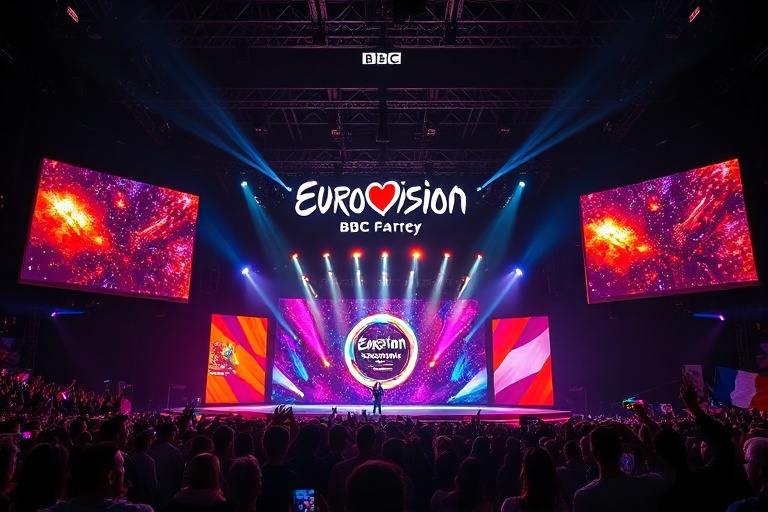
The BBC’s relationship with the Eurovision Song Contest is as long as it is complex. For decades, the British broadcaster has played a pivotal role in shaping how the world perceives—and participates in—Europe’s most-watched live music event. From highs of near-victories to lows of near-zero scores, the BBC’s Eurovision coverage reflects the UK’s fluctuating fortunes on the contest’s stage. Yet beyond the glitter and glamour, the BBC’s involvement has also sparked debates about national identity, cultural representation, and the evolving nature of Eurovision itself.
As Eurovision continues to grow in global appeal, the BBC’s role has expanded from mere broadcaster to active participant and commentator. The contest, once a post-war cultural experiment, now draws audiences in the hundreds of millions, and the BBC remains at the forefront of bringing that spectacle to British audiences. But how has the BBC’s approach to Eurovision evolved over time, and what does its future look like in an era of streaming, social media, and shifting musical tastes?
The BBC’s Eurovision Journey: From Smooth Operators to Humble Beginnings
The UK’s Eurovision story began in 1957, two years after the contest’s inception. The BBC, as the nation’s public service broadcaster, was tasked with both selecting and broadcasting the UK’s entry. That first performance, Patricia Bredin’s “All,” finished a respectable seventh in a field of 10—hardly a disaster, but not the triumphant debut the BBC might have hoped for. Over the next few decades, the UK experienced both glory and ignominy on the Eurovision stage.
The 1960s and 1970s were a golden era for the UK at Eurovision. Sandie Shaw’s win in 1967 with “Puppet on a String” remains one of the contest’s most iconic moments, while Lulu’s 1969 victory with “Boom Bang-a-Bang” (shared with three other countries) cemented the UK’s place as a Eurovision powerhouse. These wins were not just musical successes; they were cultural milestones, broadcast live on BBC One and watched by millions across the nation. The BBC’s commentary, delivered by legends like Terry Wogan, became a national ritual, blending wit, warmth, and a touch of cynicism.
Yet the tide turned in the 1980s and 1990s. The UK’s entries grew increasingly quirky—from Bucks Fizz’s energetic “Making Your Mind Up” in 1981 to Sonia’s “Better the Devil You Know” in 1987. While these performances entertained, they rarely challenged for the top spot. By the turn of the millennium, the UK’s Eurovision fortunes had waned, culminating in a 2003 score of zero points. It was a humiliating moment, but one that would ultimately force a reckoning within the BBC and the UK’s Eurovision community.
The BBC’s Changing Role: Broadcaster, Critic, and Participant
The BBC’s responsibilities at Eurovision extend far beyond simply airing the contest. As the UK’s public service broadcaster, it is tasked with providing impartial coverage, educational context, and cultural analysis. This has led to a multi-faceted approach to Eurovision coverage, which includes:
- Live Broadcasts: The BBC airs the semi-finals and grand final on BBC One and BBC iPlayer, ensuring accessibility for all viewers. Commentary is provided by experienced presenters, often with a mix of humor and insight.
- Documentaries and Specials: Programs like “Eurovision: The Official History” and “Eurovision at 60” explore the contest’s cultural impact, featuring interviews with past participants and behind-the-scenes footage.
- Online Engagement: The BBC’s Eurovision coverage extends to its website, where articles, videos, and interactive features dive into the contest’s history, politics, and music. The Music section often highlights Eurovision-related content, from fan theories to analyses of songwriting trends.
- Selection Processes: The BBC organizes and broadcasts the UK’s national selection process, whether through a public vote (as with “Eurovision: You Decide”) or an internal decision by a panel of experts.
This multi-platform approach ensures that Eurovision remains a year-round topic of conversation in the UK, not just a one-night spectacle. The BBC’s role as both participant and observer allows it to shape the narrative around Eurovision, influencing how British audiences engage with the contest.
Controversies and Criticisms: The BBC’s Eurovision Dilemmas
Despite its long-standing commitment to Eurovision, the BBC has faced its share of controversies. One of the most persistent criticisms is the perceived lack of UK success on the Eurovision stage. For decades, the UK has struggled to replicate the glories of the 1960s and 1970s, leading to accusations that the BBC and the UK’s music industry have lost touch with the contest’s evolving tastes. The 2003 zero-point debacle became a symbol of this decline, prompting soul-searching within the BBC and the wider music community.
Another source of tension is the BBC’s selection process. The shift from internal decisions to public votes (such as “Eurovision: You Decide”) has been met with both enthusiasm and skepticism. While public participation can inject fresh energy into the UK’s Eurovision bid, it has also led to accusations of populism and a lack of artistic vision. For example, the 2018 selection of SuRie with “Storm” was overshadowed by a stage invasion during her performance, raising questions about the BBC’s ability to manage such high-pressure situations.
The BBC has also faced criticism for its commentary, particularly from younger audiences who find Terry Wogan’s legacy hard to match. Wogan’s wry, often sarcastic remarks became a beloved part of Eurovision viewing in the UK, but his retirement in 2015 left a void. The BBC has struggled to find a replacement with the same blend of charm and insight, leading to calls for a more modern, diverse approach to commentary.
The Future of BBC Eurovision: Innovation and Adaptation
As Eurovision enters its seventh decade, the BBC is adapting to a rapidly changing media landscape. The rise of streaming platforms, social media, and fan engagement has transformed how audiences consume the contest. The BBC has responded by expanding its online presence, offering behind-the-scenes content, and engaging with fans on platforms like Twitter and TikTok. This digital-first approach ensures that Eurovision remains relevant to younger audiences who may not watch linear TV.
Another key challenge for the BBC is balancing tradition with innovation. While the contest’s core format remains unchanged, the BBC is experimenting with new ways to engage viewers. For example, the 2023 Eurovision Song Contest featured a live blog on the BBC’s website, allowing fans to follow the event in real time with expert commentary and fan reactions. The BBC has also explored virtual reality experiences and interactive voting systems, though these initiatives remain in their early stages.
Looking ahead, the BBC’s Eurovision strategy will likely focus on three key areas:
- Talent Development: The BBC is increasingly investing in nurturing new talent, both for the UK’s Eurovision entry and for broader music careers. Programs like “BBC Introducing” provide a platform for emerging artists, some of whom may eventually represent the UK at Eurovision.
- Diversity and Inclusion: The BBC is under pressure to ensure its Eurovision coverage reflects the diversity of modern Britain. This includes selecting artists from underrepresented backgrounds and addressing criticisms of cultural appropriation in past performances.
- Global Engagement: With Eurovision’s growing popularity outside Europe, the BBC is exploring ways to make the contest more accessible to international audiences. This includes expanding digital coverage and collaborating with global partners to bring Eurovision to new markets.
The BBC’s Eurovision coverage is at a crossroads. While the contest remains a cultural touchstone in the UK, its future is far from guaranteed. The BBC must navigate the challenges of declining linear TV audiences, evolving musical tastes, and the need to stay relevant in a crowded entertainment landscape. Yet, if history is any indication, the BBC’s commitment to Eurovision will endure. Whether through laughter, tears, or sheer spectacle, the contest continues to captivate British audiences—and the BBC will be there to bring it to life.
Conclusion: Why Eurovision Still Matters to the BBC
Eurovision is more than just a music contest. It is a celebration of cultural diversity, a platform for political expression, and a global phenomenon that transcends borders. For the BBC, Eurovision represents an opportunity to showcase British music, engage with international audiences, and foster a sense of shared cultural experience. Despite the challenges and controversies, the BBC’s involvement in Eurovision remains a testament to its role as a public service broadcaster.
As the contest continues to evolve, the BBC’s approach must also adapt. By embracing innovation, fostering inclusivity, and staying true to its mission of informing, educating, and entertaining, the BBC can ensure that Eurovision remains a cherished part of British culture for decades to come. Whether it’s through the triumph of a UK victory or the shared joy of a quirky performance, the BBC’s Eurovision story is far from over.