Brent Burns: How a Late Bloomer Became an NHL Legend
For more than a decade, Brent Burns has been one of the most recognizable and dynamic defensemen in the National Hockey League. Known for his towering presence, offensive prowess, and leadership, Burns has carved out a Hall of Fame-worthy career while continuing to play at an elite level in his late 30s. His journey—from a first-round draft pick to a Stanley Cup champion and Norris Trophy finalist—offers a compelling look at longevity, adaptability, and the evolving role of defensemen in modern hockey.
Early Career and Rise to Prominence
Brent Burns was selected 20th overall by the Minnesota Wild in the 2003 NHL Entry Draft, a selection that would eventually shape the franchise’s defensive identity. After a brief stint with the Wild, Burns was traded to the San Jose Sharks in 2011—a move that catapulted him into the spotlight. Under the guidance of head coach Todd McLellan, Burns flourished in a system that emphasized offensive output from the blue line. His ability to join the rush, fire accurate shots, and log heavy minutes made him a cornerstone of the Sharks’ blue line for nearly a decade.
During his peak years in San Jose, Burns established himself as one of the league’s most dangerous offensive defensemen. He led all NHL defensemen in scoring during the 2015–16 and 2016–17 seasons, posting back-to-back 75-plus point campaigns. His 27-goal, 75-point season in 2016–17 earned him the Norris Trophy as the league’s top defenseman, capping off a remarkable transformation from a physical, stay-at-home blueliner to a two-way powerhouse.
The Physical Presence and Playing Style That Defined a Generation
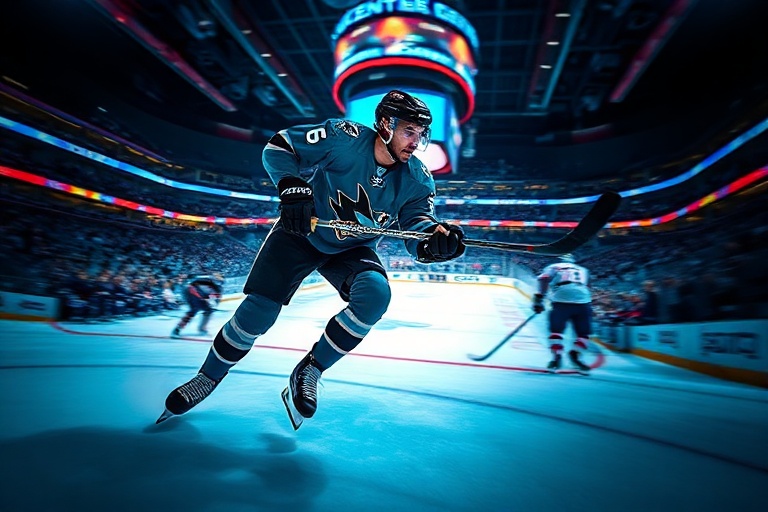
Standing at 6’5” with a muscular frame, Burns redefined what it meant to be a modern defenseman. His blend of size, skating, and skill made him nearly impossible to match up against. Unlike traditional shutdown defensemen who relied solely on physicality, Burns could dominate through sheer force while also contributing offensively. His long reach and active stick allowed him to break up plays before they developed, while his booming slap shot frequently lit the lamp or kept goaltenders honest.
Burns’ playing style was not without its risks. His willingness to pinch at the blue line and join offensive rushes sometimes left his team exposed in transition. However, his hockey IQ and recovery speed allowed him to mitigate those risks more often than not. Over time, he refined his game to become a more reliable two-way player, particularly in his later years with the Carolina Hurricanes and Florida Panthers.
- Offensive Contributions: 20+ goals in five different seasons, including a career-high 27 in 2016–17.
- Physical Dominance: Averaged over two hits per game throughout his career, often changing the complexion of a game with sheer force.
- Leadership Role: Served as an alternate captain in San Jose and later as a mentor to younger defensemen in Carolina and Florida.
- Durability: Played over 1,200 NHL games, a testament to his conditioning and resilience.
Leadership and Legacy: Beyond the Numbers
Burns’ impact extended beyond statistics. He was a vocal presence in the locker room, often praised by teammates for his professionalism and work ethic. His leadership was particularly evident during the Sharks’ run to the 2016 Stanley Cup Final, where he played through injury and set an example for the franchise. Even after leaving San Jose, Burns continued to mentor younger players, helping develop defensemen like Noah Hanifin in Carolina and Aaron Ekblad in Florida.
In 2022, Burns signed with the Carolina Hurricanes, reuniting with former Sharks assistant coach Rod Brind’Amour. The move revitalized his career, proving that even in his late 30s, he could still contribute at a high level. In Carolina, Burns embraced a more defensive-focused role, emphasizing positioning and reliability over offensive gambles. His experience was invaluable to a Hurricanes team that consistently ranked among the league’s best in the regular season.
Burns’ final NHL season in 2023–24 saw him transition to the Florida Panthers, where he played a key role on a deep playoff run. His ability to adapt his game while maintaining elite performance underscored his value as a franchise defenseman. Though he announced his retirement in 2024, his legacy as one of the most complete defensemen of his era is secure.
The Next Chapter: Life After Hockey
As Brent Burns transitions to life after hockey, his influence on the game is likely to endure. His career serves as a blueprint for modern defensemen, illustrating how size, skill, and adaptability can define a Hall of Fame career. Whether through coaching, broadcasting, or community engagement, Burns is poised to remain a figure of respect in hockey circles.
For younger players, Burns’ journey offers a lesson in perseverance. He entered the league as a rugged, physical defenseman and evolved into an elite two-way star, proving that growth and adaptability are just as important as raw talent. His retirement marks the end of an era, but his impact on the game will be felt for years to come.
As fans reflect on Burns’ career, they will remember not just the highlight-reel goals or bone-crushing hits, but the consistency, leadership, and joy he brought to the rink every night. In an era of shifting roles for defensemen, Burns stood out as a rare blend of power, skill, and professionalism—a true icon of the game.
For those looking to explore more about the evolution of NHL defensemen, check out our Sports section, where we analyze trends in player development and team strategies. To dive deeper into the careers of other elite blueliners, visit our Hockey category for expert insights and breakdowns.