The Arizona Diamondbacks and Texas Rangers have quietly forged one of Major League Baseball’s most compelling recent storylines. While not yet a household rivalry like Yankees-Red Sox or Dodgers-Giants, this matchup carries unique cultural weight, particularly in the American Southwest and beyond. The teams first squared off in 1998 during Arizona’s inaugural season, but only in the last few years has this series developed real stakes—on the field and in the stands.
What makes this rivalry intriguing isn’t just the competition—it’s the contrast. The Diamondbacks represent the sun-drenched desert culture of Phoenix, a city built on innovation and migration. The Rangers, meanwhile, embody the rugged, wide-open spirit of Texas, a state where baseball is woven into the fabric of identity. These cultural differences shape how fans engage, how players perform, and even how the games are broadcasted to a global audience.
From Expansion Teams to Playoff Contenders
The Diamondbacks entered MLB in 1998 as an expansion team, while the Rangers, founded in 1961, had spent decades searching for consistency. Both clubs endured early struggles, but their paths diverged dramatically in the 2000s. Arizona won a World Series in 2001 behind Randy Johnson and Curt Schilling, while Texas made multiple deep playoff runs in the mid-2010s, culminating in a World Series appearance in 2011.
Over the past five seasons, both teams have transformed from afterthoughts into perennial postseason threats. The Rangers returned to the World Series in 2023, defeating the Arizona Diamondbacks in five games—a series that drew global attention not just for the outcome, but for the way it showcased two distinct baseball philosophies: Texas’s power-driven offense and Arizona’s balanced, pitching-heavy approach.
This evolution reflects a broader shift in MLB, where analytics and player development strategies once reserved for big-market teams are now accessible even in smaller markets. The Diamondbacks’ rise under manager Torey Lovullo and the Rangers’ resurgence under Bruce Bochy highlight how organizational culture—rooted in adaptability and resilience—can redefine a franchise’s identity.
The Cultural Divide: Desert vs. Lone Star
Baseball fandom is deeply tied to regional identity, and the Diamondbacks-Rangers rivalry illustrates this perfectly. In Phoenix, a city shaped by migration from California, the Midwest, and Latin America, the Diamondbacks serve as a unifying force. The team’s fanbase reflects the city’s diversity, with strong support from Hispanic communities and a growing international presence thanks to players like Gabriel Moreno and Corbin Carroll.
In Texas, baseball is more than a sport—it’s a tradition. The Rangers’ fanbase is rooted in generations of allegiance, with ballparks like Globe Life Field becoming modern-day cathedrals. The team’s branding leans into cowboy imagery, from the “Rangers” name to the star logo, reinforcing a connection to Texas’s mythic frontier past. This cultural anchoring helps explain why Rangers games often feel like community gatherings, with tailgates stretching for miles before first pitch.
When these teams meet, the contrast becomes part of the spectacle. Diamondbacks games in Arizona often feature high-energy, fan-driven atmospheres with DJs and elaborate between-inning entertainment. Rangers games, by contrast, emphasize tradition—think brass bands, historic throwback jerseys, and a focus on storytelling. These differences aren’t just marketing; they reflect how baseball adapts—or resists adaptation—across regions.
Key Moments That Defined the Matchup
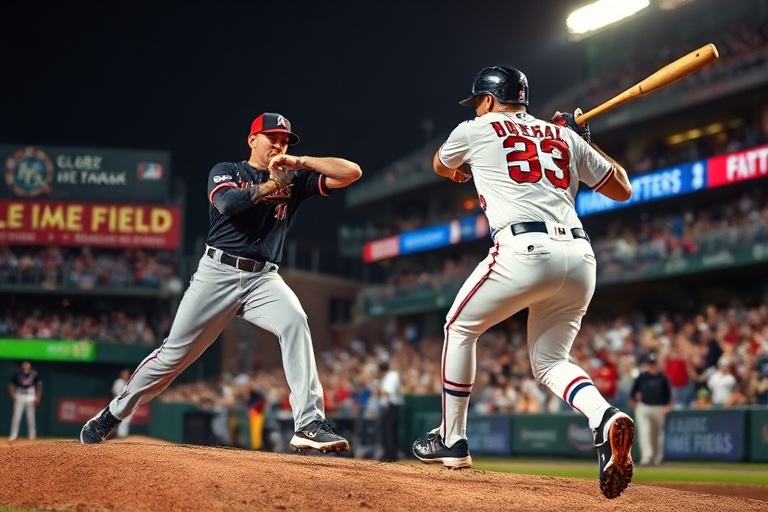
The Diamondbacks and Rangers have produced several unforgettable moments, particularly in high-stakes series. One of the most dramatic came in 2023 during the World Series, when Arizona’s Corbin Carroll hit a go-ahead home run in Game 1, only for Texas to storm back with a late rally. The series featured clutch performances by Corey Seager and Ketel Marte, and a pivotal defensive play by Evan Longoria that shifted momentum.
Regular-season clashes have also left their mark. In 2022, a three-game series in Arlington featured two extra-inning games decided by walk-off hits. The Rangers’ Adolis García hit a go-ahead home run in the 10th inning of Game 2, while Arizona’s Nick Ahmed delivered a walk-off single in Game 3. These games weren’t just wins or losses—they were statements about each team’s identity.
Here are five defining moments from recent Diamondbacks-Rangers meetings:
- 2023 World Series, Game 1: Corbin Carroll’s two-run homer in the 6th inning gave Arizona a 3-2 lead, but Texas tied it in the 8th before winning in the 10th.
- 2022 Regular Season, Game 3: Nick Ahmed’s walk-off single in the 10th capped a wild 8-7 victory for Arizona.
- 2019 Regular Season, Series in Phoenix: Madison Bumgarner outdueled Mike Minor in a pitchers’ duel, striking out 11 in 7.1 innings.
- 2017 Regular Season, Extra-Inning Thriller: The Rangers won 6-5 in 11 innings on a Rougned Odor RBI single.
- 2011 World Series: Though not a Diamondbacks-Rangers matchup (Texas lost to St. Louis), this series set the stage for both teams’ futures.
These moments aren’t just highlights—they’re building blocks of a rivalry that’s still young but growing rapidly. With both teams likely to contend for the next decade, every meeting adds another chapter to their shared history.
Why This Rivalry Matters Beyond the Diamond
Baseball rivalries often transcend the sport, and the Diamondbacks-Rangers matchup is no exception. For the MLB, this series represents a shift toward regional diversity in postseason contention. Historically, baseball’s narrative was dominated by East Coast and Midwest teams, but the rise of Arizona and Texas signals a new era where the Southwest plays a central role.
This rivalry also highlights the globalization of baseball. The Diamondbacks have embraced Spanish-language broadcasts and community outreach in Latin America, while the Rangers have expanded their international scouting to Japan and the Dominican Republic. When these teams meet, they’re not just playing for their city—they’re representing a broader cultural exchange.
For fans, the matchup offers something rare: a sense of anticipation without the baggage of long-standing animosity. Unlike Yankees-Red Sox or Dodgers-Giants, there’s no deep-seated history of bad blood. Instead, this rivalry is built on respect, competition, and the shared joy of baseball. That makes every game feel like a fresh start, a chance for both teams to prove they belong among MLB’s elite.
As both franchises continue to invest in player development and analytics, the Diamondbacks-Rangers rivalry is poised to become a defining storyline of the 2020s. Whether it’s a playoff series, a regular-season showdown, or a casual interleague game, these matchups are quickly becoming must-watch events for baseball fans worldwide.
For now, the story is still being written. But one thing is clear: the desert and the Lone Star State are colliding on the baseball diamond, and the result is a rivalry that’s as rich in culture as it is in competition.
For more on MLB and sports coverage, visit our Sports section.