Dunfermline Athletic and Partick Thistle: Two Clubs with Deep Roots
Football in Scotland is more than just a sport; it’s a cultural institution woven into the fabric of local communities. Two clubs that exemplify this tradition are Dunfermline Athletic and Partick Thistle, each with histories stretching back over a century. Dunfermline Athletic, founded in 1885, calls East End Park home, a stadium that has witnessed generations of fans cheering on their team. Partick Thistle, established in 1876, plays at Firhill Stadium, a venue that has stood in Glasgow’s Maryhill since 1909.
The rivalry between these two clubs is not one of the most intense in Scottish football, yet it carries a unique charm. Unlike the Old Firm derby between Celtic and Rangers, this matchup is defined by regional pride rather than sectarian divides. It’s a contest where local identities are on display, where players wear their heart on their sleeve, and where the fans’ passion often transcends the final whistle.
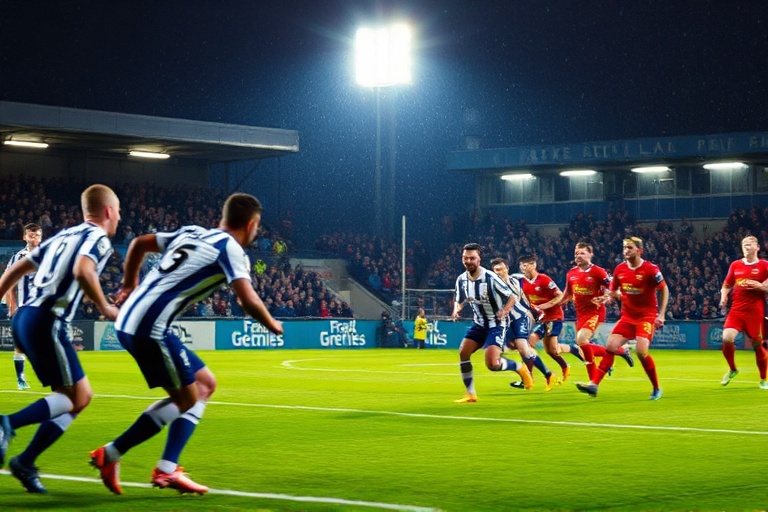
When these two teams meet, it’s an opportunity to celebrate Scottish football’s grassroots spirit. The matches often feature unpredictable outcomes, making them a draw for neutrals who appreciate the unpredictability of lower-league football. In an era where global football is dominated by financial powerhouses, Dunfermline Athletic vs Partick Thistle reminds us of the beauty of the game at its most authentic.
The Global Appeal of Lower-League Football
While Scottish football may not command the same global attention as the Premier League or La Liga, it holds a special place in the hearts of fans who value tradition and community. Lower-league clubs like Dunfermline Athletic and Partick Thistle operate on tight budgets, often relying on local sponsorships and fan contributions to survive. This financial reality creates a stark contrast with the glamour of top-tier football, yet it’s precisely this authenticity that attracts a dedicated following.
Globally, there’s a growing appreciation for the stories behind these clubs. Documentaries like I Believe in Miracles, which chronicles Nottingham Forest’s rise from obscurity to European glory, highlight how underdog narratives resonate across borders. Similarly, Dunfermline Athletic and Partick Thistle embody the spirit of resilience. Their matches are a reminder that football is not just about trophies and transfer fees; it’s about identity, loyalty, and the sheer joy of supporting a local team.
In countries like Argentina, where clubs like Rosario Central and Newell’s Old Boys thrive despite limited resources, the passion mirrors that of Scottish lower-league football. Fans in both regions understand that their club’s success isn’t measured in league titles alone but in the sense of belonging it fosters. This cultural phenomenon extends beyond Europe, reaching communities in Africa, Asia, and the Americas, where local clubs serve as beacons of hope and unity.
A Closer Look at the Clubs’ Histories
Dunfermline Athletic has enjoyed periods of relative success, most notably in the 1960s and early 2000s. The club won the Scottish Cup in 1961 and 1968, with legendary players like Willie Hamilton and Charlie Dickson donning the black-and-white stripes. In the 2000s, under the management of Jim Leighton, Dunfermline reached the UEFA Cup, further cementing its place in Scottish football history.
Partick Thistle, on the other hand, has a reputation for punching above its weight. The club’s most famous moment came in 1971 when they won the Scottish League Cup, defeating Celtic in the final. This victory remains a defining chapter in the club’s history, showcasing the underdog ethos that defines Partick Thistle. The club has also produced notable talents like Alan Rough, who went on to represent Scotland at the 1978 World Cup.
Both clubs have faced challenges, including financial struggles and relegations, but their resilience has kept them afloat. For fans, supporting these teams is a lifelong commitment, one that often involves traveling long distances to away games or standing through rain-soaked matches in hope of a last-minute winner. This dedication is a testament to the emotional investment fans make in their clubs.
Key Matches and Memorable Moments
The history between Dunfermline Athletic and Partick Thistle is filled with matches that have left a lasting impression on fans. One of the most notable encounters took place in the 2013-14 Scottish Championship season. Dunfermline, then managed by Allan Johnston, secured a crucial 2-1 victory over Partick Thistle at East End Park. The win was a turning point in their campaign, helping them avoid relegation and ultimately finish in a respectable mid-table position.
Another memorable clash occurred in the 2017-18 season, when the two teams met in the Scottish Challenge Cup. Partick Thistle, then playing in the Scottish Premiership, fielded a stronger side, but Dunfermline held their own in a tightly contested 1-1 draw. The match highlighted the competitive nature of lower-league football, where determination often outweighs the gap in resources.
These matches are more than just results; they’re part of a larger narrative that defines the clubs’ identities. For Dunfermline fans, victories over Partick Thistle are a source of pride, a chance to assert their club’s place in Scottish football. For Partick Thistle supporters, the rivalry is an opportunity to prove their mettle against a team with a storied past.
What to Expect in Future Encounters
As both clubs continue to navigate the challenges of modern football, their encounters remain unpredictable. Dunfermline Athletic has shown resilience in recent years, bouncing back from financial difficulties to compete in the Scottish Championship. Partick Thistle, meanwhile, has faced its own set of challenges, including a brief stint in League One before regaining its place in the Championship.
When these two teams meet, fans can expect a match filled with passion, intensity, and a touch of unpredictability. The tactical approaches may vary—Dunfermline often relies on a structured defensive setup, while Partick Thistle is known for its attacking flair—but the outcome is never guaranteed. This uncertainty is what makes lower-league football so compelling.
For neutrals, the matches offer a glimpse into the raw, unfiltered essence of the game. There are no superstars earning millions, no stadiums packed with corporate sponsors. Instead, there’s a purity to the experience, where every tackle, every goal, and every chant from the terraces feels authentic.
Why This Rivalry Matters in the Broader Context of Football
The Dunfermline Athletic vs Partick Thistle rivalry may not have the global recognition of other derbies, but it plays a crucial role in preserving the soul of Scottish football. In an era where the sport is increasingly dominated by financial power and media spectacle, clubs like Dunfermline and Partick Thistle represent the grassroots foundation on which the game was built.
Globally, there’s a growing movement to support local clubs as a counterbalance to the commercialization of football. Fans in countries like Germany, where clubs like Bayern Munich coexist with smaller sides like FC Magdeburg, understand the importance of community-based football. Similarly, in Scotland, clubs like Dunfermline Athletic and Partick Thistle serve as cultural touchstones, connecting people to their heritage and to each other.
This rivalry is a reminder that football is more than a business; it’s a social institution that fosters belonging, pride, and shared experiences. Whether it’s the roar of the crowd at East End Park or the chants echoing through Firhill Stadium, the passion of the fans is what makes these matches special. It’s a passion that transcends borders, uniting supporters in their love for the game.
As Scottish football continues to evolve, the Dunfermline Athletic vs Partick Thistle rivalry remains a vital part of its fabric. It’s a celebration of what makes football truly great: the stories, the struggles, and the triumphs of the underdogs.
For fans of both clubs, these matches are a chance to write new chapters in their clubs’ histories. For neutrals, they’re an opportunity to witness the beauty of football in its purest form. And for the global football community, they’re a reminder that the game’s soul lives on in the heart of every local club.
Interested in more football stories? Explore our Sports section for more articles on Scottish football and beyond.