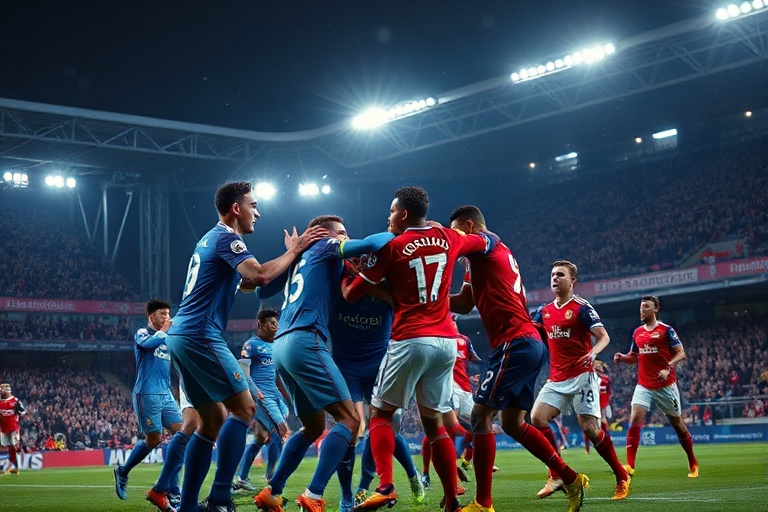
EFL Playoffs Explained: Drama, History, and What’s Next
The English Football League (EFL) playoffs represent one of the most dramatic and unpredictable spectacles in English football. Unlike the straightforward progression of league titles or automatic promotions, the playoffs offer a second-chance saloon for teams that narrowly missed out on direct promotion. With high stakes, intense pressure, and winner-takes-all matches, the playoffs often produce unforgettable moments and underdog triumphs.
The EFL playoffs consist of a series of knockout matches across League One and League Two, as well as the Championship. The top two teams in each league are automatically promoted to the next tier, while teams finishing in third through sixth place enter the playoffs. The semi-finals are played over two legs, with the final held as a single match at Wembley Stadium. This format ensures that every playoff match is critical, creating an atmosphere of tension rarely matched in football.
The Structure: How the Playoffs Work
The EFL playoffs follow a tiered knockout format, providing a clear path to glory for teams that fall just short of automatic promotion. The structure varies slightly depending on the league, but the principles remain consistent. In the Championship, League One, and League Two, the teams finishing third through sixth qualify for the playoffs.
In the Championship playoffs, the third-placed team faces the sixth-placed team, while the fourth-placed team takes on the fifth-placed team. These semi-finals are played over two legs, with the aggregate score determining which teams advance to the final. The League One and League Two playoffs follow the same format, ensuring a fair and competitive process.
The finals for all leagues are single matches played at Wembley Stadium, adding to the prestige and pressure of the occasion. Over the years, these finals have produced countless iconic moments, from last-minute winners to dramatic penalty shootouts. The stakes are never higher, and the rewards—promotion to the next tier—are immense.
Key Differences Between Leagues
- Championship: The highest of the EFL leagues, the Championship playoffs offer the most lucrative prize—promotion to the Premier League. The financial implications are enormous, with even a single season in the top flight potentially transforming a club’s fortunes.
- League One: Promotion to the Championship brings a significant increase in revenue and prestige. The playoffs here are fiercely competitive, with teams often separated by just a few points at the end of the season.
- League Two: The final step for non-league teams, promotion to League One can be a springboard for further growth. The playoffs in League Two are often where smaller clubs punch above their weight, defying expectations.
Memorable Moments: Playoff Drama Through the Years
The EFL playoffs have delivered some of the most thrilling moments in English football. These matches are where legends are made, and careers are defined. From last-minute winners to penalty shootout heartbreak, the playoffs never fail to captivate fans.
One of the most iconic playoff finals came in 2015, when Norwich City secured promotion to the Premier League after a dramatic 2-0 victory over Middlesbrough. The match, played in front of nearly 85,000 fans at Wembley, saw Norwich dominate from start to finish, with goals from Cameron Jerome and Nathan Redmond sealing their return to the top flight.
Another unforgettable moment came in 2018, when Wigan Athletic defied the odds to reach the Championship playoff final. Despite finishing sixth, Wigan went on a remarkable run, defeating local rivals Blackburn Rovers in the semi-finals before falling just short in the final against Aston Villa. Their journey demonstrated the unpredictable nature of the playoffs, where anything is possible.
Underdog Triumphs
The playoffs have a history of producing shocks, with smaller clubs often outperforming their wealthier rivals. These underdog stories are what make the playoffs so special.
In 2017, Millwall reached the League One playoff final after a grueling semi-final victory over Bradford City. The Lions, backed by passionate fans, defeated Scunthorpe United 1-0 in the final, securing promotion to the Championship. Their triumph was a testament to the power of belief and teamwork.
Similarly, in 2019, Newport County made an improbable run to the League Two playoff final. The non-league side had never played in the Football League before, yet they defied expectations by reaching the final at Wembley. Though they fell short against Tranmere Rovers, their journey captured the imagination of football fans worldwide.
Financial and Sporting Impact of Playoff Success
The financial rewards of EFL playoff success are substantial. Promotion to a higher league brings increased revenue from broadcasting rights, sponsorship deals, and matchday income. For clubs in the Championship, promotion to the Premier League can be transformative, with parachute payments providing financial security even in the event of relegation.
In League One and League Two, the financial boost is equally significant. Clubs promoted to the Championship gain access to larger broadcasting deals and higher sponsorship revenues. The increased exposure can also attract better players, creating a virtuous cycle of improvement. For smaller clubs, playoff success can be a stepping stone to long-term stability and growth.
The sporting impact is equally profound. Promotion to a higher league means facing stronger opposition, which can accelerate a club’s development. Players benefit from higher-quality matches, while managers gain valuable experience in more competitive environments. For fans, playoff success brings excitement and hope for the future.
Case Study: Brentford’s Playoff Heartbreak and Redemption
Brentford’s playoff history is a tale of near-misses and eventual triumph. The Bees reached the Championship playoffs in 2015 and 2020, falling agonizingly short on both occasions. However, their eventual promotion in 2021, achieved through a 2-0 playoff final victory over Swansea City, marked the culmination of years of hard work and investment in their academy and recruitment strategy.
Their success underscored the importance of resilience and long-term planning. Unlike clubs that chase short-term success, Brentford’s approach—focusing on sustainable growth—paid off in the end. Their playoff triumph was not just a sporting achievement but a validation of their model.
The Future of the EFL Playoffs
The EFL playoffs continue to evolve, with discussions ongoing about potential changes to the format. Some have suggested expanding the number of teams qualifying for the playoffs, while others advocate for a neutral venue for all matches to reduce home advantage. However, the core appeal of the playoffs—their unpredictability and high stakes—remains unchanged.
As football continues to evolve, the playoffs will likely remain a cornerstone of the EFL calendar. They provide a lifeline for ambitious clubs and a spectacle for fans, ensuring that the end of the season is never anticlimactic.
For clubs like Coventry City, who secured promotion via the playoffs in 2018, the format offers a lifeline. After years of struggle, their playoff triumph reignited hope and set the stage for future success. Similarly, for clubs like Luton Town, who reached the Championship playoffs in 2022, the playoffs represent an opportunity to climb the football pyramid and compete at a higher level.
Potential Changes and Innovations
The EFL has explored various innovations to enhance the playoff experience. One proposal is to introduce a third-place playoff in the Championship, allowing the team finishing third to bypass the playoffs entirely. However, this idea has met with mixed reactions, with some arguing it would devalue the playoff format.
Another potential change is the introduction of video assistant referee (VAR) technology in playoff matches. While VAR has been adopted in the Premier League and Championship, its use in the playoffs remains a topic of debate. Some argue it would improve fairness, while others worry it could disrupt the flow of the matches.
Regardless of these discussions, the EFL playoffs will continue to captivate fans. Their unique blend of drama, tension, and unpredictability ensures they remain one of the most thrilling events in English football.
The EFL playoffs are more than just a series of matches—they are a celebration of football’s unpredictability and the never-say-die spirit that defines the sport. Whether it’s a last-minute winner in the final or a dramatic penalty shootout, the playoffs never fail to deliver unforgettable moments. For clubs and fans alike, they represent hope, ambition, and the chance to write their names into footballing history.
Explore more Sports articles on Dave’s Locker.
Catch up on the latest News to stay informed.