The legacy of aerial combat stretches back over a century, beginning with the fragile biplanes of World War I. Today’s fighter aircraft represent a pinnacle of engineering, blending speed, stealth, and precision into machines that define air superiority. These warplanes are not merely tools of war; they are instruments of deterrence, diplomacy, and technological innovation. Their development reflects broader shifts in global power dynamics, defense strategies, and the nature of modern conflict.
From the dogfights over Europe in the 1940s to the precision strikes in modern conflicts, fighter aircraft have evolved dramatically. The transition from piston-engine fighters to supersonic jets and now to fifth-generation stealth platforms highlights how warfare adapts to new threats. This evolution is driven by advancements in aerodynamics, materials science, avionics, and artificial intelligence.
The Generational Shift: From First to Fifth-Generation Fighters
The classification of fighter aircraft into generations provides a framework for understanding their technological progression. Each generation reflects breakthroughs in propulsion, radar evasion, networking, and combat systems. First-generation fighters, such as the World War II-era P-51 Mustang, relied on piston engines and manual control. These aircraft were limited by their lack of speed and radar, making them vulnerable in modern combat scenarios.
The introduction of jet engines in the late 1940s marked the beginning of the second generation. Aircraft like the MiG-15 and F-86 Sabre brought swept-wing designs and afterburners, enabling supersonic flight. The third generation, exemplified by the F-4 Phantom II and MiG-23, emphasized multi-role capabilities and beyond-visual-range (BVR) missile engagements. These jets introduced radar-guided missiles and more sophisticated avionics.
The fourth generation, represented by the F-15 Eagle and Su-27, focused on maneuverability, fly-by-wire systems, and integrated weapons suites. These aircraft balanced dogfighting prowess with ground attack roles, setting the standard for air combat in the late 20th century. However, the real revolution came with the fifth generation, which prioritizes stealth, sensor fusion, and networked operations.
Key Characteristics of Fifth-Generation Fighters
- Stealth Technology: Reduced radar cross-section through composite materials, angular designs, and radar-absorbent coatings.
- Sensor Fusion: Integration of radar, infrared, and electronic warfare systems to provide a unified battlefield picture.
- Supercruise Capability: Ability to sustain supersonic speeds without relying on afterburners, enhancing range and fuel efficiency.
- Networked Operations: Real-time data sharing with other aircraft, satellites, and ground stations for enhanced situational awareness.
- Multirole Flexibility: Capable of air-to-air, air-to-ground, and electronic warfare missions in a single sortie.
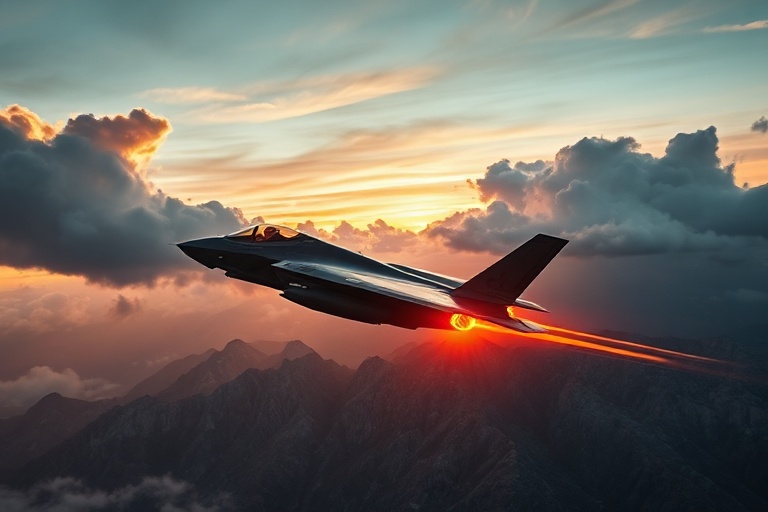
The F-22 Raptor and F-35 Lightning II are the most prominent examples of fifth-generation fighters. The Raptor excels in air dominance roles, while the F-35 serves as a multirole workhorse for allied nations. These aircraft are not just weapons; they are force multipliers that redefine how modern militaries project power.
Strategic Implications: How Fighters Shape Global Power Dynamics
The deployment of advanced fighter aircraft is often a statement of intent. Nations invest billions in these platforms not only for combat but also to signal military capability and political resolve. The presence of a fifth-generation fighter fleet can deter aggression, influence regional stability, and shape alliance structures.
For instance, the introduction of the F-35 into NATO’s inventory has strengthened collective defense capabilities. Its stealth and sensor fusion allow for seamless integration with allied forces, creating a more cohesive and lethal combat network. Similarly, China’s J-20 Mighty Dragon and Russia’s Su-57 Felon highlight the growing competition in Asia and Europe, where air superiority is a key determinant of regional influence.
Fighter aircraft also play a critical role in hybrid warfare scenarios. Their ability to conduct precision strikes and gather intelligence makes them invaluable in conflicts that blend conventional and unconventional tactics. The use of drones alongside manned fighters further extends the reach and lethality of air power, complicating adversaries’ defensive strategies.
The Cost of Dominance: Economic and Ethical Considerations
The development and acquisition of advanced fighter aircraft come with staggering costs. The F-35 program, for example, has exceeded $1.7 trillion in lifecycle costs, making it one of the most expensive defense initiatives in history. These expenditures raise questions about opportunity costs, as funds could be redirected to cyber defense, space assets, or other emerging threats.
Ethically, the proliferation of stealth fighters raises concerns about escalation risks. The ability to conduct covert strikes with minimal detection could lower the threshold for military intervention. Additionally, the reliance on complex, software-driven systems introduces vulnerabilities to cyberattacks, potentially compromising aircraft integrity in critical moments.
The Future of Fighter Aviation: Sixth-Generation and Beyond
The next frontier in fighter aviation is the sixth generation, which promises to push the boundaries of speed, autonomy, and adaptability. Programs like the U.S. Next Generation Air Dominance (NGAD) and Europe’s Future Combat Air System (FCAS) aim to introduce aircraft that can operate in contested environments while leveraging artificial intelligence and directed-energy weapons.
These future fighters will likely feature:
- AI-Powered Decision Making: Autonomous systems that assist pilots in threat evaluation and weapons deployment.
- Directed-Energy Weapons: Laser and microwave systems for precision strikes and electronic warfare.
- Hypersonic Capabilities: Speeds exceeding Mach 5 to outmaneuver enemy defenses.
- Swarming Technology: Deployment of drone wingmen that operate alongside manned fighters, increasing combat mass.
- Adaptive Camouflage: Dynamic materials that alter radar and thermal signatures in real time.
The sixth-generation fighters will not replace fifth-generation platforms but rather complement them, creating a layered and resilient air combat ecosystem. However, the pace of technological advancement also raises concerns about arms races and the potential for destabilizing global security architectures.
Conclusion: The Enduring Legacy of Fighter Aircraft
Fighter aircraft remain at the heart of modern military strategy, embodying the intersection of technology, geopolitics, and warfare. Their evolution reflects humanity’s relentless pursuit of dominance in the skies, a domain that has become as critical as land and sea in the 21st century. As nations continue to invest in next-generation platforms, the balance of power will shift, and new challenges will emerge.
The future of fighter aviation is not just about building faster or stealthier jets; it’s about integrating these platforms into a broader ecosystem of intelligence, cyber defense, and autonomous systems. The lessons learned from decades of aerial combat will continue to shape the design and deployment of these war machines, ensuring that they remain indispensable in the face of evolving threats.
As we look ahead, one thing is clear: the skies will remain a contested domain, and the fighters that dominate them will define the course of global security for generations to come.
For further reading on military technology and its broader implications, explore our Technology and News sections.