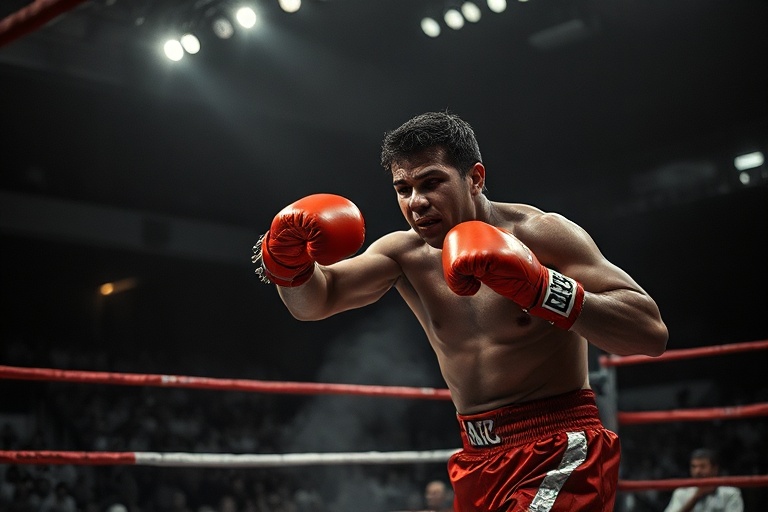
Julio César Chávez: The Legend Who Redefined Boxing
Julio César Chávez remains one of the most iconic figures in boxing history, not just for his record but for the way he redefined what it meant to be a champion. With a career spanning over two decades, Chávez dominated multiple weight classes with a rare combination of skill, durability, and charisma. His influence extended far beyond the ring, shaping the sport’s global appeal and inspiring generations of fighters. Even years after his retirement, Chávez’s legacy continues to resonate with fans and analysts alike.
Early Life and Rise to Stardom
Born on July 12, 1962, in Ciudad Obregón, Sonora, Mexico, Julio César Chávez grew up in a family where boxing was woven into daily life. His father, Rodolfo Chávez, was an amateur boxer, and the young Chávez began training at an early age. By the time he was 16, he had already turned professional, stepping into the ring for his first fight in 1980. His rapid ascent through the ranks was fueled by a relentless work ethic and a natural talent for the sport.
Chávez’s early career was marked by an impressive string of victories, often against seasoned opponents. His technical precision, particularly his mastery of body punching and counterpunching, set him apart from his peers. By 1984, he had already claimed his first world title, winning the WBC super featherweight championship. This victory was just the beginning of what would become a historic run in the sport.
Key Milestones in Chávez’s Early Career
- 1980: Turns professional at age 17.
- 1984: Wins his first world title (WBC super featherweight) in just his 25th fight.
- 1987: Moves up in weight and captures the WBC lightweight title, becoming a multi-division champion.
- 1988: Defends his titles against top contenders, solidifying his reputation as a dominant force.
The 1980s were a golden era for Chávez, as he continued to climb the ranks and face the best fighters of his generation. His rivalry with Edwin Rosario in 1987 is often cited as a turning point, where Chávez’s resilience and tactical brilliance shone through in a grueling 12-round battle. These early triumphs laid the foundation for a career that would eventually see him etch his name into boxing lore.
The Chávez Effect: How He Transformed Boxing
Julio César Chávez wasn’t just a boxer; he was a cultural icon who brought global attention to the sport. His fights were not just athletic contests but spectacles that transcended boxing, drawing massive audiences in Mexico, the United States, and beyond. Chávez’s ability to connect with fans on a personal level, combined with his technical prowess, made him a household name long before the era of social media.
One of the most significant ways Chávez transformed boxing was by elevating the sport’s profile in Latin America. Before Chávez, boxing in Mexico was dominated by a handful of stars, but he single-handedly brought the spotlight to the country’s rich fighting tradition. His fights became must-watch events, and his rivalry with fellow Mexican great Salvador Sánchez is still remembered as one of the greatest in boxing history.
Chávez’s influence extended to the business side of boxing as well. His fights generated record-breaking pay-per-view buys and arena sell-outs, proving that boxing could thrive as a mainstream sport. Promoters quickly realized the financial potential of featuring Chávez, and his presence in the ring often meant a guaranteed draw. This shift helped pave the way for future Mexican champions like Erik Morales, Juan Manuel Márquez, and Canelo Álvarez, who would later carry on his legacy.
Chávez’s Impact on the Sport
- Globalized Boxing: Chávez’s fights brought international attention to boxing, particularly in Spanish-speaking markets.
- Elevated Rivalries: His battles with Sánchez, Meldrick Taylor, and others became defining moments in boxing history.
- Financial Model: Chávez’s ability to draw crowds and PPV buys set a new standard for the sport’s economics.
- Cultural Icon: He became a symbol of Mexican pride and resilience, transcending the sport itself.
Beyond his in-ring achievements, Chávez’s legacy is also tied to his longevity. He fought at a high level for over two decades, a rarity in a sport known for its physical toll. His ability to adapt and remain competitive against younger opponents was a testament to his skill and determination. Even in his 40s, Chávez continued to fight, though his later years were marked by the inevitable decline that comes with age.
The Fights That Defined a Generation
Few boxers in history have had as many defining fights as Julio César Chávez. His career was filled with battles that captivated audiences and left an indelible mark on the sport. One of his most famous fights came in 1993 against Pernell Whitaker, a bout that ended in a controversial draw. Many believed Whitaker had done enough to win, and the decision remains one of the most debated in boxing history.
Another iconic moment came in 1990 when Chávez faced Meldrick Taylor in a fight billed as the “Thunder and Lightning” matchup. Taylor, a fast and skilled fighter, was ahead on points before Chávez rallied in the final rounds to knock him out in the 12th. The fight is often cited as one of the greatest in boxing history, showcasing Chávez’s never-say-die attitude.
Chávez’s rivalry with Hector Camacho was another highlight of his career. Their two fights in the 1990s were high-energy affairs, filled with trash talk and excitement. Chávez’s victory in their first meeting in 1992 solidified his status as one of the best pound-for-pound fighters in the world at the time.
The late 1990s and early 2000s saw Chávez’s career wind down, but he remained a draw in the ring. His final fight in 2005, a loss to Grover Wiley, marked the end of an era. Yet, even in defeat, Chávez displayed the heart and determination that had defined his career. His retirement was met with widespread acclaim, and he left the sport as one of its most beloved figures.
Legacy and Influence on Modern Boxing
Julio César Chávez’s legacy is not just measured in titles or knockouts but in the way he inspired future generations. Fighters like Canelo Álvarez have often cited Chávez as a major influence, both in their approach to the sport and their ability to connect with fans. Chávez’s emphasis on technique, work ethic, and respect for the game set a standard that few have matched.
His impact is also evident in the way boxing is promoted today. Chávez proved that a fighter could be both a technical master and a marketable star, a combination that has become increasingly important in the modern era. Promoters now seek fighters who can deliver in the ring while also engaging audiences outside of it, a model Chávez helped establish.
Beyond the sport itself, Chávez’s cultural significance cannot be overstated. He became a symbol of Mexican resilience and pride, a hero to millions who saw him as a reflection of their own struggles and triumphs. His fights were not just sporting events but cultural touchstones, bringing together families and communities to celebrate shared heritage.
Today, Chávez’s legacy lives on in the fighters he mentored and the records he set. While the sport of boxing has evolved, his influence remains a constant reminder of what it means to be a true champion. Whether it’s in the ring, in the gym, or in the hearts of fans, Julio César Chávez’s impact is undeniable.
For those looking to explore more about the legends of boxing and their cultural impact, visit Dave’s Locker’s Sports and Entertainment sections for deeper insights into the figures who shaped the sport.
Chávez’s Enduring Influence
- Mentorship: Many modern Mexican fighters cite Chávez as a key influence in their careers.
- Marketability: Chávez’s ability to draw crowds and PPV buys set a template for future champions.
- Cultural Icon: His fights were not just sporting events but cultural phenomena that transcended boxing.
- Longevity: His career spanned over two decades, a testament to his skill and durability.
In the end, Julio César Chávez was more than just a boxer. He was a symbol of excellence, a cultural icon, and a legend whose impact will be felt for generations to come. His story is a reminder that greatness in sports is not just about titles or statistics but about the lives touched and the legacy left behind.