The Eurovision Song Contest is one of the globe’s most-watched live events, drawing over 160 million viewers annually. At its core, the competition relies on a transparent yet complex voting system that blends jury and public votes. Understanding how the Eurovision vote functions reveals why certain countries consistently rank higher—and why others might feel their favorites were overlooked.
The Two-Part Voting System Explained
Since 2009, Eurovision has used a dual scoring structure: 50% comes from professional juries in each participating country, and 50% from the public via televoting. Each jury consists of five music industry professionals who award points based on artistic merit, vocal quality, stage performance, and originality. These jurors cannot vote for their own country, ensuring fairness. Meanwhile, televoting allows the general public to cast ballots via phone or app, with votes aggregated by the European Broadcasting Union (EBU).
Both components carry equal weight, but their influence varies depending on turnout and regional voting patterns. For instance, countries with large diasporas often receive strong public votes from abroad, while jury scores tend to reward technical excellence and innovation. This balance aims to prevent bloc voting and ensure a level playing field.
How Points Are Distributed
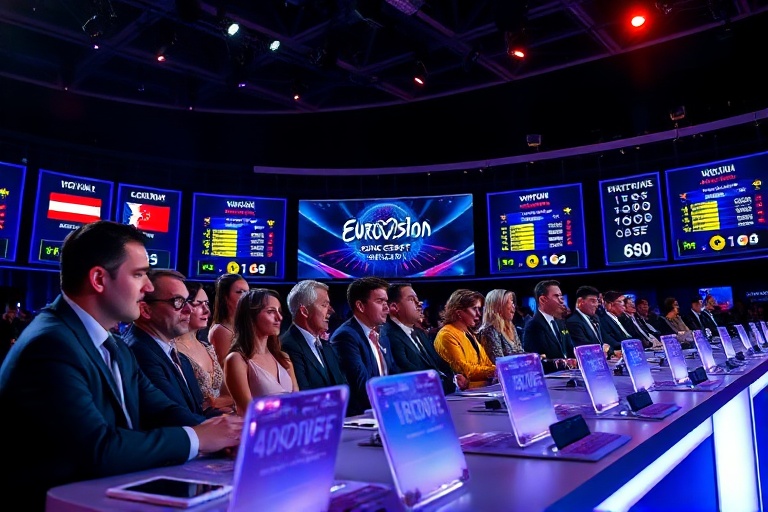
The voting process unfolds in two phases. First, each country awards 12 points to its favorite song, 10 to the second, and then 8 through 1 to the remaining entries. These are known as “top-line” scores. After that, the remaining points—from 7 down to 1—are distributed based on the jury or televote rankings. The EBU uses a secure electronic system to tally votes in real time, with results displayed during the live broadcast.
This system creates drama as countries watch their scores climb one by one. In 2023, Sweden’s Loreen won with a historic 583 points, thanks to near-perfect jury scores and robust public support across Europe. Meanwhile, countries like Finland and Israel scored highly with juries but lagged in televoting, highlighting the divide between critical acclaim and popular appeal.
The Controversies Surrounding Eurovision Voting
Despite its structured format, Eurovision voting has long been scrutinized for perceived biases and political alliances. Music critics and fans often cite “neighborly voting,” where countries in the same region award each other high scores. For example, Greece and Cyprus frequently exchange top marks, as do the Baltic states and Nordic countries. While such patterns aren’t illegal, they fuel debates about fairness.
Another recurring issue is the “bloc vote,” where groups of countries consistently support each other due to cultural or political ties. The so-called “Big Five”—France, Germany, Italy, Spain, and the United Kingdom—are automatically qualified for the final but rarely finish at the top, partly because their public votes are less concentrated. Meanwhile, smaller countries like Moldova and Azerbaijan often rely on strategic alliances to secure higher placements.
- Jury vs. Televote Discrepancies: Some years, the jury and public vote results clash dramatically. In 2016, Australia’s Dami Im placed second overall despite winning the televote. Jury scores from Eastern Europe favored Ukraine’s Jamala, who ultimately won the contest.
- Zero Points Phenomenon: Receiving no points from a jury or televote is rare but devastating. In 2017, the United Kingdom scored “nul points” from the public, a first for a country with decades of Eurovision history.
- Political Undercurrents: The 2022 contest saw Ukraine’s victory amid Russia’s invasion, with many interpreting the win as a symbolic gesture. While the EBU denies political influence, the geopolitical context undeniably shapes voting behavior.
How Technology Is Changing Eurovision Voting
The rise of digital platforms has transformed how fans engage with Eurovision voting. In 2023, the EBU introduced a new app feature allowing viewers to cast votes directly via social media, increasing accessibility. This shift reflects a broader trend in live events, where interactivity enhances fan investment. Additionally, blockchain technology has been proposed to increase transparency in vote verification, though it remains untested in the contest.
Social media also amplifies voting trends. A viral performance or meme can boost a song’s popularity overnight, influencing both public votes and media coverage. For instance, Finland’s Käärijä became a sensation in 2023 after his energetic routine and fan-driven campaigns on TikTok. His second-place finish—despite winning the televote—showed how digital engagement can rival traditional scoring.
Another technological advancement is the use of AI to analyze voting patterns. Researchers have mapped regional preferences and identified clusters where certain countries consistently rank highly. While the EBU hasn’t adopted AI for live scoring, such tools could help detect anomalies or bloc voting in the future.
What the Future Holds for Eurovision Voting
The Eurovision Song Contest continues to evolve, and so does its voting system. In 2024, the EBU announced plans to experiment with a “split jury-televote” model, where countries could choose to allocate their public vote differently. This change aims to reduce discrepancies between jury and public preferences, though it risks further complicating an already intricate process.
There’s also growing pressure to address bloc voting. Some fans advocate for a rotation system where countries take turns hosting or receiving fewer neighborly votes. Others suggest increasing the weight of the public vote to reflect modern audience tastes. However, any major overhaul would require consensus among 43 participating broadcasters, making change a slow process.
One thing is certain: Eurovision voting will remain a blend of tradition, politics, and innovation. As long as the contest celebrates diversity and live performance, its scoring system will continue to spark debate—and deliver unforgettable moments.
For those interested in the cultural impact of Eurovision, visit our Music section to explore deeper analyses of past contests and performances.
© 2024 Dave’s Locker. All rights reserved.