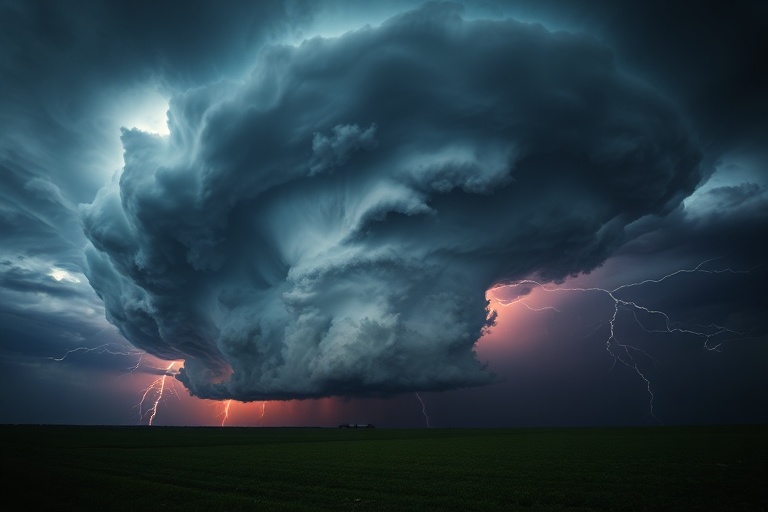
The past decade has seen an undeniable shift in weather patterns worldwide. What were once considered rare or seasonal anomalies—heatwaves scorching continents, hurricanes intensifying overnight, or floods submerging entire cities—are now recurring headlines. The scientific community has long warned about climate change, but the acceleration of extreme weather events suggests we’re witnessing more than just statistical outliers. These events are reshaping economies, displacing communities, and forcing industries to rethink their strategies.
The Science Behind the Storms: What’s Driving the Change?
At the core of this transformation is the Earth’s climate system, which operates on delicate balances of temperature, pressure, and moisture. Rising global temperatures, primarily driven by greenhouse gas emissions, have disrupted these balances in measurable ways. Warmer air holds more moisture, leading to heavier rainfall and snowfall in some regions. Meanwhile, the Arctic’s rapid warming weakens the jet stream, a high-altitude river of wind that steers weather systems. When the jet stream slows or meanders, weather patterns stall, prolonging droughts in some areas while dumping months’ worth of rain in days elsewhere.
Scientists also point to the increasing frequency of compound events—situations where multiple extreme weather phenomena coincide. For example, a heatwave that dries out vegetation can later fuel wildfires when strong winds arrive. These cascading disasters amplify the damage, leaving communities and governments scrambling to respond. The National Oceanic and Atmospheric Administration (NOAA) has documented a steady increase in billion-dollar weather disasters in the U.S. alone, from an average of two per year in the 1980s to over ten annually in the past decade.
Key indicators of climate-driven weather extremes
- Temperature spikes: Record-breaking heatwaves, such as those in Europe in 2022 and the Pacific Northwest in 2021, are now five times more likely due to human-induced warming, according to the World Weather Attribution initiative.
- Intensified precipitation: The atmosphere’s ability to hold 7% more moisture per 1°C of warming has led to flash floods in urban areas like New York City and Zhengzhou, China, where entire subway systems were submerged in 2021.
- Stronger tropical cyclones: Hurricanes and typhoons are becoming more intense, with wind speeds and rainfall rates increasing by up to 30% in some cases, as seen with Hurricane Ian in 2022.
- Prolonged droughts: Regions like the U.S. Southwest and the Horn of Africa are experiencing “megadroughts” that last decades, straining water supplies and agricultural output.
Human Costs: Displacement, Health, and Economic Fallout
The human toll of extreme weather is staggering. In 2023, the Internal Displacement Monitoring Centre reported that over 23 million people were displaced by weather-related disasters—a figure that has doubled since 2010. Low-income communities, often located in high-risk areas like floodplains or coastal zones, bear the brunt of these displacements. The World Bank estimates that by 2050, over 216 million people could become climate migrants, fleeing uninhabitable regions.
Health impacts extend beyond immediate injuries or fatalities. Extreme heat exacerbates chronic conditions like heart disease and respiratory illnesses, particularly among vulnerable populations such as the elderly and outdoor workers. The 2021 Pacific Northwest heatwave killed over 1,400 people, many of whom were found alone in unventilated homes. Meanwhile, hurricanes and floods trigger outbreaks of waterborne diseases, such as cholera and leptospirosis, as contaminated water sources become widespread.
The economic ripple effects are equally severe. The 2023 floods in Libya, caused by Storm Daniel, destroyed critical infrastructure and left thousands dead or missing. The estimated cost of recovery exceeds $2 billion—a sum that strains already fragile economies. In the U.S., the 2023 wildfires in Maui resulted in $5.6 billion in insured losses, while the broader economic impact, including lost tourism and business interruptions, could reach double that amount. Insurance companies are responding by raising premiums or withdrawing coverage entirely from high-risk areas, leaving homeowners and businesses in a precarious position.
Industries on the Frontlines: Adaptation and Innovation
From agriculture to energy, industries are being forced to adapt to a new reality where volatility is the only constant. Farmers are turning to drought-resistant crops and precision irrigation systems to cope with erratic rainfall. In California, almond growers have invested in soil moisture sensors and AI-driven weather forecasting to optimize water use, a shift that has reduced water consumption by up to 30% in some operations.
The energy sector faces dual challenges: ensuring resilience against extreme weather while transitioning to cleaner sources. Hurricane season has repeatedly knocked out power grids, as seen in Puerto Rico after Hurricane Maria in 2017, where some areas remained without electricity for nearly a year. In response, utilities are hardening infrastructure with underground power lines, microgrids, and battery storage systems. Meanwhile, renewable energy projects are being designed with climate resilience in mind. Offshore wind farms, for example, are being built to withstand Category 5 hurricane winds, a feat once considered impossible.
Transportation networks are also undergoing transformations. Rail companies in Europe and Japan are installing early warning systems for landslides and heat-related track buckling. Airlines are rerouting flights to avoid turbulence linked to stronger jet streams, a move that has reduced delays but increased fuel consumption. Even the shipping industry is adapting, with ports investing in higher seawalls and automated cranes to handle extreme tides and storms.
Policy and Preparedness: Can Society Keep Up?
The urgency of the situation has spurred governments to act, though progress remains uneven. The Paris Agreement, adopted in 2015, aims to limit global warming to 1.5°C above pre-industrial levels, but current policies put the world on track for nearly 3°C of warming by 2100. This gap highlights the need for accelerated action, not just in reducing emissions but also in preparing for the changes already underway.
Countries like the Netherlands and Bangladesh are leading the way in climate adaptation. The Dutch, long accustomed to battling floods, have invested billions in the “Room for the River” program, which creates floodplains and water storage areas to absorb excess water. Bangladesh, one of the most flood-prone nations, has built thousands of cyclone shelters and early warning systems that have saved countless lives. These examples demonstrate that proactive planning can mitigate disaster impacts, even in the most vulnerable regions.
Yet, challenges persist. Political inertia, short-term economic priorities, and global inequities hinder collective action. Wealthy nations, which have contributed the most to historical emissions, often leave developing countries to bear the brunt of climate impacts without adequate support. The U.N. estimates that developing nations need $300 billion annually by 2030 to adapt to climate change, a figure that pales in comparison to the $17 trillion spent on fossil fuel subsidies between 2015 and 2022.
For individuals, preparedness is becoming a necessity rather than an option. The Federal Emergency Management Agency (FEMA) recommends creating emergency kits with food, water, and medical supplies, as well as developing evacuation plans. Communities are also stepping up, with neighborhood watch programs and local resilience networks providing mutual aid during crises. These grassroots efforts complement larger-scale initiatives, proving that adaptation can start at any level.
Actionable steps for individuals and communities
- Stay informed: Sign up for local emergency alerts and monitor weather forecasts from trusted sources like NOAA or the Met Office.
- Prepare your home: Install storm shutters, reinforce roofs, and elevate utilities to reduce flood damage. Consider investing in a backup power source.
- Support sustainable policies: Advocate for local and national initiatives that reduce emissions and invest in renewable energy and resilient infrastructure.
- Build community networks: Join or organize local emergency response teams to share resources and knowledge during disasters.
- Reduce your carbon footprint: Small changes, such as reducing energy consumption, eating less meat, or using public transportation, collectively make a difference.
The era of extreme weather is not a distant threat—it’s the present reality. While the challenges are daunting, they also present an opportunity to rethink how we live, work, and interact with the planet. The choices made today will determine whether future generations inherit a world of manageable risks or one overwhelmed by unchecked disasters. The time to act is now, before the next storm hits.
Related Reading
Explore these categories on Dave’s Locker for more insights into climate resilience and environmental trends:
- Science: Delve into the latest research on climate change and its global impacts.
- Technology: Discover how innovation is helping societies adapt to extreme weather.