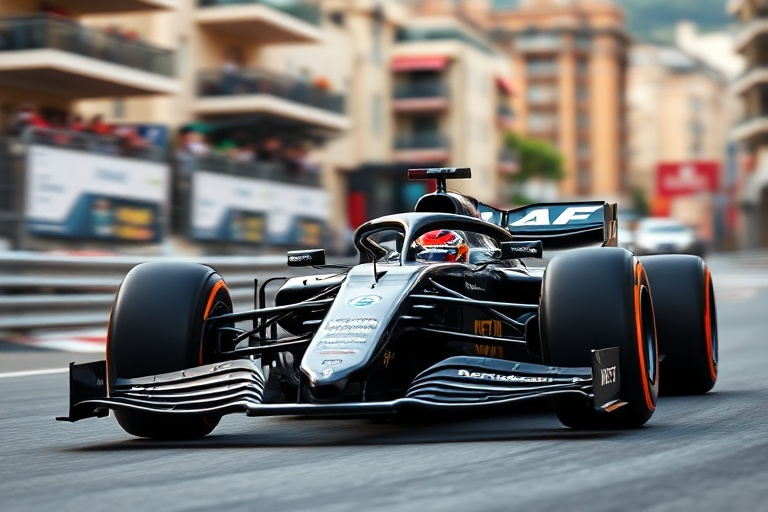
Formula racing stands at the intersection of engineering brilliance, split-second decision-making, and sheer human endurance. With its origins tracing back to the early 20th century, this motorsport discipline has evolved into a global spectacle that blends technological innovation with athletic prowess. Unlike other forms of racing, Formula racing is defined by strict technical regulations that level the playing field while pushing the boundaries of automotive performance.
Today, Formula racing encompasses several distinct series, each with its own identity and fanbase. The most prestigious of these is Formula 1 (F1), the pinnacle of open-wheel racing. But the ecosystem also includes Formula 2, Formula 3, and regional championships like Formula Regional and Formula E—the electric-powered counterpart that’s quickly gaining traction. These series serve as proving grounds for young talent and incubators for the next generation of automotive pioneers.
The Evolution of Formula Racing: From Humble Beginnings to Global Domination
The story of Formula racing begins in Europe, where early 20th-century road races tested both machines and drivers to their limits. The first official Grand Prix was held in 1906 in Le Mans, France, but it wasn’t until the 1950s that Formula 1 was formally established as the premier single-seater championship. The inaugural World Championship season in 1950 featured legendary teams like Alfa Romeo and drivers such as Juan Manuel Fangio, who dominated the early years with a mix of skill and mechanical sympathy.
By the 1960s and 70s, Formula racing became a canvas for innovation. Wings, aerodynamic ground effects, and turbocharged engines entered the fray, transforming cars from simple mechanical beasts into complex, high-downforce machines. The era also saw the rise of iconic rivalries, such as those between Jackie Stewart and Jim Clark, or Niki Lauda and James Hunt—duels that transcended the track and captivated millions. Safety, too, evolved during this period, spurred by tragedies like the 1970 crash at Monza that claimed Jochen Rindt’s life.
The 1980s and 90s marked another leap forward, with active suspension, semi-automatic gearboxes, and advanced materials like carbon fiber becoming standard. McLaren’s MP4/4, driven by Ayrton Senna and Alain Prost, remains one of the most dominant cars in F1 history, winning 15 of 16 races in 1988. The sport’s global reach expanded as races were added in Japan, Brazil, and Malaysia, reflecting the growing commercial appeal of Formula racing.
A Global Sport with Local Roots
While Formula 1 is often associated with European circuits like Monaco, Silverstone, and Spa-Francorchamps, its influence stretches far beyond the continent. In the Americas, Brazil’s Ayrton Senna and Argentina’s Juan Manuel Fangio became national heroes, their legacies immortalized in museums and street art. The United States, meanwhile, has its own rich history in open-wheel racing through IndyCar, which shares some DNA with Formula racing but remains a distinct entity.
Asia has emerged as a critical market for Formula racing. Japan’s Suzuka Circuit is a fan favorite, known for its challenging figure-eight layout, while the Singapore Grand Prix under the floodlights of Marina Bay showcases the sport’s ability to merge speed with urban glamour. The Middle East entered the fray with the Abu Dhabi Grand Prix in 2009, adding a desert finale to the season that has since become a staple in the F1 calendar.
Even in Africa, Formula racing has left its mark. The South African Grand Prix, held in Kyalami from 1967 to 1993, was a highlight of the F1 season, drawing top drivers and teams to the continent. While the race has been dormant for decades, there’s renewed interest in bringing motorsport back to Africa, with potential venues in Morocco and Rwanda being explored.
Behind the Scenes: The Unsung Heroes of Formula Racing
Formula racing is often celebrated for its drivers, but the sport’s success hinges on the work of thousands of engineers, strategists, and mechanics operating behind the scenes. A modern F1 team employs upwards of 1,000 people, each playing a crucial role in extracting performance from the car. The aerodynamicists, for instance, spend countless hours in wind tunnels and computational fluid dynamics (CFD) simulations to optimize every millimeter of the chassis.
The power unit—a hybrid system combining a turbocharged internal combustion engine with electric motors—is another marvel of modern engineering. Teams like Mercedes, Ferrari, and Red Bull Powertrains invest hundreds of millions in R&D to gain even the slightest edge in efficiency or power output. Pit crews, meanwhile, train relentlessly to execute flawless tire changes and refueling stops, where a single error can cost a race.
Strategy is another invisible force shaping outcomes. Race engineers monitor telemetry in real-time, making split-second decisions about tire compounds, fuel loads, and pit stops. A well-timed undercut or overcut can leapfrog a driver several positions, while a miscalculation can lead to a costly loss. The 2021 Abu Dhabi Grand Prix, where Max Verstappen overtook Lewis Hamilton on the final lap, remains a case study in strategic brilliance—and controversy.
The Role of Data and Technology
Formula racing has long been a pioneer in adopting cutting-edge technology. From the introduction of telemetry in the 1980s to the use of AI-driven performance simulations today, data has become the lifeblood of the sport. Teams collect terabytes of data per race, analyzing everything from tire temperatures to driver biometrics. Even the drivers themselves are wired with sensors that monitor heart rate, G-forces, and reaction times.
Virtual reality (VR) has also entered the fray, allowing drivers to familiarize themselves with new circuits without leaving the factory. Wind tunnels, once the sole domain of aerodynamic testing, are now complemented by advanced CFD tools that can model airflow in ways previously unimaginable. The push toward sustainability has further accelerated innovation, with Formula E leading the charge in electric powertrain development and energy recovery systems.
The Cultural Impact of Formula Racing: More Than Just a Sport
Formula racing is more than a competition; it’s a cultural phenomenon that transcends borders and socioeconomic divides. In countries like Italy, tifosi—die-hard Ferrari fans—pack the streets of Maranello for the team’s annual launch, their passion bordering on religious fervor. In the UK, the sport is woven into the national identity, with Silverstone’s British Grand Prix drawing over 400,000 spectators annually, making it one of the most attended sporting events in the country.
The sport’s influence extends to fashion, music, and even language. Iconic designs like the Ferrari red or the McLaren papaya orange have become synonymous with speed and prestige. Musicians and artists, from David Bowie to Banksy, have drawn inspiration from Formula racing, while phrases like “pole position” and “pit stop” have entered everyday vernacular.
Formula racing also plays a significant role in education and workforce development. Many engineers and technicians who cut their teeth in motorsport go on to careers in aerospace, renewable energy, and automotive design. The sport’s emphasis on STEM fields has led to partnerships with universities and schools, inspiring the next generation of innovators.
Sustainability and the Future of Formula Racing
The sport faces increasing scrutiny over its environmental impact, particularly regarding carbon emissions and energy consumption. Formula 1 has responded with a bold sustainability strategy, targeting net-zero carbon emissions by 2030. This includes using sustainable fuels, reducing waste, and promoting greener logistics. The introduction of the F1 Sustainability Programme in 2022 underscores the sport’s commitment to leading by example.
Formula E, meanwhile, has positioned itself as the vanguard of electric racing. With races in urban centers like Rome, Paris, and New York, the series showcases the potential of electric vehicles (EVs) while pushing the boundaries of battery technology and regenerative braking. The Gen3 era, which began in 2022, features even more advanced powertrains and a focus on energy efficiency, with cars capable of racing with minimal energy loss.
As the world shifts toward sustainability, Formula racing is uniquely positioned to drive change. The lessons learned on the track—whether in energy recovery, lightweight materials, or aerodynamic efficiency—have applications far beyond motorsport. In this way, Formula racing isn’t just keeping pace with the times; it’s helping to shape a more sustainable future.
Conclusion: Why Formula Racing Endures
Formula racing’s enduring appeal lies in its ability to balance tradition with innovation. It’s a sport where history and modernity coexist, where the echoes of Fangio and Senna can be heard in the roar of a hybrid power unit. It’s a spectacle that captivates millions, from the neon-lit streets of Singapore to the hallowed tarmac of Monza.
But more than anything, Formula racing is a testament to human ingenuity. It’s a reminder that speed, when paired with precision, strategy, and sustainability, can transcend mere competition and become a force for progress. As the sport looks toward an electric and hybrid future, one thing is certain: the need for speed will always find a way.
For those looking to explore the broader world of motorsport, Dave’s Locker’s Sports section offers a deep dive into racing’s many disciplines, from endurance classics to rallycross. And for the tech enthusiasts eager to understand the engineering behind the spectacle, our Technology category breaks down the innovations that are redefining what’s possible on four wheels.