fighter aircraft
Fighter Aircraft: The Evolution of Aerial Dominance
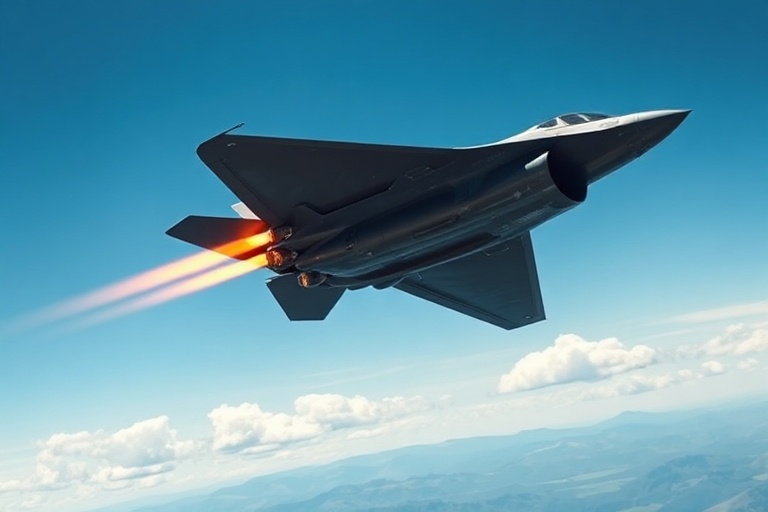
Fighter aircraft have long stood as the cornerstone of modern military aviation. These machines are not merely tools of war; they represent decades of technological advancement, strategic innovation, and engineering precision. From the dogfights of World War I to the stealth operations of today, fighter jets have continually redefined what is possible in aerial combat.
What sets fighter aircraft apart is their ability to combine speed, agility, and firepower in ways that no other aircraft can match. Whether deployed for air superiority, ground attack, or reconnaissance, these jets are designed to outperform their adversaries in virtually every scenario. Their development reflects the ever-changing demands of warfare, where adaptability and technological superiority often determine victory.
The Birth of Fighter Aircraft: From Biplanes to Jets
The history of fighter aircraft begins in the early 20th century, a time when aviation was still in its infancy. The first dedicated fighter planes emerged during World War I, with aircraft like the British Sopwith Camel and the German Fokker Dr.I becoming legends of the era. These biplanes, with their lightweight frames and machine gun synchronizations, revolutionized aerial combat.
By World War II, fighter aircraft had evolved into sleek, single-wing designs capable of reaching speeds over 400 mph. The Supermarine Spitfire and the Messerschmitt Bf 109 became iconic symbols of their respective nations, showcasing the importance of speed, maneuverability, and firepower. The introduction of jet engines in the latter stages of the war marked a turning point, with aircraft like the German Messerschmitt Me 262 hinting at the future of aerial warfare.
The post-war era saw rapid advancements in jet technology. The Korean War introduced the world to the first true jet-on-jet combat, where the North American F-86 Sabre and the Mikoyan-Gurevich MiG-15 clashed in some of the most intense dogfights in history. These conflicts underscored the need for faster, more agile aircraft capable of engaging in beyond-visual-range (BVR) combat.
Modern Fighter Jets: Stealth, Speed, and Sophistication
Today’s fighter aircraft are marvels of modern engineering, incorporating cutting-edge technologies that were once the stuff of science fiction. Stealth remains one of the most critical features, allowing jets like the Lockheed Martin F-35 Lightning II and the Chengdu J-20 to operate undetected in hostile airspace. Radar-absorbing materials, angular designs, and advanced avionics systems work together to minimize their visibility to enemy radar.
Speed and agility remain essential, but modern fighters are also defined by their sensor suites and networked capabilities. The Boeing F/A-18E/F Super Hornet, for example, is equipped with an advanced APG-79 Active Electronically Scanned Array (AESA) radar, which provides unparalleled situational awareness. This allows pilots to engage multiple targets simultaneously while maintaining a low radar cross-section.
The F-35, often described as a fifth-generation fighter, takes integration to another level. Its advanced sensor fusion combines data from multiple sources, presenting pilots with a comprehensive picture of the battlefield. This networked approach enables the F-35 to act as a “quarterback” in modern air operations, coordinating strikes and gathering intelligence for allied forces.
The Role of Fighter Aircraft in Modern Warfare
Fighter aircraft are no longer just about dogfights and air superiority. Today, they play a multifaceted role in modern warfare, supporting ground troops, conducting electronic warfare, and even serving as platforms for cyber operations. The Eurofighter Typhoon, for instance, is capable of performing both air-to-air and air-to-ground missions, making it a versatile asset for NATO forces.
One of the most significant shifts in recent years has been the rise of unmanned aerial vehicles (UAVs) and their integration with traditional fighter jets. While drones like the MQ-9 Reaper excel in long-endurance surveillance and strike missions, they lack the speed and maneuverability of manned fighters. This has led to the development of collaborative combat aircraft (CCA) programs, where drones and fighters operate together to maximize combat effectiveness.
The following list highlights some of the most influential fighter aircraft in service today:
- F-35 Lightning II – A fifth-generation multirole stealth fighter designed for air superiority, ground attack, and electronic warfare.
- Su-57 Felon – Russia’s first fifth-generation fighter, featuring advanced stealth, supercruise, and networked capabilities.
- Eurofighter Typhoon – A twin-engine, canard-delta wing multirole fighter used extensively by European air forces.
- Chengdu J-20 – China’s stealth fighter, optimized for long-range interception and penetration missions.
- F-22 Raptor – A twin-tail, single-seat, all-weather stealth tactical fighter designed for air dominance.
The Future of Fighter Aircraft: Hypersonics and AI
The next frontier in fighter aircraft development is likely to be dominated by hypersonic technology and artificial intelligence (AI). Hypersonic missiles, capable of traveling at speeds exceeding Mach 5, pose a significant challenge to current air defense systems. The Hypersonic Air-breathing Weapon Concept (HAWC), developed by DARPA, represents one of the most ambitious projects in this field, aiming to create a cruise missile that can outpace any existing interceptor.
AI is also poised to revolutionize air combat. The U.S. Air Force’s Skyborg program, for example, seeks to develop an autonomous wingman capable of accompanying manned fighters into combat. These AI-driven systems could handle high-risk missions, such as electronic warfare or strike missions, while human pilots focus on strategy and decision-making.
Another area of innovation is directed-energy weapons. The U.S. Air Force has tested airborne laser systems, such as the High Energy Laser (HEL) mounted on the AC-130J Ghostrider, which could potentially arm future fighter jets. These weapons offer the promise of unlimited ammunition, as they are powered by the aircraft’s onboard systems rather than traditional explosives.
The challenges ahead are substantial. Budget constraints, geopolitical tensions, and the rapid pace of technological change all play a role in shaping the future of fighter aircraft. Yet, one thing remains clear: the fighter jet will continue to evolve, adapting to new threats and ensuring that air dominance remains a critical component of modern military strategy.
Conclusion
Fighter aircraft have come a long way since the biplanes of World War I. Today, they are at the forefront of a technological revolution, blending stealth, speed, and intelligence in ways that were once unimaginable. As warfare continues to evolve, so too will these remarkable machines, ensuring that they remain indispensable to the defense of nations around the world.
For aviation enthusiasts and military historians alike, the story of fighter aircraft is far from over. With advancements in AI, hypersonics, and directed-energy weapons on the horizon, the next chapter promises to be as thrilling as any that came before.
To explore more about the history and technology behind these incredible machines, visit our aviation category on Dave’s Locker.