Julio César Chávez: How Mexico’s Boxing Legend Redefined Greatness
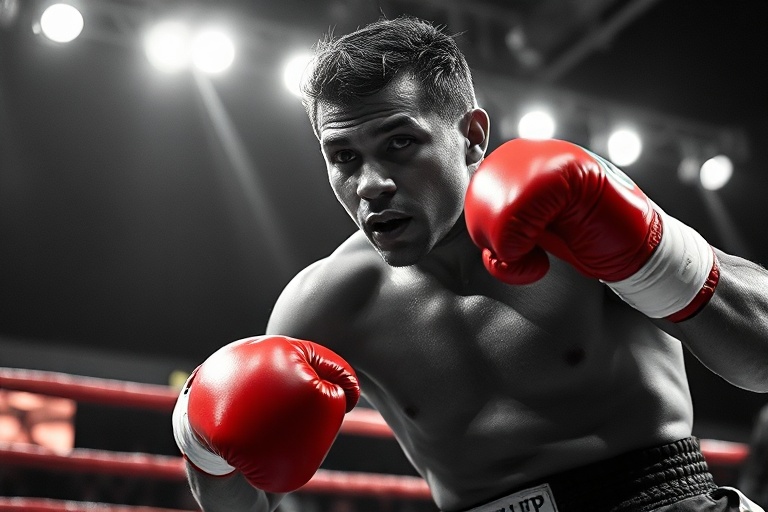
Julio César Chávez remains one of the most iconic figures in boxing history, a fighter whose name evokes power, precision, and an unmatched competitive spirit. Born on July 12, 1962, in Ciudad Obregón, Sonora, Mexico, Chávez rose from humble beginnings to become a global symbol of Mexican boxing excellence. His career spanned over three decades, during which he captured world titles in three weight classes and faced nearly every top contender of his era. More than just a champion, Chávez became a cultural touchstone for millions of fans, both in Mexico and beyond.
What set Chávez apart was not only his technical mastery but his ability to dominate opponents with an almost surgical approach. Known for his relentless body punching, iron chin, and tactical brilliance, he brought a level of discipline and consistency rarely seen in the sport. His rivalry with other legends like Edwin Rosario, Meldrick Taylor, and Pernell Whitaker defined an era and elevated the profile of boxing in the 1980s and 1990s. Decades later, his influence endures, shaping how Mexican fighters approach the sport and how fans perceive greatness in the ring.
The Rise of a Mexican Icon
Chávez began his professional career at the age of 17, quickly rising through the ranks with a blend of speed, power, and ring IQ. By 1984, he had already claimed his first world title—the WBC super featherweight championship—by knocking out Mario Martínez in eight rounds. This victory marked the beginning of a historic reign that would see him defend the belt 11 times, a record that underscored his dominance.
His early years were defined by a relentless work ethic. Chávez trained under the guidance of his father, Rodolfo Chávez, a former boxer, and absorbed lessons in patience and strategy. Unlike many fighters who relied solely on aggression, Chávez studied opponents meticulously, exploiting weaknesses with calculated precision. This approach made him a formidable force, particularly in Mexico, where his success inspired a generation of young fighters to pursue boxing with similar dedication.
Key Moments in Chávez’s Early Career
- 1980: Turns professional at age 17 with a first-round knockout of Andres Felix.
- 1984: Wins his first world title (WBC super featherweight) by defeating Mario Martínez.
- 1987: Captures the WBC lightweight title with a knockout of Edwin Rosario, a fight many consider one of the greatest in lightweight history.
- 1988: Defends his lightweight title against José Luis Ramírez in a grueling 12-round war, further cementing his reputation for durability.
By the late 1980s, Chávez had established himself as a must-see attraction. His fights drew massive audiences in Mexico and the United States, helping to globalize boxing’s appeal. His rivalry with Rosario, in particular, became a benchmark for lightweight division excitement, showcasing the kind of technical and tactical chess match that captivated fans worldwide.
Chávez at His Peak: Dominance Across Three Weight Classes
The early 1990s represented the zenith of Chávez’s career. In 1990, he moved up to light welterweight and claimed the WBC title by defeating Meldrick Taylor in a fight that became legendary for its drama. The bout, billed as “The Fight of the Decade,” saw Chávez rally from a deep deficit to stop Taylor in the final seconds of the 12th round. The victory was not just a win—it was a statement, proving that Chávez could overcome adversity and deliver under pressure.
This period also saw Chávez transition to welterweight, where he faced some of the toughest competition in boxing history. In 1993, he moved up again to challenge Pernell Whitaker for the lineal welterweight title. Though the fight ended in a controversial draw, it highlighted Chávez’s ability to compete with elite talent at any weight. His welterweight reign would later be solidified with victories over fighters like Tony López and Sammy Fuentes, further cementing his legacy as one of the division’s all-time greats.
What made Chávez’s achievements so remarkable was his ability to maintain peak performance across multiple weight classes. Unlike many fighters who peak early or struggle with weight transitions, Chávez adapted seamlessly, demonstrating a rare combination of skill, stamina, and adaptability. His record of 107 wins (88 by knockout) and only six losses speaks to his longevity and consistency—an accomplishment unmatched in modern boxing.
The Cultural Impact of a Boxing Legend
Beyond his in-ring accomplishments, Chávez’s influence extended into broader cultural and social spheres. In Mexico, he became a national hero, embodying the values of perseverance, discipline, and national pride. His fights were broadcast on national television, and his image adorned billboards, posters, and even murals in cities across the country. For many Mexicans, Chávez represented more than a boxer—he was a symbol of hope and achievement.
Chávez’s impact was not confined to Mexico. In the United States, he played a pivotal role in popularizing boxing among Hispanic audiences. His fights were some of the highest-rated events on Spanish-language television, drawing millions of viewers and paving the way for future generations of Latino fighters. Promoters like Don King and Bob Arum actively sought Chávez for his drawing power, recognizing that his presence could elevate an event’s profile.
His legacy also extends to the next generation of Mexican fighters. Stars like Canelo Álvarez, Juan Manuel Márquez, and Saúl “Canelo” Álvarez have cited Chávez as a major influence, both in terms of fighting style and professionalism. Chávez’s emphasis on fundamentals, respect for the sport, and unwavering dedication set a standard that continues to inspire young boxers today.
Chávez’s Lasting Influence on Mexican Boxing
- Breaking Barriers: Chávez was one of the first Mexican fighters to achieve superstardom in the U.S., helping to bridge the gap between Mexican and American boxing audiences.
- Elevating the Sport: His technical brilliance and competitive fire raised the bar for what it meant to be a champion, influencing how future generations train and compete.
- Cultural Ambassador: Chávez’s success helped legitimize boxing as a viable career path for young Mexicans, contributing to the country’s rich tradition of producing world-class fighters.
- Inspiring a Generation: Fighters like Canelo Álvarez have often spoken about how Chávez’s career motivated them to pursue greatness in the ring.
A Legacy That Endures
Even after retiring in 2005, Chávez’s impact on boxing has not waned. He remains a sought-after analyst, commentator, and ambassador for the sport, frequently appearing at major fights to share his insights. His fights are still studied by boxing enthusiasts and historians, serving as masterclasses in technique, strategy, and heart. In 2011, he was inducted into the International Boxing Hall of Fame, a fitting tribute to a career that redefined excellence in the sport.
Chávez’s story is one of perseverance, discipline, and unshakable belief in oneself. From his modest beginnings in Sonora to his rise as a global icon, he demonstrated what it means to chase greatness without compromise. His rivalry with Whitaker, his wars with Taylor and Rosario, and his dominance across three weight classes are etched into boxing lore, serving as a reminder of what can be achieved through hard work and dedication.
For fans of boxing, Julio César Chávez represents the pinnacle of what it means to be a champion—not just in the ring, but in life. His legacy is a testament to the power of sport to inspire, unite, and elevate. As new generations of fighters step into the ring, they do so with the knowledge that Chávez’s standard of excellence is one worth striving for.
In an era where boxing often prioritizes spectacle over substance, Chávez’s career stands as a reminder of the beauty that lies in skill, strategy, and sheer determination. His fights were not just about winning—they were about proving that greatness is earned, one punch at a time. And for that, he will always be remembered as one of the greatest to ever lace up a pair of gloves.