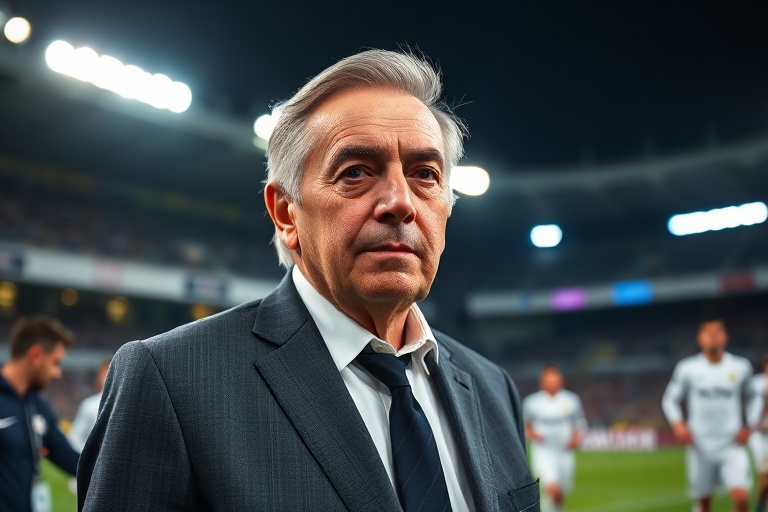
Florentino Pérez: How Real Madrid’s President Built a Football Empire
Few figures in modern sports have shaped an institution as profoundly as Florentino Pérez has with Real Madrid. Since his first tenure as president in 2000, and then again after 2009, Pérez has redefined the club not just as a football team, but as a global brand. His vision extended far beyond trophies, transforming Real Madrid into a financial powerhouse and a cultural symbol.
Pérez’s leadership has been marked by a philosophy that blends sporting ambition with economic pragmatism. He championed the concept of “Galácticos,” acquiring world-class players to elevate both on-field performance and commercial appeal. This strategy didn’t just fill the Santiago Bernabéu; it filled global coffers and turned the club into a year-round entertainment enterprise. While critics argue his approach prioritizes marketing over youth development, the results—15 Champions League titles since 2000—speak to a formula that has redefined success in modern football.
The Galáctico Strategy: A Double-Edged Sword
Pérez’s most visible legacy is the Galáctico policy, a bold initiative that brought superstars like Zidane, Ronaldo, Cristiano Ronaldo, and Benzema to Madrid. The idea was simple: attract the best players to make the club unbeatable and irresistible to fans and sponsors alike. Financially, it worked. Real Madrid’s revenue grew from €194 million in 2000 to over €840 million in 2023. Broadcasting, sponsorships, and commercial deals flourished as the club’s global profile expanded.
But the strategy wasn’t without controversy. Critics pointed to a revolving door of managers, high wages, and a lack of long-term squad planning. The departure of homegrown talents like Iker Casillas and Raúl under Pérez’s watch fueled debates about the club’s identity. Was it becoming a theme park for superstars rather than a club rooted in tradition?
- Financial Growth: Revenue increased eightfold under Pérez’s leadership.
- Global Reach: Real Madrid became the most-followed sports club on social media.
- Trophies: 15 Champions League titles since 2000, including five in the last decade.
- Criticism: Squad turnover remains high, with few players staying more than five years.
Yet Pérez defended his model, arguing that success on the pitch validates the investment. “We are not a charity,” he once stated. “We are a club that competes to win, and to win, you need the best.” His ability to monetize success has set a benchmark for other clubs, proving that football could be both a sport and a global business.
From Football to Finance: Building a Global Brand
Pérez didn’t just build a football team—he built a corporation. Under his leadership, Real Madrid expanded beyond the pitch into media, tourism, and technology. The club launched its own television channel, Real Madrid TV, and developed the Santiago Bernabéu into a state-of-the-art stadium with a retractable roof and immersive fan experiences. The stadium itself became a revenue stream, hosting concerts, tours, and even esports events.
In 2023, Real Madrid became the first sports team to surpass €1 billion in annual revenue. This financial muscle allowed Pérez to sign Mbappé in 2024 without selling key players—a move that signaled a new phase: sustainability through self-sufficiency. Unlike clubs reliant on state funding or oil money, Real Madrid thrives on brand strength, merchandise, and digital engagement.
The broader implication of Pérez’s model is that football clubs can—and perhaps must—operate like multinational corporations. His approach has influenced clubs from Manchester City to PSG, all of which now prioritize commercial growth alongside sporting ambition. Football is no longer just about 11 players on a field; it’s about ecosystems, data analytics, and global audiences.
The Pérez Paradox: Success vs. Identity
Despite the trophies and profits, questions linger about Real Madrid’s soul under Pérez. The club’s famous motto, “Hala Madrid,” once echoed a sense of belonging and tradition. Today, that identity feels more corporate than communal. The Bernabéu is no longer just a stadium; it’s a destination, a spectacle. While this brings in millions, it also distances the club from its working-class roots.
Pérez has responded by investing in La Fábrica, the club’s youth academy, though results have been mixed. Vinícius Jr. and Rodrygo are recent graduates who have become icons, but the pipeline remains inconsistent compared to clubs like Barcelona or Ajax. The tension between global ambition and local identity is the central paradox of Pérez’s presidency.
Yet, in a sport where success is measured in trophies and revenue, Pérez’s model has proven unmatched. While rival clubs chase short-term glory through heavy spending, Real Madrid sustains dominance through patience, planning, and Pérez’s unshakable belief in the power of the brand.
Legacy and the Future of Football Leadership
As Pérez approaches his late 70s, speculation grows about his succession. Would Real Madrid remain a superpower without him? His influence is so embedded that the club risks losing its competitive edge if the next president strays from his playbook. Yet, Pérez has groomed a generation of executives within the club’s hierarchy, ensuring continuity.
Pérez’s broader impact extends beyond Madrid. He has redefined what it means to lead a football club in the 21st century. His blend of financial acumen, marketing genius, and sporting ambition offers a blueprint for clubs aiming to balance tradition with modernity. Whether this model is sustainable in the long run remains an open question—but for now, it works.
In an era where football clubs are often seen as playthings for billionaires, Pérez has shown that with the right vision, a club can be both a sporting powerhouse and a business juggernaut. Love him or criticize him, Florentino Pérez has rewritten the rules of the game.
For more on the business of football and modern sports leadership, visit our Sports and Analysis sections.