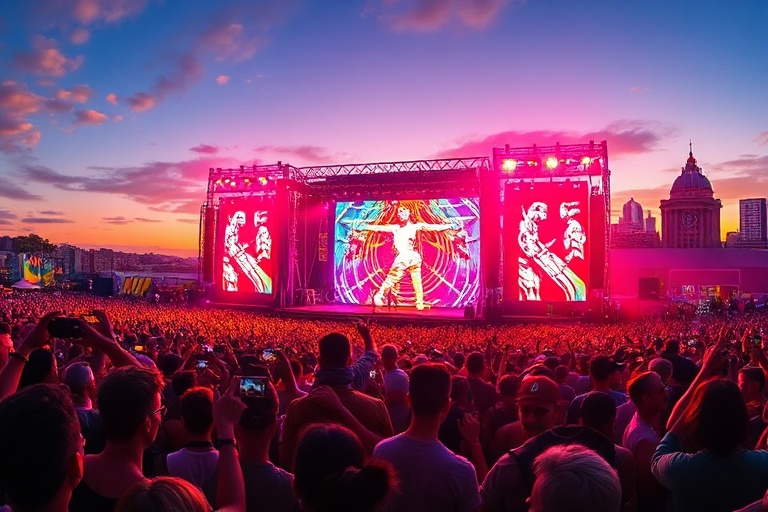
How Lollapalooza Changed Music Festivals Forever
Few music festivals have left as lasting an impression as Lollapalooza. Since its inception in 1991, the event has evolved from a modest traveling festival into one of the most influential gatherings in global music culture. Its journey reflects broader shifts in how audiences consume live entertainment, the business models that sustain it, and the role of festivals in shaping cultural trends.
The Origins and Early Years of Lollapalooza
Lollapalooza was created by Jane’s Addiction frontman Perry Farrell in 1991 as a farewell tour for his band. The name itself was Farrell’s playful nod to the slang term for something impressive or unusual. The first lineup included acts like Siouxsie and the Banshees, Nine Inch Nails, and Ice-T’s Body Count, blending alternative rock, punk, and hip-hop in ways that challenged mainstream music categories.
That inaugural year, Lollapalooza was a traveling festival, hitting nine cities across the United States. It was more than a concert series—it was a statement. Farrell envisioned an event that prioritized artistic freedom over commercial constraints, offering a platform for underground and emerging artists alongside established names. The DIY ethos resonated deeply with Gen X audiences, who were growing disillusioned with the polished, corporate rock of the time.
Key Moments in Lollapalooza’s Early Evolution
- 1992: Lollapalooza expanded to 24 cities, solidifying its reputation as a must-attend event for alternative music fans.
- 1993: The festival introduced a second stage, allowing more artists to perform and diversifying the lineup further.
- 1994: After a hiatus, Lollapalooza returned with a stronger emphasis on rock and electronic acts, reflecting the growing diversity of underground scenes.
Lollapalooza’s Expansion and the Rise of Festival Culture
By the late 1990s and early 2000s, Lollapalooza had become a cultural institution. However, financial struggles and shifting musical tastes led to its temporary cancellation in 1998. Farrell revived the festival in 2003, this time as a stationary event in Chicago’s Grant Park. This pivot was pivotal. Chicago became Lollapalooza’s permanent home, and the festival’s reputation soared as it attracted international acts and audiences.
The 2000s also saw the rise of festival culture worldwide, with events like Coachella and Bonnaroo gaining prominence. Lollapalooza distinguished itself through its curated, genre-blending lineups and commitment to artist-friendly contracts. Unlike some festivals that prioritize profit margins, Lollapalooza maintained a reputation for treating performers and fans with respect—a rarity in an industry increasingly dominated by corporate interests.
This era also marked Lollapalooza’s global expansion. In 2011, a South American edition launched in Santiago, Chile, followed by editions in Brazil and Argentina. These international versions introduced the festival to new audiences while adapting to local tastes. The South American editions, in particular, demonstrated how Lollapalooza could bridge cultural divides through music.
The Business and Cultural Impact of Lollapalooza
Lollapalooza’s influence extends beyond its stages. Economically, the festival has become a cornerstone of Chicago’s tourism industry, injecting hundreds of millions of dollars into the local economy each year. According to a 2019 study by the University of Illinois, Lollapalooza generated over $130 million in economic activity for the city during its four-day run. The festival’s success has inspired other cities to invest in large-scale events, hoping to replicate its benefits.
Culturally, Lollapalooza has consistently pushed boundaries. It has been a launchpad for careers, from the Red Hot Chili Peppers in the 1990s to Billie Eilish in the 2010s. The festival’s ability to blend genres—rock, hip-hop, electronic, pop—has mirrored the fragmentation of modern music consumption. In an era where streaming algorithms dictate taste, Lollapalooza offers a rare space for discovery, where fans can stumble upon artists they might never encounter online.
Moreover, Lollapalooza has become a platform for activism. From environmental initiatives like its zero-waste efforts to social justice campaigns, the festival has used its reach to advocate for change. This aligns with the values of millennial and Gen Z audiences, who increasingly expect brands and institutions to take stands on social issues.
How Lollapalooza Stays Relevant in a Changing World
- Adaptability: Lollapalooza has continually evolved its lineup and format to stay ahead of trends, incorporating EDM, hip-hop, and K-pop alongside its rock roots.
- Technology Integration: The festival employs apps, cashless payment systems, and augmented reality experiences to enhance the attendee experience.
- Sustainability: Recent years have seen a focus on eco-friendly practices, including recycling programs, carbon offsets, and partnerships with environmental organizations.
- Artist Partnerships: Lollapalooza collaborates with brands and artists on exclusive content, such as limited-edition merchandise and VIP experiences, to maintain exclusivity.
What’s Next for Lollapalooza?
As Lollapalooza approaches its fourth decade, its future looks bright but not without challenges. The festival must navigate the post-pandemic landscape, where live events face heightened scrutiny over safety and sustainability. Additionally, the rise of virtual concerts and hybrid experiences poses questions about the long-term viability of traditional festivals.
Yet, Lollapalooza’s resilience suggests it will endure. Its ability to reinvent itself while staying true to its core values—artistic freedom, inclusivity, and community—has been key to its longevity. For fans, attending Lollapalooza remains a rite of passage, a chance to be part of something bigger than a concert.
Looking ahead, Lollapalooza could explore new markets, such as Africa or Southeast Asia, where festival culture is still emerging. It might also deepen its commitment to sustainability, potentially becoming a leader in eco-conscious event planning. Whatever the future holds, Lollapalooza’s legacy is secure as a trailblazer in the world of live music.
For those interested in exploring more about music festivals and their cultural significance, Dave’s Locker’s Music section offers in-depth coverage of live events, artist profiles, and industry trends. Additionally, the Entertainment category provides broader insights into the evolving landscape of music and pop culture.
Lollapalooza is more than a festival—it’s a testament to the power of music to bring people together, challenge norms, and create lasting memories. As it continues to grow, it will undoubtedly shape the future of live entertainment for generations to come.