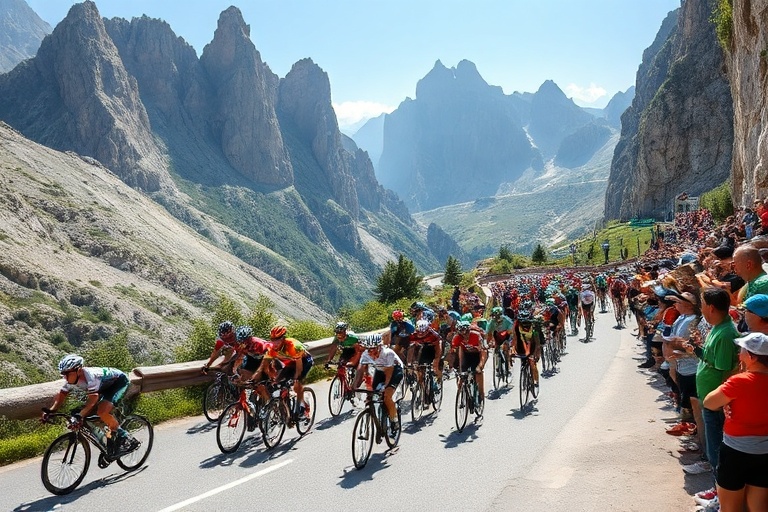
Giro d’Italia Through the Decades: A Cycling Epic Rooted in Italian Culture
Giro d’Italia: A Century of Pedal Power, Passion, and Italian Grandeur
The Giro d’Italia stands as one of cycling’s most storied races—a three-week odyssey through the heart of Italy, where the roads twist like the pages of a historical novel. Born in 1909 as a bold response to the rising popularity of the Tour de France, the Giro was designed not only as a sporting event but as a celebration of Italian identity. Over the past 115 years, it has grown from a modest national competition into a global spectacle, drawing riders and fans from every corner of the cycling world.
Unlike its French counterpart, the Giro d’Italia is deeply embedded in the cultural and geographical soul of Italy. It winds through the Dolomites’ jagged peaks, rolls across sun-drenched Tuscan vineyards, and traces the rugged coastline of Sicily. Each stage tells a story—of endurance, strategy, and national pride. To understand the Giro is to understand Italy itself: a land where tradition meets modernity, where every climb feels like a verse in a national epic.
The Origins and Evolution of a Legend
The Giro d’Italia was conceived by the newspaper La Gazzetta dello Sport in 1908, as a way to boost circulation and counter the dominance of French cycling media. The first edition, held in May 1909, featured 8 stages and covered 2,448 kilometers. Only 45 riders started, and just 20 finished. Among them was Luigi Ganna, the inaugural champion, who became the first in a long line of Italian heroes.
In its early decades, the Giro was dominated by Italian cyclists, reflecting both the country’s cycling culture and the logistical challenges of international travel during wartime and economic instability. However, by the 1950s and 60s, global stars like Fausto Coppi and Eddy Merckx began to rise, transforming the race into an international stage for the sport’s elite. Merckx, the “Cannibal,” claimed five victories between 1968 and 1974, solidifying the Giro’s reputation as a proving ground for the greatest riders in history.
Today, the Giro is part of the cycling calendar’s Triple Crown, alongside the Tour de France and the Vuelta a España. It remains the only Grand Tour to start outside Italy in recent years (in 2024, it began in Turin), a nod to its expanding global reach while staying true to its Italian roots.
Iconic Climbs and Cultural Symbols
The Giro is defined by its climbs—each one steeped in legend and carrying the weight of history. The Passo dello Stelvio, at 2,757 meters, is perhaps the most famous. Its 48 hairpin bends have broken champions and made legends. In 2017, the Stelvio became the highest paved pass ever included in the Giro, a moment that drew global attention and cemented its place in cycling folklore.
Other legendary ascents include:
- Mortirolo: A brutal 10.5 km climb averaging 10.5% gradient, where the Giro often decides the general classification.
- Alpe di Siusi: A scenic but deceptive climb in the Dolomites, offering panoramic views that belie its difficulty.
- Blockhaus: A modern favorite, with its steep ramps and sweeping descents through Abruzzo’s wild landscapes.
These climbs are not just athletic challenges—they are cultural touchstones. The Dolomites, a UNESCO World Heritage site, serve as a dramatic backdrop that elevates the race far beyond sport. Riders become pilgrims, cycling through valleys that echo with the songs of Italian partisan fighters during World War II. The Giro doesn’t just pass through history; it rides through it.
The Global Stage and Modern Rivalries
While the Giro remains deeply Italian, it has evolved into a truly international event. Riders from the UK, Colombia, Australia, and the Netherlands now share the spotlight with Italians. In 2023, Britain’s Geraint Thomas won the Giro, the first non-Italian victor since 2010. His victory highlighted the race’s growing global appeal and the increasing competitiveness of teams from outside Europe.
The rise of British and Colombian cycling in particular has reshaped the Giro’s competitive landscape. Colombian climbers like Nairo Quintana and Egan Bernal have brought a new intensity to the high mountains, blending South American climbing style with European tactical precision. Meanwhile, British teams such as Ineos Grenadiers have brought a data-driven, scientific approach to training and racing.
The 2020s have also seen the rise of young Italian talent. Filippo Ganna, a time trial specialist, and Giulio Ciccone, a fearless climber, represent the next generation of homegrown stars. Their emergence comes at a time when Italian cycling is seeking to reclaim its former glory after a period of relative decline.
A Race for the People
What sets the Giro apart from other Grand Tours is its relationship with the Italian public. The race is woven into the fabric of daily life. Towns close their streets, schools set up viewing parties, and families camp along the route for days to secure a spot. The maglia rosa—the pink jersey worn by the race leader—is not just a sporting symbol but a national icon, its color derived from the pages of La Gazzetta dello Sport.
The Giro also reflects Italy’s regional diversity. From the industrial north to the rural south, each stage celebrates a different aspect of Italian life. The race passes through olive groves in Puglia, truffle fields in Piedmont, and lemon groves on the Amalfi Coast. It’s a moving tour of Italy’s culinary and cultural heritage, making the Giro as much a gastronomic journey as a sporting one.
Even the race’s challenges—from extreme weather to political protests—add to its narrative richness. In 2021, the Giro faced controversy over COVID-19 restrictions and rider protests. In 2022, heavy snowfall in the Dolomites forced stage cancellations and reshaped the entire race. These moments remind us that the Giro is not just a sporting event but a living, breathing reflection of Italy’s social and environmental realities.
Why the Giro Matters Beyond the Podium
The Giro d’Italia is more than a race. It is a cultural institution, a tourism driver, and a source of national pride. It has inspired generations of cyclists, from amateur riders in local clubs to professional champions. It has also played a role in Italy’s post-war recovery, offering hope and unity during difficult times.
In an era where global sports often feel disconnected from local identity, the Giro remains rooted in place and tradition. It shows how sport can transcend competition to become a celebration of community, geography, and national character. Whether you’re a cycling fan or simply someone who appreciates the beauty of movement through landscape, the Giro offers something profound: a chance to witness history unfold on two wheels.
The Future of the Giro
Looking ahead, the Giro faces both challenges and opportunities. Climate change threatens the viability of high mountain stages, forcing race organizers to adapt routes and schedules. Meanwhile, the rise of e-sports and virtual cycling presents new ways to engage younger audiences. Yet, the Giro’s core appeal remains unchanged: its ability to connect people to a shared story, told through sweat, suffering, and spectacular scenery.
As the 2025 edition approaches, anticipation builds. Will a new champion emerge from the Alps? Will an Italian reclaim the maglia rosa? Or will a global outsider rewrite the script? One thing is certain: the Giro d’Italia will continue to pedal into the future, carrying with it the soul of Italy and the spirit of cycling.