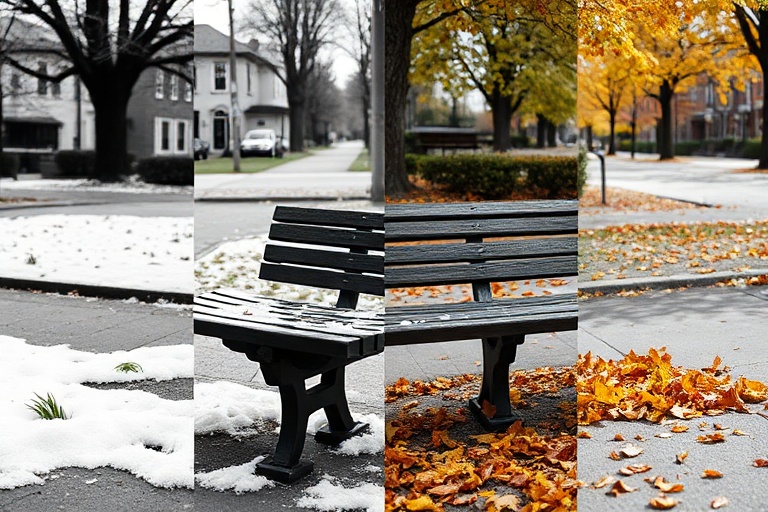
Every Year After: How Time Shapes Identity Without Announcing It
Time doesn’t announce its presence. It doesn’t arrive with fanfare or a press release. Instead, it settles in like the quiet hum of a refrigerator—unnoticed until the moment you realize the milk has expired and the silence feels different. Every year after becomes a ledger of change, not through dramatic revelations but through the slow accumulation of small shifts. These shifts shape identity, relationships, and even how we see the world. What begins as a single moment—graduation, a loss, a move, a new beginning—eventually transforms into a series of years marked by quiet evolution rather than explosive transformation.
This phenomenon isn’t just personal; it reflects a universal truth about human experience. Across cultures and generations, people mark time not by calendars alone, but by the emotional weight of what has passed. Every year after isn’t just a marker on a timeline. It’s a threshold where memory and anticipation intersect, where the past becomes a lens through which the present is viewed. Understanding this process sheds light on resilience, growth, and the often-overlooked art of living forward while carrying the past.
The Psychology of Time After Impactful Events
Psychologists have long studied how people process major life events and the passage of time afterward. Research consistently shows that the brain doesn’t process “every year after” chronologically, but rather thematically. Year one may be dominated by shock or denial, year two by adjustment and routine. By year three, many individuals report a sense of equilibrium—though not necessarily happiness or resolution. This isn’t about moving on, but moving through.
A study published in the Journal of Personality and Social Psychology found that people who create structured reflections—journaling, revisiting memories, or revising goals—experience greater emotional clarity in the years following significant events. This suggests that the power of “every year after” lies not in the years themselves, but in how we engage with them. It’s less about time healing wounds and more about how we choose to inhabit the time that passes.
Consider the experience of returning to a place after years away. A childhood home, a college campus, a city where a loved one once lived. The physical space hasn’t changed much, but the emotional landscape has. Every year after such a return brings a new layer of understanding—sometimes painful, sometimes liberating. These moments reveal that time isn’t just a measure of duration; it’s a medium through which meaning is filtered.
Every Year After as a Cultural Narrative
Storytelling across media has increasingly embraced the theme of “every year after,” reflecting society’s growing comfort with nonlinear narratives and emotional complexity. Films like Every Year in Santiago and series like This Is Us thrive not on plot twists, but on the quiet revelations that come with time. Audiences are drawn to stories where characters age, change, and sometimes regress—not because they’re flawed, but because they’re human.
In music, albums like Phoebe Bridgers’ Punisher or Kendrick Lamar’s DAMN. capture the weight of time through fragmented lyrics and shifting tones. The passage of years isn’t romanticized; it’s presented as a process of reckoning. Even in pop culture, where instant gratification is the norm, the appeal of “every year after” persists because it mirrors real life. We don’t grow in leaps; we grow in increments, often unnoticed until we look back.
This cultural shift also reflects a broader rejection of the idea that growth must be linear or that progress is always upward. In an era obsessed with optimization and self-improvement, “every year after” offers a counter-narrative: sometimes the most important work is simply staying present, enduring, and learning to sit with what you’ve become.
Practical Wisdom: Making the Most of Every Year After
If time is a silent partner in our lives, how can we become more intentional about the years that follow pivotal moments? The answer may lie in small, consistent practices rather than grand gestures.
- Annual Reflection Rituals: Instead of waiting for New Year’s Eve, set aside a personal anniversary date to review what has changed, what has stayed the same, and what you’ve learned. This doesn’t require a formal process—just a few moments of honest self-inquiry.
- Revisit with Curiosity, Not Judgment: When returning to a place or revisiting a memory, approach it with openness. Ask: What do I notice now that I didn’t before? What feels heavier? What feels lighter?
- Cultivate “Time Literacy”: Recognize that not all years are equal. Some will feel expansive; others will feel stagnant. Both are valid. The goal isn’t to rush through time, but to move with it.
- Create New Milestones: “Every year after” doesn’t have to be defined by loss or upheaval. Celebrate personal growth, new skills, or shifts in perspective. Marking these moments reinforces agency over time.
- Embrace Ambiguity: Some years won’t feel like progress. And that’s okay. Growth isn’t always upward; sometimes it’s lateral or even circular. Trust the process without demanding immediate clarity.
These practices aren’t about controlling time, but about deepening our relationship with it. They acknowledge that every year after is an opportunity—not to erase the past, but to understand it better, and in doing so, understand ourselves.
The Ripple Effect: How Personal Time Becomes Collective Memory
There’s a subtle but powerful connection between individual experiences of “every year after” and collective memory. When a generation ages, when a community rebuilds after loss, or when a society reflects on shared history, the passage of time becomes a shared text. Consider how anniversaries of major events—wars, movements, disasters—are observed not just as historical footnotes, but as emotional touchstones that shape identity.
In this way, every year after is both deeply personal and inherently social. It’s how we carry legacy forward. How we teach the next generation not just what happened, but how it felt. How we preserve stories that might otherwise fade. Time, in this sense, becomes a form of inheritance.
This is especially visible in communities that have endured hardship. For instance, in cities recovering from economic collapse or communities healing from trauma, the act of marking time isn’t passive. It’s an act of resistance. It says: We are still here. We are still growing. Every year after is proof of endurance.
In the end, “every year after” is less about the years themselves and more about what we choose to do with them. It’s the quiet courage of showing up, again and again, even when the path isn’t clear. It’s the art of becoming someone new without forgetting who you were. And it’s the realization that time, though relentless, is not the enemy—it’s the medium through which life unfolds.
Perhaps the most profound lesson of every year after is this: You are not the same person you were a year ago. And that’s not a failure of growth—it’s the natural result of living.
So the next time you mark another year gone by, don’t just count it. Reflect on it. Learn from it. And carry it forward—not as baggage, but as wisdom.
Explore more on personal growth and reflection in our Culture and Analysis sections.