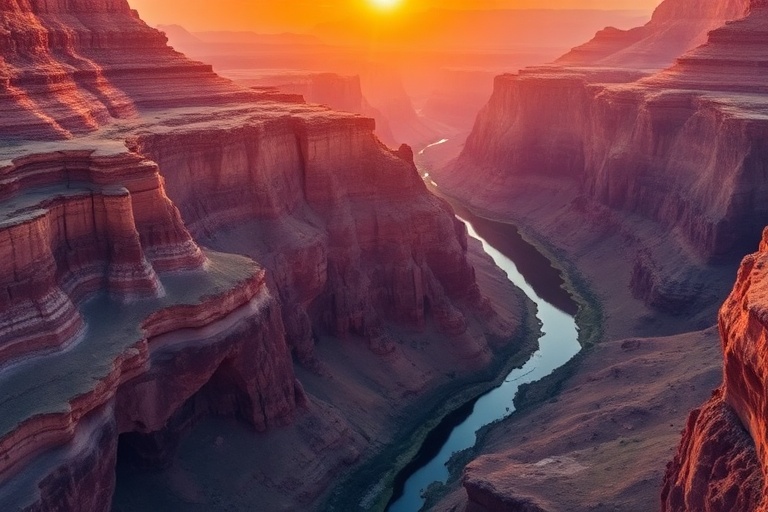
grand canyon
The Grand Canyon stands as one of Earth’s most awe-inspiring landscapes, a testament to the relentless power of nature carved over millions of years. Carved by the Colorado River, this vast chasm stretches 277 miles long, reaches up to 18 miles wide, and plunges over a mile deep in places. More than just a geological marvel, the Grand Canyon is a symbol of preservation, tourism, and environmental responsibility, drawing nearly 4.5 million visitors annually. Its layered bands of red rock tell a story of time itself—layer upon layer of sediment deposited, uplifted, and exposed by erosion. To walk its rim or descend into its depths is to stand within the pages of Earth’s history.
The Geological Story: How Time Carved a Masterpiece
The Grand Canyon’s formation began around 70 million years ago during the Laramide Orogeny, a period of mountain-building that elevated the Colorado Plateau. Yet the canyon as we know it today took shape much more recently. Geologists estimate the Colorado River began cutting through the rock about 5 to 6 million years ago, a process accelerated by the river’s steep gradient and the region’s arid climate, which limits vegetation that might otherwise slow erosion. The result is a vertical timeline of Earth’s history, with the oldest rocks at the bottom—some nearly 2 billion years old—and younger layers like the Kaibab Limestone at the rim.
What makes the canyon especially fascinating is the interplay of uplift and incision. The Colorado Plateau rose gradually, tilting the land and increasing the river’s erosive power. Over millennia, the river sliced downward, exposing strata that reveal ancient environments: from shallow seas to coastal dunes, from tropical forests to desert basins. Each layer tells a different chapter—some rich in fossils, others marked by volcanic activity that blanketed parts of the canyon in ash. The canyon is not just a hole in the ground; it’s a layered archive of planetary change.
Human History and Cultural Significance
The Grand Canyon has been home to humans for at least 12,000 years. Indigenous peoples, including the Havasupai, Hopi, Navajo, and Southern Paiute, have long considered the canyon sacred and integral to their cultural identity. For many tribes, the canyon is not merely a landscape but a living ancestor—a place of origin, spiritual power, and ongoing connection. Archaeological evidence, including ruins, pottery, and rock art, shows continuous human presence long before European explorers arrived.
European contact began in the 16th century, but it wasn’t until 1869 that the canyon was systematically explored by John Wesley Powell, a one-armed Civil War veteran who led a daring expedition down the Colorado River. Powell’s meticulous mapping and vivid accounts brought national attention to the canyon, laying the groundwork for its future as a protected space. By 1919, it became a national park, preserving its grandeur for generations to come. Today, the National Park Service manages over 1.2 million acres, balancing access with conservation.
Indigenous Perspectives and Modern Stewardship
Efforts to honor Indigenous voices have grown in recent years. The Havasupai Tribe, whose reservation includes the western end of the canyon, has fought for water rights and cultural recognition. In 2023, a new interpretive center near Desert View was co-developed with tribal partners, integrating traditional knowledge into park education. Such collaborations reflect a shift toward inclusive stewardship, recognizing that the canyon’s story is not just geological or recreational—it is deeply human.
Tourism, Impact, and the Challenge of Preservation
The Grand Canyon is a crown jewel of the U.S. National Park System, generating over $1 billion in annual economic impact for northern Arizona. Visitors come from around the world to hike the Bright Angel Trail, raft the Colorado, or simply gaze from Mather Point at sunrise. Yet this popularity brings challenges: trail erosion, wildlife disturbance, air pollution from nearby coal plants, and the carbon footprint of millions of travelers. The park has responded with innovations like the sustainable shuttle system in Grand Canyon Village, which reduces traffic and emissions.
Another pressing issue is overcrowding. During peak seasons, parking lots fill before 7 a.m., and wait times at entrance stations can exceed two hours. The park has experimented with timed entry permits and reservation systems, though debates continue over accessibility versus preservation. Some advocate for expanding off-peak visitation, spreading the load across seasons and reducing pressure on infrastructure.
Key Challenges Facing the Grand Canyon Today
- Climate Change: Rising temperatures and reduced snowpack in the Rockies—source of the Colorado River—threaten water availability downstream. Drought conditions have led to lower river levels, impacting both ecosystems and recreation.
- Air Quality: The Four Corners region, home to coal-fired power plants, has some of the worst air pollution in the U.S. Haze from these plants can obscure views from the rim for over 100 days a year.
- Wildlife Stress: Species like the California condor and desert bighorn sheep face habitat fragmentation and human encroachment. Noise pollution from helicopters and drones disturbs nesting birds.
- Cultural Heritage Protection: Sacred sites are vulnerable to vandalism and unauthorized access. Balancing visitation with respect for tribal lands remains an ongoing negotiation.
Why the Grand Canyon Matters Beyond Its Borders
The Grand Canyon is more than a tourist destination—it is a global symbol of the need to protect natural wonders in an era of environmental strain. Its story reflects broader themes: the slow pace of geological time versus the rapid pace of human activity, the tension between access and preservation, and the importance of Indigenous knowledge in environmental management.
It also serves as a living laboratory. Scientists study its rock layers to understand past climates, its caves to track biodiversity, and its river to model water security. The canyon reminds us that nature is not static. Even as we marvel at its beauty, we are part of its ongoing transformation.
A Call for Responsible Stewardship
Visitors today are increasingly aware of their role. Leave No Trace principles are emphasized in park literature. Programs like the Grand Canyon Conservancy fund restoration projects, from trail repair to native plant reintroduction. Even small actions—staying on marked paths, carrying out all waste, respecting quiet zones—can make a difference.
Looking ahead, the canyon faces a paradox: how to remain accessible while remaining intact. The answer may lie in reimagining tourism not as consumption, but as connection. That means deeper engagement with the land’s history, quieter experiences, and a commitment to leaving it better than we found it.
The Grand Canyon does not belong to any one era or people. It belongs to time itself—a river-carved monument that continues to shape those who walk its edges. To stand at its rim is to feel small, not in insignificance, but in awe of forces that operate beyond human lifespans. It is a place where the past speaks, the present pauses, and the future is quietly negotiated.
Whether you see it from the rim or from within its depths, the Grand Canyon invites reflection. It challenges us to think not only about where we are, but where we are going—and what we choose to preserve along the way.
Dave’s Locker explores the stories behind the places that shape culture, science, and society. From natural wonders to urban transformations, we uncover the layers that define our world.