francis scott key bridge
The Francis Scott Key Bridge: A Symbol of Resilience and Global Connectivity
The Francis Scott Key Bridge, spanning the Patapsco River in Baltimore, Maryland, is more than just a critical piece of infrastructure. Completed in 1977 and named after the writer of the U.S. national anthem, the bridge has become a symbol of both local identity and global trade connectivity. Its collapse in March 2024 sent shockwaves through supply chains worldwide, underscoring the bridge’s role in an interconnected global economy. Understanding its history, significance, and the events surrounding its collapse provides valuable insight into the fragility of modern trade routes and the communities they support.
A Brief History and Engineering Marvel
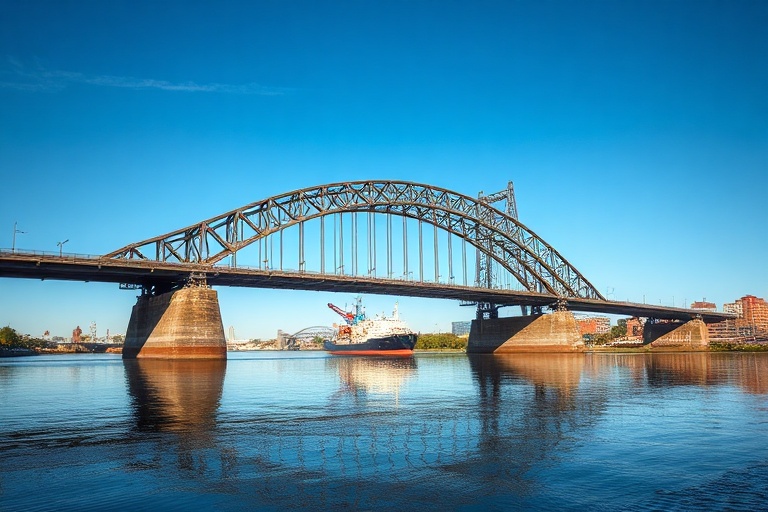
The Francis Scott Key Bridge was designed by the engineering firm Sverdrup & Parcel and constructed as a continuous truss bridge, a type of structure known for its durability and load-bearing capacity. At the time of its completion, it was the longest continuous truss bridge in the world, stretching 1.6 miles across the Patapsco River. The bridge’s name honors Francis Scott Key, the lawyer and poet who penned “The Star-Spangled Banner” during the War of 1812, adding a layer of historical significance to its functional purpose.
Over the decades, the bridge evolved from a regional connector into a vital artery for international trade. Baltimore’s port, one of the busiest on the U.S. East Coast, relies heavily on the bridge to move goods between ships and inland distribution networks. The bridge’s role in facilitating commerce made it indispensable to industries ranging from automotive to agriculture, cementing its place in the global supply chain.
Global Impact: A Bridge Between Continents
The Francis Scott Key Bridge was not just a local landmark; it was a global connector. The Port of Baltimore handles more than 50 types of cargo, including automobiles, machinery, and agricultural products, many of which are shipped to and from Europe, Asia, and beyond. When the bridge collapsed in March 2024 after a cargo ship lost control and struck a critical support column, the immediate impact was felt worldwide. Shipping companies rerouted vessels, delayed deliveries, and incurred additional costs, while businesses scrambled to adjust to disrupted supply lines.
The ripple effects extended far beyond Baltimore. Automakers in Europe and Asia, which rely on parts shipped through the port, faced production slowdowns. Farmers in the Midwest, who export grain through Baltimore, saw delays in getting their products to overseas markets. The incident highlighted how a single point of failure in global trade can have cascading consequences, affecting industries and consumers thousands of miles away.
In the aftermath of the collapse, logistics experts and policymakers began re-evaluating the resilience of critical infrastructure. The event served as a case study for how vulnerable global supply chains can be to disruptions, prompting discussions about diversifying trade routes and investing in redundant infrastructure.
Cultural and Symbolic Significance
Beyond its economic role, the Francis Scott Key Bridge held cultural weight. For generations of Baltimore residents, the bridge was a familiar sight, a daily reminder of the city’s connection to the wider world. Its collapse was not just an economic loss but a psychological one, disrupting the rhythm of life for thousands who relied on it for commuting, commerce, and a sense of stability.
The bridge also carried symbolic meaning. Named after the author of the national anthem, it represented the intersection of history, patriotism, and progress. Its name evoked themes of resilience and unity, qualities that became even more poignant in the wake of its sudden disappearance. Local artists, musicians, and writers quickly responded, using the bridge as a muse to explore themes of loss, recovery, and the passage of time.
Rebuilding and the Path Forward
As of mid-2024, plans to rebuild the Francis Scott Key Bridge are already underway, with federal and state agencies committing resources to restore the critical link. The reconstruction process will likely take years, but it presents an opportunity to incorporate modern engineering standards that could enhance the bridge’s resilience against future disasters. Engineers are exploring advanced materials and design techniques to ensure the new structure can withstand extreme weather, ship impacts, and other potential threats.
In the meantime, the port has partially reopened, and temporary measures are in place to facilitate cargo movement. However, the full restoration of trade flows will take time, and the incident has already prompted calls for greater investment in alternative transportation networks. Rail and trucking industries are stepping up to absorb some of the displaced cargo, but the transition is not seamless. The situation has underscored the need for a diversified, multi-modal approach to logistics.
The rebuilding effort is also a testament to the power of community and collaboration. Local businesses, workers, and officials are rallying to support the recovery, reflecting the bridge’s deep roots in Baltimore’s identity. The process will require not just financial resources but also creativity and determination to ensure the new bridge is not just a replacement but an improvement.
Lessons for the Future
The Francis Scott Key Bridge collapse serves as a stark reminder of the fragility of global trade networks. In an era where efficiency often trumps redundancy, the incident has forced a reckoning with the vulnerabilities of critical infrastructure. Policymakers, businesses, and communities are now asking tough questions: How can we better protect vital trade routes? What lessons can we learn from this disaster to prevent future disruptions?
One potential solution is the adoption of “smart infrastructure” technologies. Sensors, real-time monitoring systems, and predictive analytics could provide early warnings for structural weaknesses or operational failures. Additionally, diversifying trade routes—such as expanding the use of alternative ports or increasing reliance on rail and road networks—could reduce dependence on any single chokepoint. These strategies require significant investment and coordination, but the cost of inaction could be far higher.
The collapse of the Francis Scott Key Bridge has also reignited discussions about the human element of global trade. Behind every shipment, every cargo container, and every supply chain decision are people—workers, families, and communities whose lives are directly impacted by the smooth (or disrupted) flow of goods. Recognizing this human dimension is essential to building a more resilient and equitable global economy.
A Bridge Reborn
The Francis Scott Key Bridge will eventually be rebuilt, but its legacy will endure. It will stand as a monument to both the progress of human engineering and the vulnerabilities of our interconnected world. As Baltimore and the global community move forward, the bridge’s story offers a chance to reflect on how we value infrastructure—not just for its functional purpose, but for its role in shaping lives, economies, and identities.
For now, the bridge’s absence is a gaping hole in the skyline and in the rhythm of daily life. But its eventual return will be more than a restoration; it will be a renewal. A renewal of hope, of resilience, and of the unshakable belief that even in the face of disaster, progress is possible. The Francis Scott Key Bridge may have fallen, but its spirit—and its future—remain unbroken.
To learn more about the role of infrastructure in global trade, explore our News section for updates on recovery efforts and policy discussions.
For insights into how supply chain disruptions are reshaping industries, check out our Business category for in-depth analysis.