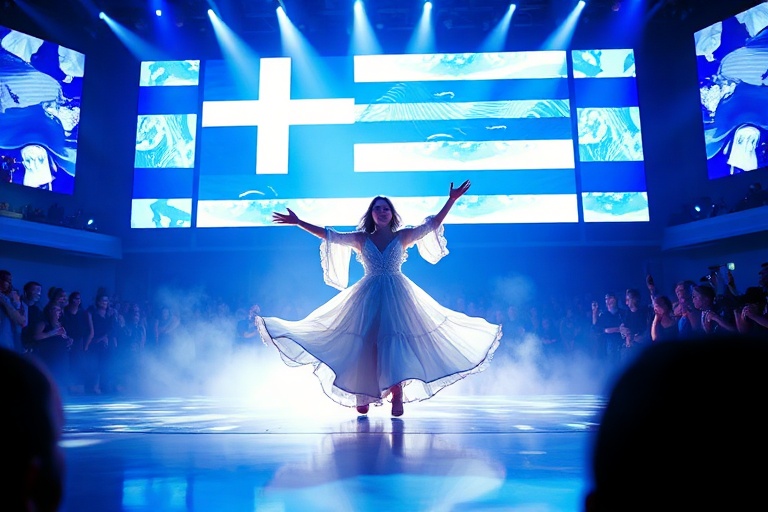
Greece’s Eurovision 2026 Strategy: Tradition Meets Global Ambition
As the sun sets over the Acropolis, Athens prepares for another chapter in its long-running love affair with the Eurovision Song Contest. Greece’s participation in 2026 isn’t just another entry in the competition—it’s a carefully crafted blend of cultural heritage, musical innovation, and strategic positioning on the world stage. With a history dating back to 1974, Greece has seen highs and lows, from unforgettable performances like Sakis Rouvas in 2004 to quieter years when the spotlight dimmed. But as Eurovision evolves into a global spectacle reaching over 160 million viewers, Greece is stepping up with renewed ambition.
The Greek national broadcaster ERT has historically prioritized artists with strong local appeal, often leaning into traditional sounds like rebetiko or modernized folk. Yet, in recent years, a shift has occurred. Greece is increasingly embracing a more cosmopolitan approach, blending electronic beats, pop sensibilities, and even experimental genres to compete with powerhouses like Sweden, Italy, and Australia. The 2026 selection process reflects this evolution, balancing between nostalgia and innovation.
The Selection Process: From Public Vote to Industry Scrutiny
Greece’s path to Eurovision 2026 began months before the contest itself. Unlike some countries that rely solely on internal selections, ERT has traditionally used a televised national final—a format that has both its supporters and critics. The 2026 edition is no exception. The broadcaster has announced an open submission period, inviting artists from all backgrounds to submit their songs. A panel of music industry professionals, including producers, lyricists, and former Eurovision contestants, will whittle down the entries before a public vote determines the finalist.
This hybrid approach aims to democratize the selection while maintaining a level of artistic credibility. However, it’s not without challenges. Past national finals have been criticized for being overly political or favoring established names over fresh talent. To counter this, ERT has introduced stricter criteria for the 2026 selection, emphasizing originality, vocal ability, and stage presence. The goal is clear: present Greece not just as a participant, but as a serious contender.
One notable change this year is the increased involvement of international producers. Greece has long relied on domestic songwriters, but with Eurovision’s global reach, there’s a growing recognition that a song needs to resonate beyond national borders. Collaborations with producers from Sweden, the Netherlands, and the UK have become more common, signaling Greece’s intent to compete at the highest level.
Cultural Identity in a Global Contest
Eurovision has always been as much about cultural expression as it is about music. Greece’s entries often reflect its rich musical traditions, from the haunting melodies of the bouzouki to the modern pop anthems that dominate the airwaves. The 2026 song is expected to continue this tradition, but with a twist. Early rumors suggest a fusion of traditional Greek instruments with contemporary electronic production—a nod to the country’s dual identity as both a cradle of ancient culture and a modern European nation.
This balance is crucial. While Greece must honor its roots to appeal to its domestic audience, it also needs to craft a song that can compete in an increasingly diverse field. Eurovision’s voting system rewards broad appeal, and Greece’s past successes often came from entries that could straddle both local and international tastes. For example, Kalomira’s 2008 entry “Secret Combination” blended Greek pop with a danceable rhythm, earning Greece a top-10 finish.
Yet, the challenge isn’t just musical. Greece’s participation in Eurovision is also a statement of its place in Europe. The country has faced economic and political challenges in recent years, and Eurovision serves as a platform to project resilience and creativity. In a contest where national pride is often on display, Greece’s entries frequently carry a deeper meaning—whether it’s a celebration of Greek identity or a defiant showcase of cultural richness amid adversity.
Lessons from the Past, Hopes for the Future
Greece’s Eurovision journey has been a rollercoaster of emotions. The country’s first entry in 1974, “Krassi, Thalassa ke T’ Asteria” by Marinella, set a high bar, but subsequent years saw mixed results. The early 2000s marked a resurgence, thanks in part to the charismatic performances of Sakis Rouvas and Helena Paparizou, who delivered Greece’s first—and so far only—win in 2005 with “My Number One.”
Since then, Greece has struggled to replicate that success. The 2010s were particularly challenging, with several entries failing to qualify for the grand final. Critics argued that Greece was resting on its laurels, relying too heavily on familiar faces rather than nurturing new talent. The 2026 selection process aims to address these concerns, with ERT placing a stronger emphasis on discovering and developing emerging artists.
One potential advantage for Greece in 2026 is the contest’s location. The United Kingdom will host Eurovision in 2026 after Ukraine’s win in 2025 was unable to proceed due to logistical challenges. Hosting in the UK could provide Greece with a unique opportunity to connect with a European audience that may not typically tune into the contest. Proximity to the UK, along with shared cultural ties, could help Greek artists gain traction among British and Irish viewers.
What to Expect in 2026
While the official song for Greece’s 2026 entry has yet to be revealed, several trends suggest what fans might see. The use of traditional Greek instruments like the lyra or the baglamas is likely, as is a modern production that incorporates elements of pop, electronic, or even rock. The stage performance will be another critical factor, with Greece historically delivering visually stunning shows that blend choreography, lighting, and pyrotechnics.
Here’s a look at what Greece might bring to the table in 2026:
- Musical Fusion: Expect a blend of traditional Greek sounds with contemporary genres to appeal to a global audience.
- New Talent: ERT is placing greater emphasis on discovering fresh faces, potentially breaking away from the reliance on established stars.
- Visual Spectacle: Greece has a history of delivering high-energy performances, and 2026 is unlikely to be an exception.
- Cultural Storytelling: The song may incorporate themes of Greek history, mythology, or modern life to resonate with both domestic and international audiences.
Greece’s journey to Eurovision 2026 is more than just a quest for a trophy. It’s a reflection of the country’s evolving identity, its resilience in the face of challenges, and its determination to carve out a space in the global cultural landscape. Whether Greece can reclaim its past glory or forge a new path remains to be seen, but one thing is certain: the world will be watching.
For those interested in the broader cultural impact of Eurovision, Entertainment on Dave’s Locker offers deeper analysis into how the contest shapes national identities and global music trends. Eurovision isn’t just a competition—it’s a mirror held up to the world’s diverse cultures, and Greece’s 2026 entry will undoubtedly add another chapter to this vibrant story.
As the countdown to Eurovision 2026 begins, Greece stands at a crossroads. The country has the talent, the history, and the ambition to make its mark. Whether it will rise to the occasion remains to be seen, but one thing is certain: the journey itself will be as compelling as the destination.