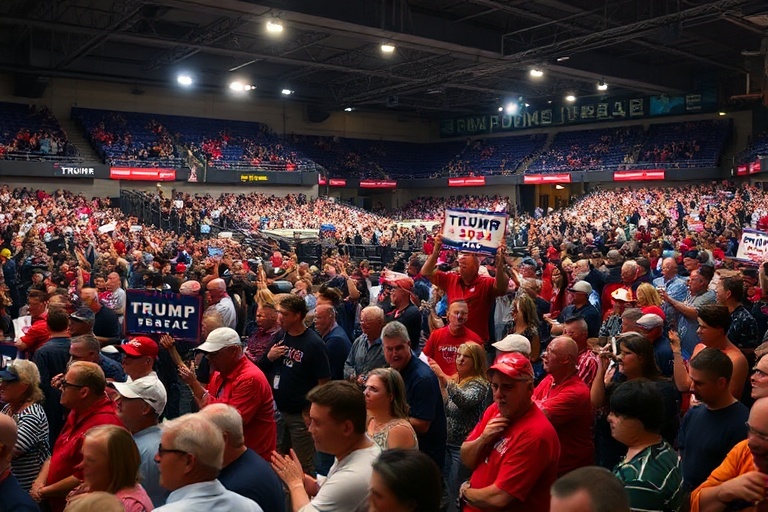
Trump Approval Ratings: Trends, Shifts, and What They Really Mean
Approval ratings for former President Donald Trump have remained a persistent topic in political discourse, even years after his presidency ended. These numbers—tracked by polling organizations like Gallup, YouGov, and Rasmussen—offer a window into public sentiment, revealing patterns that reflect broader cultural and political divides. Understanding these trends requires more than just glancing at the latest poll numbers; it demands a closer look at the forces shaping them.
Historical Context and Baseline Numbers
Trump’s approval ratings have been unusually steady compared to other modern presidents. During his single term, his average Gallup approval rating hovered around 41%, with a high of 49% and a low of 35%. These figures placed him consistently among the least popular presidents in modern history, yet they also demonstrated remarkable resilience. Even amid scandals, impeachment proceedings, and contentious policies, his base remained largely intact.
What makes these numbers significant is their contrast with historical norms. Most presidents experience fluctuations tied to economic conditions, international crises, or major legislative achievements. Trump’s approval, however, defied many conventional expectations. His relationship with the public was defined less by traditional metrics of performance and more by deep partisan loyalty.
Key Factors Influencing Trump’s Approval Ratings
- Partisan Polarization: Trump’s approval ratings were—and remain—sharply divided along party lines. Republicans consistently showed support in the 80-90% range, while Democrats registered disapproval rates above 90%. This polarization suggests that his ratings were less about policy outcomes and more about identity politics.
- Media Coverage: The tone and volume of media coverage played a significant role in shaping public perception. Outlets on both sides amplified narratives that reinforced existing beliefs, creating echo chambers that made compromise or shift in opinion unlikely.
- Economic Conditions: Despite a strong pre-pandemic economy, Trump’s approval didn’t see a significant boost. Conversely, the economic downturn during COVID-19 didn’t uniformly erode his support, indicating that economic metrics alone don’t dictate his popularity.
- Cultural and Social Issues: Trump’s rhetoric on immigration, race, and nationalism energized his base while alienating many others. These issues became litmus tests for his supporters, making his approval ratings more about cultural alignment than policy achievements.
The Role of Polarization in Modern Politics
Trump’s approval ratings underscore a broader trend in American politics: the growing irrelevance of traditional metrics like economic growth or legislative success in shaping public opinion. Instead, approval is increasingly tied to tribal identity. This shift has reshaped how politicians engage with their bases and how the public evaluates leadership.
Consider the 2020 election. Despite facing a pandemic, economic uncertainty, and high unemployment, Trump’s approval rating remained relatively stable. His campaign strategy leaned heavily on mobilizing his base rather than appealing to undecided voters, a tactic that prioritized loyalty over persuasion. This approach has since become a blueprint for other politicians navigating polarized landscapes.
“The stability of Trump’s approval ratings reflects a new normal in politics, where performance takes a backseat to identity. His supporters see him not as a president with flaws, but as a symbol of resistance against perceived elites.”
Broader Implications for American Democracy
The persistence of Trump’s approval ratings, even post-presidency, raises critical questions about the future of American democracy. When a significant portion of the electorate evaluates leadership through an exclusively partisan lens, the potential for democratic erosion increases. Compromise becomes nearly impossible, and governance is reduced to a zero-sum game.
Moreover, Trump’s approval ratings highlight the role of social media in modern politics. Platforms like Twitter and Facebook allowed him to bypass traditional media gatekeepers, directly shaping narratives and rallying supporters. This direct communication channel amplified his influence, making his approval ratings less about institutional accountability and more about viral resonance.
What’s Next for Trump’s Political Influence
As Trump continues to loom over the Republican Party, his approval ratings—both within the GOP and among the broader public—will remain a bellwether for the party’s direction. Several scenarios could unfold:
- Endorsement and Mobilization: Trump’s ability to endorse candidates and fundraise could solidify his role as the de facto leader of the Republican Party, ensuring his policy preferences and cultural stances remain central to its platform.
- Diminished Influence: If the GOP distances itself from Trump’s most polarizing elements—such as his election denialism or confrontational rhetoric—his approval ratings within the party could wane, particularly among younger or more moderate voters.
- Third-Party Bid: A potential 2024 third-party run by Trump could fracture the Republican vote, altering the dynamics of the race and potentially reshaping approval ratings across the political spectrum.
The outcome of these scenarios will depend on a variety of factors, including economic conditions, legal challenges, and the performance of the Biden administration. However, one thing is clear: Trump’s approval ratings are no longer just about him. They reflect deeper divisions in American society that show no signs of abating.
Conclusion: Approval Ratings as a Mirror of Division
Trump’s approval ratings are more than political data points; they are a reflection of America’s current state. They reveal a nation deeply divided not just on policy, but on fundamental questions of identity, governance, and the role of leadership in a fractured world. As long as these divisions persist, approval ratings will continue to oscillate within narrow bands, resistant to traditional forces of change.
For political observers, the challenge lies in interpreting these numbers without succumbing to the temptation of overgeneralization. Trump’s approval ratings are not a referendum on his presidency alone; they are a snapshot of a society grappling with its own contradictions. Understanding them requires a nuanced approach—one that acknowledges the power of identity, the influence of media, and the enduring grip of polarization.
As the 2024 election approaches, all eyes will be on these ratings once more. But the real story isn’t in the numbers themselves. It’s in what they reveal about the state of American democracy and the challenges that lie ahead.
For more insights into the intersection of politics and culture, explore our News and Analysis sections.