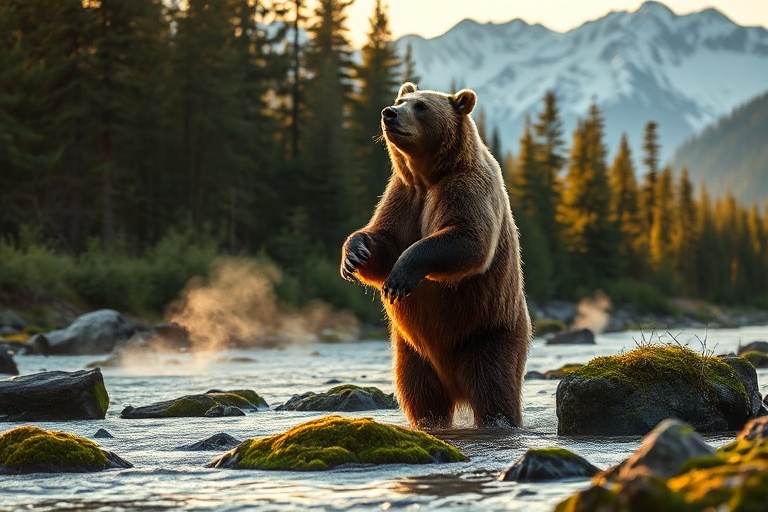
grizzly bear
Understanding the Grizzly Bear: Nature’s Powerful Survivor
The grizzly bear, a subspecies of brown bear known scientifically as Ursus arctos horribilis, commands respect as one of North America’s most formidable yet misunderstood creatures. Unlike their coastal relatives, grizzlies thrive in rugged inland territories, from the dense forests of Alaska to the rocky slopes of the Rocky Mountains. Their reputation for aggression often overshadows their ecological importance, which includes seed dispersal, nutrient cycling, and maintaining balance within their habitats.
Grizzlies are not merely apex predators; they are keystone species whose presence shapes entire ecosystems. Their digging behaviors create microhabitats for other animals, while their feeding habits influence plant life cycles. Yet, despite their ecological role, human-bear conflicts continue to pose challenges. Understanding these animals beyond their fearsome image is essential for fostering coexistence.
Physical Characteristics and Adaptations
Grizzly bears are instantly recognizable by their humped shoulders, which house powerful muscles used for digging and foraging. Their thick fur ranges from light brown to nearly black, often tipped with silver or gold, giving them a grizzled appearance. Adult males can weigh up to 800 pounds, while females are typically half that size. Claws measuring up to four inches long are another distinguishing feature, perfectly adapted for excavating roots, rodents, and even carrion.
One of their most remarkable adaptations is their acute sense of smell, which is estimated to be 2,100 times more sensitive than a human’s. This allows them to detect food sources miles away, whether it’s a berry patch or a carcass hidden beneath snow. Their hibernation cycle, lasting four to seven months, is another survival strategy that conserves energy during harsh winters when food is scarce. During this period, grizzlies do not eat, drink, or eliminate waste, living off stored fat reserves.
These physical traits make grizzlies highly efficient foragers. They consume a varied diet that includes wildlife, fish, berries, and even insects. Their ability to exploit diverse food sources is a testament to their adaptability in environments ranging from Arctic tundra to alpine meadows.
Habitat and Range: From Wilderness to Human Encroachment
Historically, grizzly bears roamed across much of western North America, from the Great Plains to the Pacific Coast. Today, their range has dramatically shrunk due to habitat loss, hunting, and human expansion. Approximately 55,000 grizzlies once inhabited the contiguous United States; now, fewer than 2,000 remain outside Alaska. The majority are concentrated in six ecosystems: the Greater Yellowstone, Northern Continental Divide, Cabinet-Yaak, Selkirk, North Cascades, and Southern Rockies.
Alaska remains the stronghold for grizzly bears, with an estimated 30,000 individuals. Here, they coexist with vast wilderness areas where human impact is minimal. In contrast, populations in the Lower 48 states face constant pressure from urban development, roads, and agriculture. Conservation efforts have led to some recovery, particularly in Yellowstone, where grizzlies were removed from the endangered species list in 2017 after a 25-year recovery period.
However, recovery is fragile. Climate change threatens food sources like whitebark pine nuts, forcing bears to venture closer to human settlements in search of alternative sustenance. Roads and trails fragment their habitats, increasing the likelihood of encounters with humans. These challenges highlight the need for robust conservation strategies that balance ecological needs with human development.
Behavior and Social Structure: Solitaries with Complex Lives
Grizzly bears are generally solitary animals, with the exception of mothers with cubs or during mating season. Adult males are particularly intolerant of each other, often engaging in aggressive encounters to establish dominance. Despite their solitary nature, grizzlies exhibit complex social behaviors, especially in maternal care. Cubs remain with their mothers for up to three years, learning essential survival skills such as foraging, fishing, and avoiding threats.
Communication plays a vital role in their interactions. Bears use body language, vocalizations, and scent marking to convey messages. A mother defending her cubs may emit deep, resonant growls, while subordinate bears may flatten their ears or avoid direct eye contact to signal submission. These nuanced behaviors are often overlooked in favor of their more dramatic confrontations.
Dominance hierarchies are evident during salmon runs, where bears gather in large numbers to feed. Larger males typically claim the best fishing spots, while younger or smaller bears wait their turn. This competition, while intense, is rarely fatal, as injuries could impair a bear’s ability to forage or hibernate successfully.
Human-Bear Conflicts and Conservation Challenges
As human populations expand into grizzly bear territory, conflicts inevitably arise. The most common triggers include food attractants, such as unsecured garbage, livestock carcasses, or pet food left outdoors. These conflicts often result in bears being euthanized or relocated, which can disrupt local populations and reduce survival rates for displaced individuals. In 2022, Montana alone reported over 1,000 conflicts, a number that has risen alongside bear populations and human encroachment.
Conservation efforts have focused on several key areas:
- Habitat Protection: Establishing wildlife corridors and protected areas to connect fragmented habitats.
- Public Education: Teaching communities near grizzly habitats how to minimize attractants and respond to encounters.
- Regulated Hunting: In areas where hunting is permitted, strict quotas aim to prevent overharvesting while allowing sustainable populations.
- Climate Adaptation: Monitoring food source availability and adjusting conservation strategies to account for changing environmental conditions.
One notable success story is the recovery of grizzlies in the Cabinet-Yaak ecosystem, where populations have grown from fewer than 20 to nearly 100 individuals since the 1990s. This progress is attributed to collaborative efforts between conservationists, tribes, and state agencies. However, challenges remain, particularly in regions where grizzlies are expanding into new areas with little prior human-bear interaction history.
Myths and Misconceptions: Separating Fact from Fiction
Grizzly bears are often portrayed as mindless killing machines, a stereotype fueled by sensational media coverage. In reality, fatal attacks are exceedingly rare. According to the science of bear behavior, most aggressive encounters result from surprise encounters or perceived threats to cubs or food. Bears typically avoid humans, retreating if given the chance. The idea that they “hunt” people is a myth perpetuated by misinformation.
Another common misconception is that grizzlies are solitary by nature. While they do spend much of their time alone, they exhibit complex social structures, particularly during mating season or when raising cubs. Female grizzlies, in particular, are highly protective and will go to great lengths to ensure the survival of their offspring. Their maternal instincts are among the strongest in the animal kingdom.
Dispelling these myths is crucial for fostering coexistence. Education campaigns that emphasize bear behavior, proper food storage, and safe encounter protocols can significantly reduce conflicts. Organizations like Defenders of Wildlife and the Bear Management Office in Montana have made strides in public outreach, but misinformation persists in popular culture.
The Future of Grizzly Bears: Hope Amid Challenges
The trajectory of grizzly bear populations hinges on a delicate balance between conservation and human activity. While some populations are rebounding, others remain critically endangered. The reintroduction of grizzlies into historic habitats, such as the North Cascades, has been proposed but faces political and logistical hurdles. Meanwhile, climate change continues to alter their ecosystems, with unpredictable consequences for food availability and habitat quality.
Technological advancements offer new tools for conservation. GPS collaring provides insights into bear movements and habitat use, while camera traps help monitor populations in remote areas. Public support for grizzly conservation has grown, driven by ecotourism and a deeper appreciation for their ecological role. However, this support is not universal, and debates over land use and hunting regulations remain contentious.
Ultimately, the survival of grizzly bears depends on collective action. Governments, conservation groups, and local communities must collaborate to protect habitats, mitigate conflicts, and adapt to changing conditions. The grizzly bear’s story is one of resilience, but it is also a reminder of humanity’s responsibility to share the planet with its wild inhabitants.
The next time you encounter a grizzly bear in the wild—or even in a photograph—remember that these animals are not just symbols of wilderness. They are living, breathing creatures with complex lives and critical ecological roles. By understanding them better, we can ensure that future generations will have the opportunity to witness their majesty firsthand.