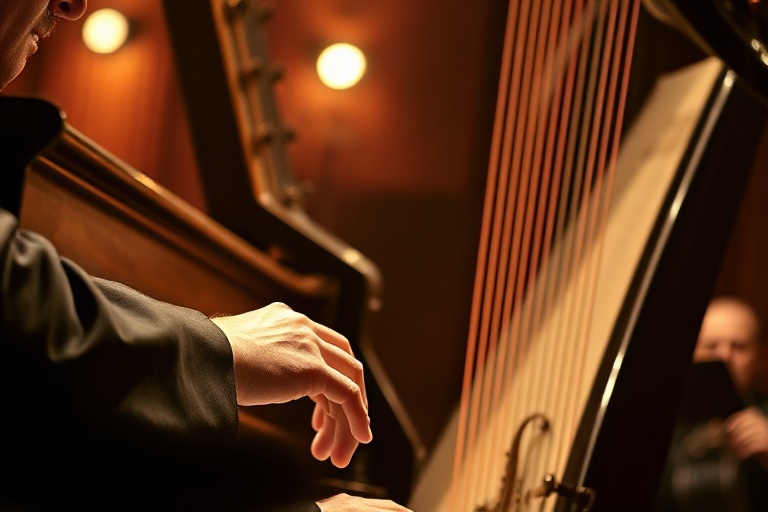
George Frideric Handel (1685–1759) remains one of classical music’s most enduring figures, yet his legacy often lives in the shadow of contemporaries like Bach. While Johann Sebastian Bach’s reputation has swelled in recent centuries, Handel’s works—particularly his operas and oratorios—have experienced something of a quiet resurgence. This revival isn’t just about nostalgia; it reflects a broader reevaluation of Baroque music’s emotional depth and theatrical flair. Audiences today are rediscovering Handel not as a relic of the past, but as a visionary whose compositions still pulse with vitality.
Handel’s Operatic Mastery: The Man Who Invented the Blockbuster
Before he became synonymous with oratorios like Messiah, Handel was a trailblazing opera composer. His 40-plus operas, written primarily for London’s royal opera houses, redefined the genre by blending Italianate drama with English theatrical sensibilities. Works like Giulio Cesare (1724) and Rodelinda (1725) weren’t just musical achievements—they were box-office gold. Handel’s operas thrived on spectacle, featuring elaborate sets, virtuosic arias, and plots drawn from historical or mythological sources. His ability to craft unforgettable melodies ensured that even non-specialists could hum along.
What set Handel apart was his knack for accessibility. Unlike Bach, whose works were often composed for church or private study, Handel tailored his operas to public taste. He recycled successful arias across different works, a practice that scandalized purists but delighted audiences. This pragmatic approach allowed him to dominate London’s competitive musical scene for decades. Today, opera companies like the Metropolitan Opera occasionally revive these works, proving their enduring appeal.
The Oratorio Revolution: Why Messiah Still Dominates
Handel’s shift from opera to oratorio in the 1740s wasn’t just a career pivot—it was a cultural earthquake. Frustrated by London’s fickle opera audiences and financial instability, he pivoted to sacred choral works performed in English, often during Lent when theaters were dark. The result was a genre that would define his legacy: the oratorio. Messiah, premiered in 1742, became an instant sensation, its choruses like “Hallelujah” transcending religious contexts to become global anthems. But Handel’s oratorios weren’t just pious—his librettist Charles Jennens crafted texts that balanced drama and devotion, while Handel’s music soared with theatrical grandeur.
What makes Messiah uniquely enduring is its adaptability. From grand cathedral performances to stripped-down chamber versions, the work has been reimagined endlessly. Even its seasonal association with Christmas is a modern invention; originally, it wasn’t tied to any holiday. Handel’s genius lay in creating music that felt both ancient and timeless, a paradox that keeps it relevant. In an era where classical music struggles to retain mass appeal, Messiah remains a rare bridge between tradition and contemporary culture.
Handel’s Influence: The DNA of Modern Pop and Film
Handel’s fingerprints are everywhere, from pop hooks to Hollywood scores. His melodies—like the opening of the Water Music or the aria “Ombra mai fu” from Xerxes—have been sampled, quoted, and repurposed across genres. The 1980s synth-pop band OMD even titled a song after “Ombra mai fu,” proving how deeply his themes resonate. In film, directors like Stanley Kubrick (Barry Lyndon) and Quentin Tarantino (Kill Bill) have used Handel’s music to evoke grandeur or irony. His ability to juxtapose the solemn with the playful mirrors modern tastes, where classical and contemporary collide.
Even video games have borrowed from Handel’s playbook. Titles like Assassin’s Creed and Civilization feature his compositions in soundtracks that evoke historical epochs. This cross-pollination isn’t accidental. Handel’s music thrives on repetition, clear structures, and emotional immediacy—qualities that align with today’s algorithm-driven entertainment landscape. In an age of short attention spans, his works offer gratification without complexity.
The Handel Effect: Why Conductors and Scholars Still Debate Him
Handel’s music isn’t without controversy. Purists argue that his oratorios lack the contrapuntal rigor of Bach, while others critique his operas for prioritizing spectacle over innovation. Yet these debates only underscore his importance. Handel wasn’t a revolutionary in the sense of inventing new forms; he was a synthesizer, taking existing traditions and refining them into something irresistible. His genius lay in his ability to communicate across barriers—language, class, and even centuries.
Scholars continue to dissect his works, uncovering new layers. For instance, recent research has highlighted the influence of Handel’s travels in Italy on his harmonic language. His time in Rome, where he encountered Palestrina’s choral style, left traces in works like the Dixit Dominus. Meanwhile, conductors like John Eliot Gardiner have championed historically informed performances, stripping away Romantic-era ornamentation to reveal Handel’s original intentions. These efforts remind us that Handel’s music is not static—it evolves with each interpretation.
How to Experience Handel Today: A Listener’s Guide
For those new to Handel, diving into his oeuvre can feel daunting. Where to start? Here’s a curated list of essential works, ranging from accessible to challenging:
- Messiah (1742) – The ultimate entry point. Start with the “Hallelujah Chorus” or the soprano aria “I Know That My Redeemer Liveth.”
- Water Music (1717) – A bright, celebratory suite perfect for first-time listeners. The “Hornpipe” is a standout.
- Giulio Cesare (1724) – A dramatic opera with some of Handel’s most expressive arias, like “V’adoro pupille.”
- Concerto Grosso in B-flat Major, Op. 3 No. 2 – A short, sparkling instrumental piece showcasing Handel’s lighter side.
- Saul (1739) – A lesser-known oratorio, but its storm scene is a masterclass in musical storytelling.
For live performances, check local baroque ensembles or festivals like the Handel Festival in Halle, his birthplace. Many performances now incorporate dance or multimedia elements, reflecting Handel’s own theatrical roots. Streaming platforms like Spotify and Apple Music offer curated playlists, while YouTube hosts historical recordings by legends like Fritz Wunderlich or Kathleen Ferrier.
The Handel Paradox: Why He Matters More Than Ever
In an era obsessed with innovation, Handel represents something rare: timelessness. His music doesn’t demand prior knowledge; it rewards curiosity. Whether it’s the soaring choruses of Messiah, the playful melodies of the Concerti Grossi, or the dramatic intensity of his operas, Handel’s works offer something for everyone. They’re at once familiar and fresh, a testament to his ability to blend accessibility with depth.
Handel’s resurgence also reflects a broader cultural hunger for narrative in music. His operas and oratorios are, at their core, stories—tales of power, love, and redemption set to unforgettable tunes. In a world where streaming playlists prioritize algorithmic suggestion over storytelling, Handel’s music reminds us of the power of a good tune to carry meaning. His legacy isn’t just in the notes he wrote, but in the emotions they continue to evoke.
As we celebrate Handel’s 335th birthday in 2020 (or any year, really), his music remains a bridge between eras. It connects the grandeur of the Baroque to the immediacy of modern pop, the sacred to the secular, the past to the present. In an art form often accused of elitism, Handel stands as a democratizer—a composer whose works belong to everyone, not just the concert hall.
For those willing to listen, Handel offers a revelation: that the past isn’t a distant echo, but a living, breathing force. And in that force, there’s a kind of magic.