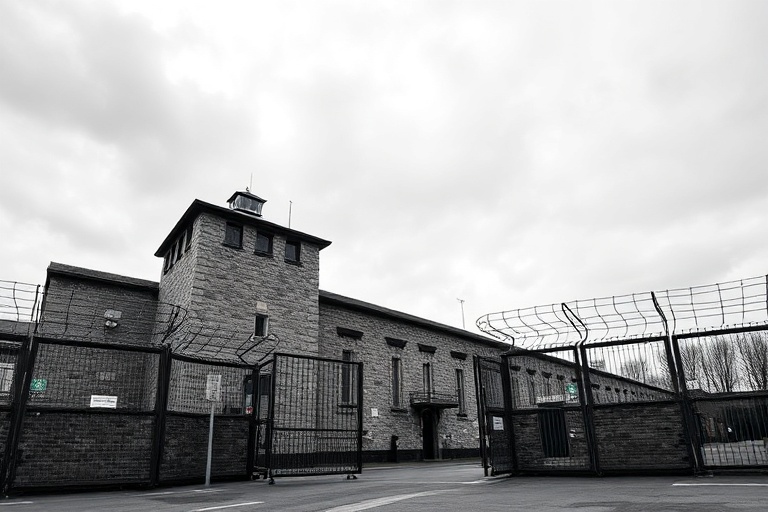
HMP Frankland, located in County Durham, England, stands as one of the United Kingdom’s most high-security prisons. Known for housing some of Britain’s most dangerous criminals, the facility has gained international notoriety over the decades. Its reputation stems from its strict security measures, high-profile inmates, and the complex challenges it poses to the British penal system.
The prison’s history dates back to 1962, when it was originally designed as a medium-security institution. Over time, however, it evolved into a maximum-security facility, particularly after the closure of Durham Prison’s top-security wing. Today, HMP Frankland is operated by His Majesty’s Prison Service and remains a critical part of Britain’s approach to incarcerating violent and long-term offenders.
The Role of HMP Frankland in Britain’s Prison System
HMP Frankland serves a unique function within the British penal system. Unlike Category A prisons, which focus on preventing escapes, Frankland is classified as a Category B prison, meaning it holds inmates who do not require maximum security but still pose significant risks. This classification allows for a balance between security and rehabilitation, though critics argue that the prison’s resources are stretched thin given its population.
The prison is divided into multiple wings, each designed to accommodate different classifications of inmates. The most secure units house prisoners convicted of terrorism, murder, and other violent crimes. In recent years, Frankland has also become a key facility for managing inmates involved in organized crime, including gang leaders and drug traffickers.
One of the prison’s defining features is its focus on intelligence-led security. The facility employs advanced surveillance technology, including biometric scanners and drone detection systems, to prevent contraband smuggling and unauthorized communications. Despite these measures, incidents of violence and drug trafficking have persisted, raising questions about the effectiveness of current strategies.
High-Profile Inmates and Their Influence
HMP Frankland has housed some of Britain’s most infamous criminals, whose cases have shaped public perception of the prison. Among the most notable inmates is Thomas Mair, convicted of the 2016 murder of Labour MP Jo Cox. His presence at Frankland reinforced the prison’s reputation as a facility for extremists and violent offenders.
Another high-profile inmate was Charles Bronson, one of Britain’s most notorious prisoners. Bronson, a convicted armed robber and self-proclaimed “prison artist,” spent years at Frankland before his transfer to other facilities. His case highlighted the challenges of managing prisoners with complex psychological profiles.
The prison has also been linked to organized crime figures, including members of the infamous Kray twins’ associates. These inmates often maintain outside connections, posing ongoing security risks. The presence of such individuals underscores the prison’s role in both punishment and containment.
The Global Context: How HMP Frankland Compares to Other High-Security Prisons
From an international perspective, HMP Frankland is not alone in its mission to house dangerous criminals. Comparable facilities exist worldwide, each reflecting the unique legal and cultural contexts of their countries. For example, the United States’ ADX Florence, known as the “Alcatraz of the Rockies,” is a supermax prison designed to hold the most violent offenders. Like Frankland, it relies on isolation and strict control measures to maintain security.
In Europe, France’s Maison Centrale de Poissy serves a similar purpose, housing inmates deemed too dangerous for ordinary prisons. However, Frankland distinguishes itself through its focus on rehabilitation alongside security. The prison offers educational programs, vocational training, and mental health services, aiming to reduce recidivism among its population.
Yet, the effectiveness of these programs remains a subject of debate. Critics argue that high-security prisons often exacerbate mental health issues due to prolonged isolation. Meanwhile, advocates emphasize the importance of structured rehabilitation to prevent future crimes. HMP Frankland’s approach reflects this tension, balancing punishment with efforts to reintegrate inmates into society.
Security Challenges and Contraband Issues
Despite its stringent measures, HMP Frankland has faced persistent security challenges. One of the most pressing issues is the smuggling of contraband, particularly drugs and mobile phones. In 2022, a report by Her Majesty’s Inspectorate of Prisons revealed that Frankland had one of the highest rates of drug misuse among inmates in England and Wales. This problem is exacerbated by the use of drones to drop packages into prison yards, a tactic employed by external criminal networks.
To combat this, the prison has increased its use of body scanners and drug detection dogs. Additionally, staff have been trained to identify signs of drug use and smuggling. However, the cat-and-mouse game between prisoners and authorities continues, with inmates devising increasingly sophisticated methods to bypass security.
Another challenge is the mental health crisis within the prison. High-security environments can exacerbate existing conditions, leading to incidents of self-harm and violence. Frankland has responded by expanding its mental health services, including therapy and counseling programs. Yet, the demand often outstrips available resources, leaving gaps in care.
Cultural Representation and Public Perception
HMP Frankland’s reputation has seeped into popular culture, often depicted as a place of fear and mystery. Films, documentaries, and true crime series frequently use the prison as a backdrop to explore themes of justice, punishment, and redemption. For instance, the BBC’s documentary series Life Inside the World’s Toughest Prisons featured Frankland, offering viewers a rare glimpse into its operations.
Public perception of the prison is deeply divided. Some view it as a necessary institution for isolating dangerous individuals, while others criticize it as a symbol of a failing penal system. The debate is further complicated by questions about rehabilitation versus punishment. Should prisons like Frankland focus solely on containment, or should they prioritize reform?
In literature, Frankland has been referenced in works such as Bad Pharma by Ben Goldacre, which examines the intersection of crime and healthcare within prisons. These cultural representations shape how society views high-security facilities, often blurring the lines between reality and fiction.
Future Directions for HMP Frankland
The future of HMP Frankland hinges on several key factors, including policy changes, technological advancements, and public opinion. One potential shift is the increased use of artificial intelligence to monitor inmate behavior and predict security threats. AI-driven systems could analyze patterns in communication, movement, and even biometric data to preempt incidents.
Another area of focus is rehabilitation. The prison has already implemented programs such as the Education and Training courses, which aim to equip inmates with skills for life after release. Expanding these initiatives could reduce recidivism rates and improve outcomes for both prisoners and society.
However, challenges remain. Budget constraints, staff shortages, and political debates over prison reform all play a role in shaping Frankland’s future. The prison service must balance the need for security with the demands for humane treatment, a task that grows increasingly complex in an era of rising incarceration rates.
Conclusion: A Prison at the Crossroads
HMP Frankland stands at a crossroads between tradition and innovation. As one of Britain’s most secure prisons, it plays a critical role in managing the country’s most dangerous criminals. Yet, its challenges—from contraband smuggling to mental health crises—highlight the need for systemic reform. The prison’s future will depend on its ability to adapt, balancing security with humanity in an ever-evolving penal landscape.
For policymakers, the question remains: How can institutions like Frankland fulfill their mandate while addressing the root causes of crime? The answer may lie in a combination of technological advancements, policy reforms, and a renewed commitment to rehabilitation. Until then, HMP Frankland will continue to operate in the shadows, a silent but formidable force in Britain’s justice system.